Introduction: Why the Right Leg Press Machine Matters More Than Ever
The fitness industry in India has grown at a pace few people predicted even five years ago. Commercial gyms are expanding, boutique studios are opening in smaller cities, and home fitness setups have become a genuine priority for thousands of households. In the middle of all this growth, the leg press machine has emerged as one of the most consistently purchased and most used pieces of strength equipment across every type of facility.
Whether you are setting up a commercial gym from scratch, upgrading an existing facility, or looking to add serious lower-body strength equipment to a home setup, understanding the leg press machine market in India including pricing, types, quality differences, and where to buy is essential before you spend a single rupee.
This article covers everything you need to know to make a well-informed, confident buying decision.
What Is a Leg Press Machine and Why Is It a Gym Staple?
The leg press is a resistance-based strength training machine that targets the quadriceps, hamstrings, glutes, and calves. Users sit or recline against a padded seat and push a weighted platform away using their legs. The motion is controlled, joint-friendly compared to free-weight squats, and accessible to a wide range of users from beginners to advanced athletes.
This combination of effectiveness, safety, and ease of use makes it one of the first machines gym owners invest in, and one of the last they would consider removing.
Why Gym Owners Prioritize the Leg Press
- It serves a wide user base, including beginners, seniors, and rehabilitation clients
- It allows heavy loading without requiring a spotter, improving safety in busy gym environments
- It is consistently popular among members, meaning strong utilization rates
- It supports progressive overload a core principle of strength training
- It takes up a defined floor footprint with predictable space requirements
- Well-built models require minimal maintenance over years of heavy use
Types of Leg Press Machines Available in India
Before looking at pricing, it helps to understand that not all leg press machines are built the same way or designed for the same purpose. There are several distinct types, each with its own advantages, price range, and ideal use case.
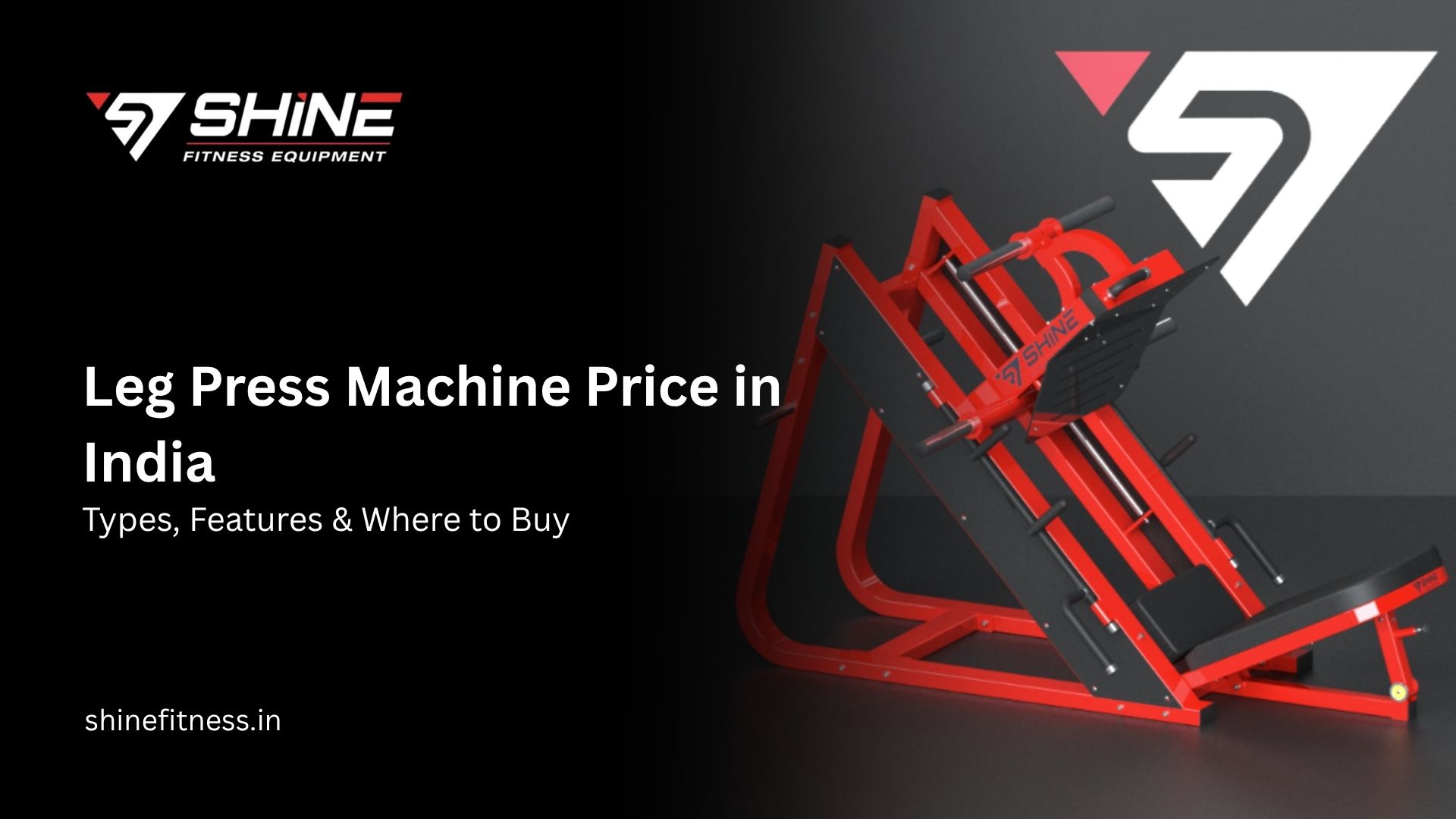
1. Plate-Loaded Leg Press (45-Degree Incline)
This is the most common type found in commercial gyms across India. The user sits at an angle and pushes a sled upward along a 45-degree track while adding weight plates manually. It allows for very heavy loading and is built for serious strength work.
Best for: Commercial gyms, powerlifting facilities, serious strength training setups
Price range: ₹35,000 – ₹1,20,000 depending on build quality, brand, and frame specifications
2. Horizontal Leg Press (Seated)
In this design, the user sits upright and pushes the platform directly forward rather than at an angle. It is often considered more joint-friendly for beginners or users with lower back concerns, since it places less compression on the spine.
Best for: Rehabilitation centers, beginner-focused gyms, senior fitness facilities
Price range: ₹25,000 – ₹85,000
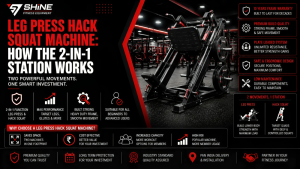
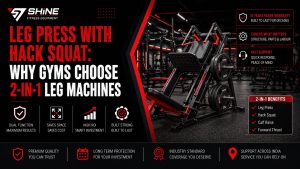
3. Hack Squat / Leg Press Combo Machine
This dual-function machine allows users to perform both a hack squat and a leg press on the same unit, simply by adjusting the body position. It is a space-efficient option for gyms that want versatility without purchasing two separate machines.
Best for: Mid-sized gyms, multipurpose training facilities, personal training studios
Price range: ₹55,000 – ₹1,80,000
4. Selectorized (Weight Stack) Leg Press
Instead of loading plates manually, this machine uses a weight stack with a pin selector. It is simpler to adjust, making it ideal for high-traffic facilities where members frequently change weights. The trade-off is that maximum load is typically lower than plate-loaded options.
Best for: Hotel gyms, corporate fitness centers, facilities with mixed user bases
Price range: ₹40,000 – ₹1,50,000
Key Factors That Affect Leg Press Machine Pricing in India
Many gym owners are surprised by how wide the price range is for what appears to be a similar product. The truth is that the price difference between a ₹30,000 machine and a ₹1,20,000 machine is not arbitrary it reflects real differences in materials, engineering, and long-term performance.
Steel Grade and Frame Construction
The frame is the backbone of any strength machine. Higher-quality commercial machines use heavy-gauge steel typically 2mm to 3mm thickness or more with precision welding at every joint. Lower-cost machines often use thinner steel or inconsistent welds, which affects both safety and longevity under heavy daily use.
Roller and Track Quality
The smoothness of the press motion depends almost entirely on the quality of the rollers and the precision of the track system. Commercial-grade machines use hardened steel rollers with sealed bearings, which maintain smooth performance even after thousands of repetitions. Budget machines use lower-grade components that wear out faster and create rough, uneven movement over time.
Upholstery and Padding
Seat and backrest padding affects user comfort, especially during extended training sessions. Commercial-grade upholstery uses high-density foam with thick, stitched vinyl or leather-effect covers that resist tearing, sweat damage, and UV fading. Budget options tend to use thinner foam that compresses quickly and vinyl that cracks within months.
Weight Capacity Rating
A commercial leg press machine should comfortably handle 300–500kg of total load (sled plus plates). Machines with lower rated capacities are not appropriate for commercial environments where users regularly load heavy weight.
Additional Factors That Influence Price
- Powder coating quality and corrosion resistance
- Footplate size and angle adjustability
- Safety lock mechanism design and reliability
- Adjustable carriage stops for range-of-motion control
- Brand reputation and after-sales service availability
What to Look for When Buying a Leg Press Machine for a Commercial Gym
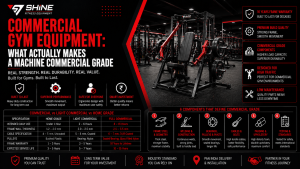
Purchasing strength equipment for a commercial facility is a different decision than buying for personal use. The machine needs to perform reliably under heavy, repeated use sometimes ten to twelve hours a day, seven days a week. Cutting corners on quality almost always costs more in repairs and replacements than the initial savings.
Structural Integrity and Safety Standards
- Check whether the machine is tested and rated for commercial use
- Look for safety stops and carriage locking mechanisms that are easy to engage
- Ensure all welds are clean, full-penetration welds with no visible gaps or cracks
- Verify that the footplate is large enough to accommodate different foot positions and user heights
- Confirm that the seat and backrest adjustment range is sufficient for your expected user base
Ease of Maintenance
- Opt for machines with accessible roller and bearing components for periodic inspection
- Look for removable upholstery panels that can be replaced without replacing the entire seat
- Choose powder-coated finishes over painted ones — they are more resistant to chipping and rust
Ergonomics and User Experience
- A well-designed leg press should allow users to naturally align their knees with their feet throughout the movement
- Adjustable back support angle helps users with different flexibility levels
- Grip handles should be positioned to allow a secure, comfortable hold throughout the press
How Gym Equipment Manufacturers Approach Quality Control
One thing that separates reliable commercial fitness equipment from low-quality alternatives is the manufacturing process behind it. Reputable Gym Equipment Manufacturers invest in quality control at every stage from raw material sourcing to finished product testing.
Material Sourcing and Testing
Quality manufacturers source steel from certified suppliers and verify tensile strength before fabrication begins. This ensures that frames will not fatigue or crack under repeated heavy loading a critical safety consideration for commercial environments.
Fabrication and Welding Standards
Commercial-grade machines are typically fabricated using CNC-cut steel components for precision fitment, and welded by trained technicians using consistent, verifiable techniques. Post-weld inspection is standard practice in well-run manufacturing facilities.
Load and Stress Testing
Before any machine reaches a customer, responsible manufacturers subject it to load testing that exceeds the rated capacity often by 150% or more. This confirms that the machine will perform safely within its specified parameters even under extreme conditions.
Surface Finishing
Powder coating, when applied correctly, creates a durable, uniform surface that resists corrosion, scratching, and fading. The quality of the coating process surface preparation, primer application, powder application thickness, and curing temperature directly affects how the machine holds up in a humid, high-traffic gym environment.
Why Buying from a Gym Machine Manufacturer in India Makes Business Sense
For gym owners and fitness businesses across the country, sourcing equipment directly from a Gym Machine Manufacturer in India offers several practical advantages over importing international brands or purchasing through multiple middlemen.
Cost Efficiency Without Compromising Quality
Direct manufacturer pricing removes distributor margins, making high-quality equipment significantly more accessible. For a gym equipping an entire floor, the savings across multiple machines can be substantial funds that can be reinvested into other areas of the business.
Customization Availability
Many Indian manufacturers offer customization options that international brands simply do not from custom color schemes that match your gym’s branding to modified dimensions for specific space requirements. This flexibility is particularly valuable for boutique studios and specialized training facilities.
Faster Delivery and Lower Logistics Costs
Domestic manufacturing means shorter lead times and significantly lower freight costs compared to importing equipment from overseas. For gym owners working against an opening deadline, this reliability matters.
After-Sales Support and Spare Parts Availability
When a machine needs a replacement part a roller, a cable, an upholstery panel sourcing it from a domestic manufacturer is faster, simpler, and more cost-effective than navigating international supply chains. Good domestic manufacturers maintain parts inventories and offer responsive service support.
Supporting Domestic Industry Growth
Beyond the practical benefits, purchasing from Indian manufacturers supports the growth of a domestic manufacturing sector that is continuously improving in quality, technology, and innovation.
Pricing Overview: What Budget Should You Plan For?
To give gym owners and buyers a realistic planning reference, here is a general breakdown of leg press machine pricing by category in the Indian market as of 2026:
| Machine Type | Entry-Level (Light Commercial) | Mid-Range (Commercial) | Premium (Heavy Commercial) |
| 45-Degree Plate-Loaded | ₹30,000 – ₹50,000 | ₹55,000 – ₹85,000 | ₹90,000 – ₹1,20,000+ |
| Horizontal Seated | ₹25,000 – ₹45,000 | ₹48,000 – ₹70,000 | ₹75,000 – ₹1,00,000+ |
| Hack Squat / Leg Press Combo | ₹50,000 – ₹75,000 | ₹80,000 – ₹1,20,000 | ₹1,30,000 – ₹1,80,000+ |
| Selectorized Weight Stack | ₹40,000 – ₹65,000 | ₹70,000 – ₹1,00,000 | ₹1,10,000 – ₹1,50,000+ |
Important note: These ranges reflect general market pricing and will vary based on manufacturer, specifications, customization, and purchase volume. Bulk purchases for multi-machine gym setups often attract meaningful discounts.
Where to Buy Leg Press Machines in India
Direct from Manufacturers
Purchasing directly from a fitness equipment manufacturer is almost always the best option for commercial buyers. You get factory pricing, customization options, direct warranty support, and access to the full product range.
Through Authorized Distributors
For buyers who prefer a local point of contact or are outside major manufacturing hubs, authorized distributors offer manufacturer-backed products with local delivery and basic after-sales support.
Things to Avoid
- Purchasing from unverified online sellers offering prices that seem unusually low
- Buying without seeing product specifications, load ratings, and warranty terms in writing
- Choosing a supplier that cannot provide references from existing commercial clients
Long-Term Value: Why Quality Equipment Is Always the Better Investment
A common mistake gym owners make especially first-time buyers is prioritizing the lowest upfront price. On paper, a machine that costs ₹30,000 less looks attractive. In practice, if it requires repairs within the first year, needs replacement within three years, or causes a user injury due to structural failure, the true cost is far higher than the initial saving.
Quality fitness equipment, purchased from a reputable manufacturer, typically:
- Operates reliably for 8–15 years in commercial environments with proper maintenance
- Retains resale value better than cheaper alternatives
- Reduces maintenance costs and downtime over the equipment’s life
- Enhances the gym’s reputation through consistent member experience
- Meets insurance requirements for commercial fitness facilities
Conclusion
The leg press machine market in India offers genuine options across every price point and use case from affordable light-commercial models for smaller facilities to heavy-duty machines built for the most demanding commercial environments. Understanding the differences in types, materials, and manufacturing quality is what separates a smart buying decision from an expensive mistake.
When you are ready to invest, working with established Gym Equipment Manufacturers who can demonstrate quality, provide verifiable load ratings, and back their products with real after-sales support is always the right approach. And for gym owners looking for cost efficiency without sacrificing quality, partnering directly with a trusted Gym Machine Manufacturer in India offers the best combination of price, customization, and reliability.
At Shine Fitness, we manufacture commercial-grade gym equipment built to perform in India’s most demanding fitness environments. From leg press machines to full gym fit-outs, our team is ready to help you find the right equipment for your goals and budget.
Get in touch with us today to request a product catalog, pricing details, or a customized gym equipment quote.
Frequently Asked Questions
1. What is the average price of a commercial leg press machine in India?
Commercial leg press machines in India generally range from ₹35,000 to ₹1,20,000 or more depending on the type, build quality, and manufacturer. Plate-loaded incline models are most common in mid-range commercial facilities, while heavy-duty or combo machines sit at the higher end. Buying directly from a manufacturer typically offers better pricing than purchasing through distributors or retail channels.
2. What is the difference between a plate-loaded and a selectorized leg press machine?
A plate-loaded leg press requires users to manually add and remove weight plates, allowing for very heavy loading often preferred by serious strength trainers and powerlifters. A selectorized machine uses a pin-and-weight-stack system that makes weight changes quick and easy, which suits high-traffic or mixed-user facilities where members need to adjust weights frequently without the effort of loading plates.
3. How do I know if a leg press machine is suitable for commercial use?
Look for a manufacturer-specified commercial weight capacity rating (typically 300kg or more), heavy-gauge steel frame construction, commercial-grade roller and bearing systems, and durable upholstery. Machines rated for “light commercial” or “home use” are not designed for the volume and intensity of daily commercial gym use and will wear out or fail much faster in that environment.
4. Can I get a leg press machine customized to match my gym’s branding?
Yes — many Indian manufacturers offer customization options including custom powder-coat colors, logo placement on shrouds or upholstery, and modified frame dimensions. This is one of the key advantages of working directly with a domestic manufacturer rather than purchasing a fixed international product line.
5. How often does a commercial leg press machine need maintenance?
Under regular commercial use, a quality leg press machine should be inspected monthly for roller wear, cable condition (if applicable), bolt tightness, and upholstery integrity. Rollers and bearings may need lubrication or replacement every 12–24 months depending on usage volume. Machines from quality manufacturers are designed for easy access to these components to keep maintenance simple and cost-effective.
6. Is it better to buy gym equipment from a domestic Indian manufacturer or import international brands?
For most commercial buyers in India, domestic manufacturers offer compelling advantages: lower cost, faster delivery, easier access to spare parts, and the option for customization. Many Indian manufacturers now produce equipment that meets or exceeds the quality standards of international brands at a fraction of the import cost. The key is selecting an established manufacturer with a verifiable track record in commercial fitness equipment.
7. What should I check before finalizing a leg press machine purchase?
Before committing to a purchase, verify the machine’s commercial load rating, frame steel specifications, roller and bearing quality, upholstery material grade, warranty terms (both parts and labor), and the manufacturer’s after-sales service capability. If possible, request a facility visit or references from existing commercial clients who use the same equipment.
8. How many leg press machines does a commercial gym typically need?
The number depends on your facility’s total membership and peak usage hours. A general guideline for commercial gyms is one leg press machine per 50–80 active members, though high-volume or strength-focused facilities may require more. Planning for adequate redundancy so that a machine being serviced does not create a significant gap in your equipment offering is also worth considering during the initial setup phase.