Specifying hotel gym equipment differs from equipping a commercial gym, because your users are unsupervised, unfamiliar with the machines, varied in ability and staying a night or two. This guide sets out the ten pieces that deliver the most value per square metre, explains how to scale the selection to your property size, and covers the space, safety and maintenance decisions that determine whether the facility earns praise or complaints.
Why Hotel Fitness Facilities Need a Different Approach
A guest arriving at 6 a.m. before a flight will not read instructions or warm up carefully. They want a familiar machine they can use immediately, and that single fact should drive every choice you make about hotel fitness center equipment.
Three constraints follow for any hotel gym equipment specification. Guided-path machines are safer than free weights when nobody is supervising. Equipment must be self-explanatory, because staff will not be available to demonstrate. And durability matters disproportionately in hospitality gym equipment, since a machine out of order is visible to every guest and often ends up in an online review.
Space is the fourth constraint. Fitness areas rarely get prime floor plate, so the question is not what you would like to install but what earns its footprint. Well-chosen hospitality gym equipment achieves broad training coverage in a compact area rather than duplicating similar movements.
The Top 10 Hotel Gym Equipment Essentials
This hotel gym list is ordered by priority. If budget or space forces a cut, remove from the bottom rather than reducing quality across the board.
- Treadmill. The most-used item in almost every hotel fitness room. Guests understand it instantly. Specify a commercial-rated deck and motor, not a domestic unit.
- Upright or recumbent bike. Low impact, quiet and suitable for guests of any fitness level. Recumbent models are easier for older or heavier guests to mount safely.
- Cross trainer or elliptical. A full-body low-impact option for guests who cannot run, and it spreads demand when the treadmill is occupied.
- Adjustable dumbbell set with rack. The most flexible resistance option per square metre. A modest range covers most guest requirements when paired with a bench.
- Adjustable bench. Flat, incline and decline positions turn a dumbbell set into a complete upper-body station. Choose a commercial frame with a wide, stable base.
- Multi-station or functional trainer. A single cable unit delivers dozens of exercises within one footprint, which is why it appears on almost every serious hotel gym equipment list.
- Lat pulldown or cable pulley station. Vertical pulling is the movement most often missing from small facilities, and guests notice its absence more than any other gap.
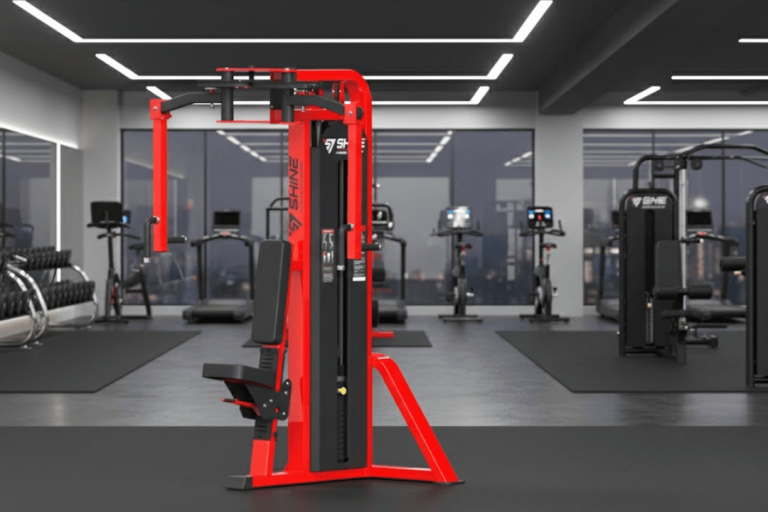
- Chest press or multi press station. Guided pressing is safer than a free-weight bench when there is no spotter available, which is the normal situation in a hotel.
- Leg press or leg extension station. Lower-body training with a controlled path and no barbell handling, appropriate for unsupervised use.
- Stretching and functional area. Mats, a mirror, resistance bands and a small stability ball. This is the least expensive item on the list and consistently among the most used.
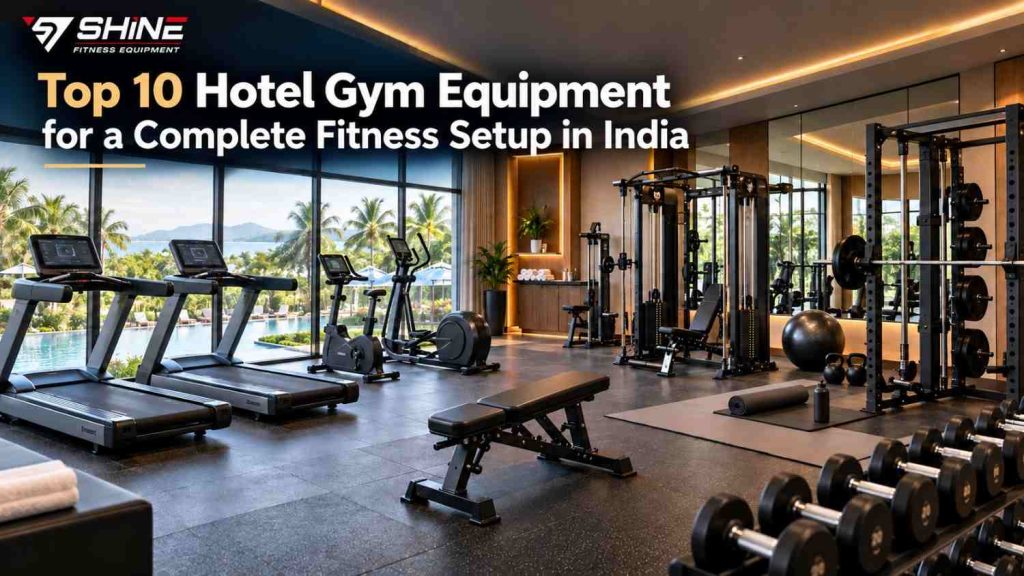
Cardio dominates the top of this hotel gym equipment list because it is what guests expect and needs no explanation. Strength stations then broaden the room’s appeal without adding supervision risk. A capable resort gym equipment specification generally follows the same order, with more duplication of cardio at larger properties.
Scaling the Setup to Your Property
| Property size | Approximate area | Core equipment focus | Typical omissions |
| Boutique, under 40 keys | Compact single room | Treadmill, bike, dumbbells, adjustable bench, functional trainer | Dedicated leg stations, duplicate cardio |
| Mid-size, 40 to 120 keys | Dedicated fitness room | Add cross trainer, lat pulldown, chest press, stretching area | Free-weight platforms, specialist machines |
| Large hotel or resort, 120 keys plus | Separate zones | Duplicate cardio, full selectorised circuit, functional zone | Little omitted; layout becomes the constraint |
Treat this as a starting framework for hotel gym equipment rather than a prescription. Occupancy pattern matters as much as key count: a business hotel with high single-occupancy midweek demand needs more cardio than a leisure resort of the same size.
Planning a Small Hotel Gym
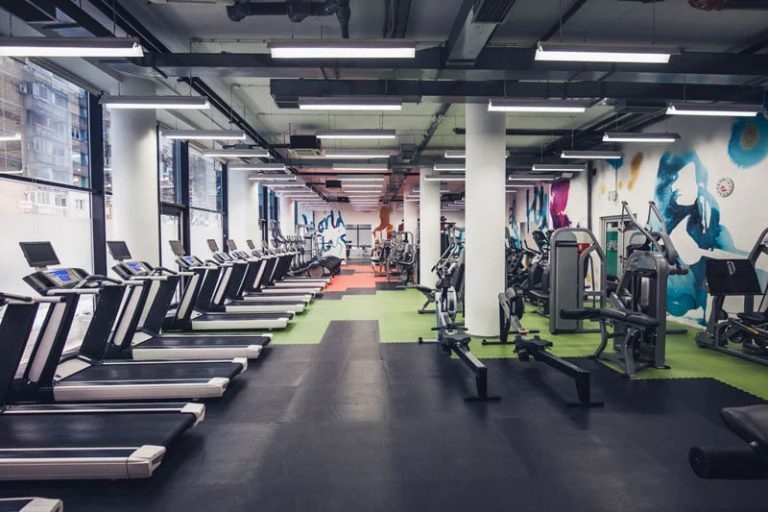
Compact facilities succeed or fail on layout rather than on how much hotel gym equipment they contain. A small hotel gym with three well-chosen machines and clear circulation feels better than a cramped room holding six.
- Prioritise multi-function equipment. In a small hotel gym a functional trainer or multi-station replaces several single-purpose machines and covers pushing, pulling and lower-body work in one footprint.
- Protect circulation space. Leave clear walking routes between stations; guests carrying towels and bottles need more room than trained members do.
- Use mirrors deliberately. They help guests self-correct technique without supervision and make a small room feel considerably larger.
- Keep cardio near natural light. Where a window exists, face treadmills and bikes toward it, consistently the most appreciated layout decision in guest feedback.
- Plan for storage. Mats, bands and dumbbells left on the floor make a small room look neglected and create trip hazards.
Hotel Gym Design and Compliance Considerations
Good hotel gym design is as much about the room as the machines. Ventilation matters more in fitness areas than almost anywhere else in a hotel, and poor air quality is among the most frequent guest complaints.
Flooring must handle point loads and absorb impact. Rubber flooring of adequate thickness protects the slab, reduces noise transmission to rooms below and improves grip. Ceiling height needs checking before you specify any cable tower or rack, since these need meaningful clearance above the top pulley.
Access control, emergency contact details, signage on machine use and a visible policy on unsupervised training all belong in the plan. Many properties also restrict access hours or ask guests to acknowledge terms at check-in. For general background on how fitness facilities are organised and regulated, the Wikipedia overview of health clubs offers a useful starting point, though you should confirm requirements with local authorities and your insurer.
What to Look For in Each Piece of Hotel Gym Equipment
- Commercial duty rating. Domestic-rated hotel gym equipment fails quickly under multi-user loading, even at modest occupancy. Confirm the rating in writing.
- Guided movement paths. Selectorised and plate-loaded machines with fixed paths reduce injury risk where no staff are present.
- Simple, visible adjustment. Pop-pins and clearly numbered positions beat mechanisms that need explanation.
- Quiet operation. Fitness rooms are often adjacent to guest rooms or meeting spaces. Belt drives, sealed bearings and quality flooring all reduce transmitted noise.
- Serviceability. Ask which parts are consumable, whether they are stocked locally, and what the realistic response time is at your location.
- Appearance and finish. Guests judge quality visually. Powder-coated frames and commercial upholstery hold their appearance far longer than budget alternatives.
Common Mistakes in Hotel Gym Setups
- Buying domestic equipment to save capital. It fails within a year or two under multi-user loading, and replacement plus downtime costs more than specifying correctly at the outset.
- Over-investing in strength and under-investing in cardio. Guest usage consistently favours cardio, and most complaints concern too few treadmills rather than too little hotel fitness center equipment.
- Ignoring maintenance scheduling. A planned service routine prevents the visible breakdowns that generate reviews. Build it into housekeeping or engineering rounds.
- Forgetting the small items. Towels, water, sanitising wipes, a clock and working air conditioning shape guest perception as much as the machines.
- Leaving hotel gym design until last. Fitting hotel gym equipment into whatever space remains after everything else is allocated produces cramped, poorly ventilated facilities.
Budgeting and Phasing
A sensible hotel gym setup does not have to be delivered in one purchase. Install core hotel gym equipment cardio plus one multi-function strength station first, monitor usage for a few months, then add equipment where demand is demonstrated. Keycard access data and simple usage logs give you evidence rather than assumptions.
Plan a replacement cycle from the beginning. Cardio wears out sooner than strength-based hospitality gym equipment, so treating them as a single capital block distorts your budgeting. An annual maintenance and consumables allowance keeps the facility presentable between capital cycles.
Conclusion
Effective hotel gym equipment selection comes down to a short, deliberate list installed properly rather than a long one squeezed into inadequate space. Lead with cardio, add guided-path strength stations guests can use without instruction, protect circulation space, and specify commercial-rated hotel gym equipment that still looks and works well in five years. Scale the selection to your property size and occupancy pattern, and phase the investment where demand is uncertain.
If you are planning a new facility or refreshing an existing one, start by measuring your available area and ceiling height, then map expected guest usage against the hotel gym list above before requesting quotations. Explore the Shine Fitness commercial range or contact the team for a hotel gym setup recommendation based on your floor plan and property size.
Frequently Asked Questions
What should a minimum hotel gym list include for a small property?
A treadmill, an upright or recumbent bike, an adjustable dumbbell set with rack, an adjustable bench and a functional trainer cover most guest expectations. Add a stretching area with mats and mirrors if any space remains.
How much space does a hotel gym need?
Space depends on the equipment count rather than key count, and each machine needs clearance for entry, exit and full range of motion plus circulation. Cable towers and racks also require meaningful ceiling height, so verify that before specifying.
Should hotels buy commercial or home-grade equipment?
Always commercial-rated hotel fitness center equipment. Domestic machines are engineered for a few sessions a week by one household and fail quickly under multi-user hotel loading, making them more expensive once replacement and downtime are counted.
Do hotel gyms need supervision?
Most Indian hotels operate unsupervised fitness rooms, which is why guided-path machines, clear signage, accessible emergency contact details and controlled access hours are important. Confirm requirements with your insurer and local authorities.
What resort gym equipment differs from a city hotel?
Resort gym equipment serves longer stays and more leisure use, so it benefits from duplicated cardio, a functional training zone and outdoor or open-air options. City business hotels concentrate demand into early mornings and need more cardio capacity per key.
How often should hotel gym equipment be serviced?
Daily cleaning and visual checks, monthly inspection of cables, fasteners and belts, and a scheduled professional service at the manufacturer’s recommended interval. Documented maintenance also protects warranty cover on most commercial machines.
Can a hotel gym improve guest ratings?
A clean, well-ventilated room with functioning hotel gym equipment is regularly cited in positive reviews, while broken machines and poor air quality appear in negative ones. The facility’s condition tends to matter more to guests than its size.