The lat pulldown machine is the most reliable way to build vertical pulling strength for anyone who cannot yet perform controlled pull-ups, and it stays in trained lifters’ programmes for the same reason: it loads the lats through a full range with adjustable resistance. This guide covers setup and execution, which muscles the movement trains, how grip changes the stimulus, the most useful variations, and the errors that quietly limit back development.
What the Lat Pulldown Machine Does
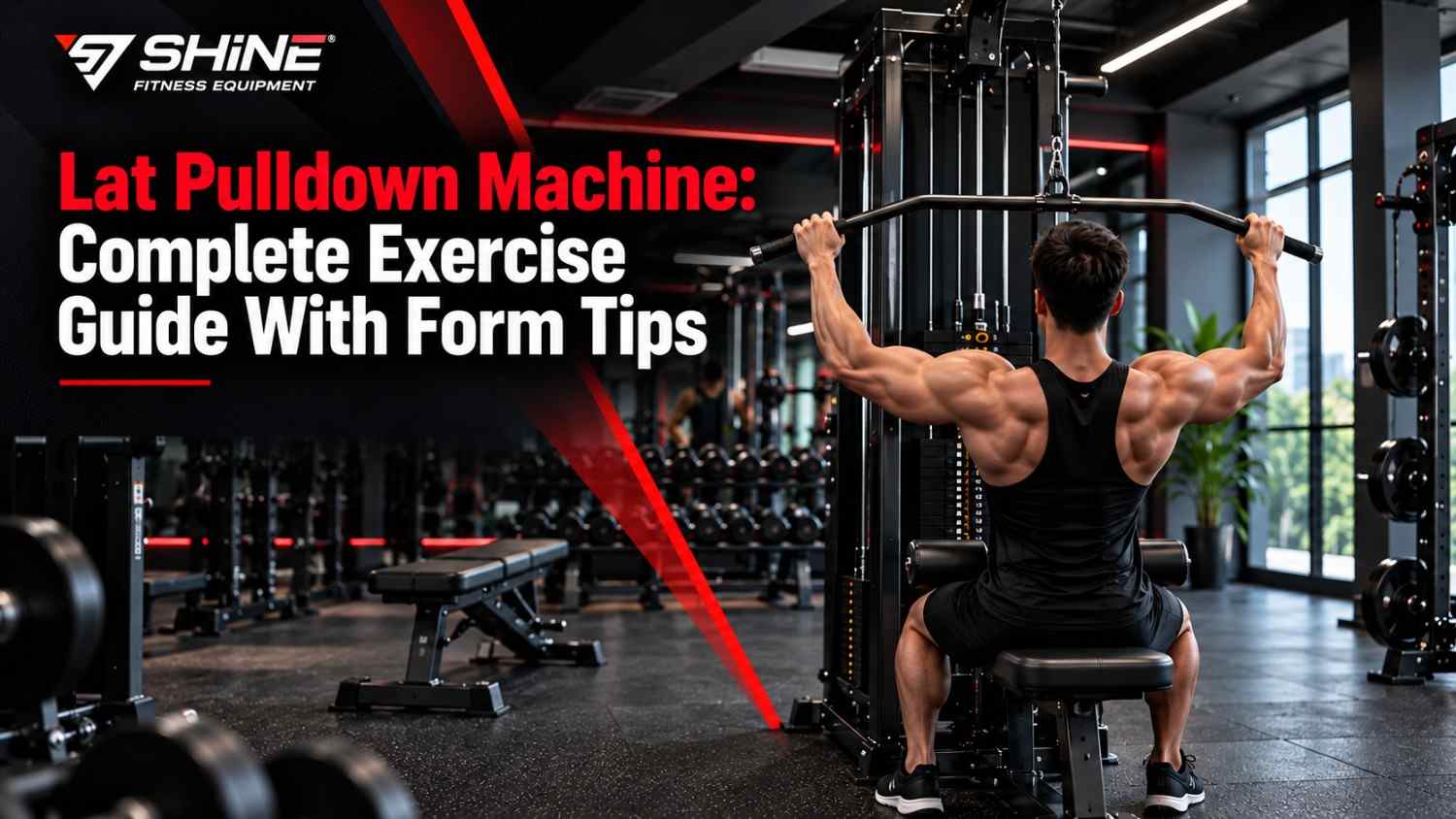
The station uses a high pulley, a weight stack and a thigh restraint pad. You pull a bar or handle down toward the upper chest while the pad anchors your body against the upward force. Because the load path is fixed and resistance is selectable in small increments, progression is far easier to manage than with bodyweight pulling.
That controllability is the point. A pull down machine lets a beginner train the same movement pattern as a pull-up at 30 percent of their bodyweight, and lets an advanced lifter push past their bodyweight with strict tempo work. Both are difficult to achieve with a bar alone.
A commercial cable lat pull down machine typically pairs the pulldown station with a low pulley, so a single footprint covers both vertical and horizontal pulling. This is why the lat pulldown machine is usually among the first pieces specified when a gym plans its back and pulling area.
Lat Pulldown Muscles Worked
Understanding the lat pulldown muscles worked on a lat pulldown machine helps you judge whether your technique is actually training what you intend. The movement is a shoulder adduction and extension pattern with elbow flexion, so several muscles contribute.
- Latissimus dorsi. The primary mover, bringing the upper arm down and toward the midline. It is the largest back muscle and the reason the exercise exists.
- Teres major and posterior deltoid. Assist shoulder extension and adduction alongside the lats.
- Rhomboids and middle trapezius. Control scapular retraction and depression, especially early in the pull.
- Biceps brachii and brachialis. Flex the elbow. When they dominate, the arms fatigue before the back does.
- Lower trapezius. Stabilises the shoulder blade against upward rotation throughout the movement.
The lat pulldown muscles worked shift slightly with grip and torso angle, but the lats remain the target in every version. For anatomical background, the the latissimus dorsi covers its origin, insertion and function.
Correct Lat Pulldown Form, Step by Step
Good lat pulldown form begins before the first repetition. Adjust the thigh pad so it sits firmly against your legs with no vertical play if your hips lift under load, the pad is too high.
- Set the seat and pad. Sit tall, feet flat, knees at roughly ninety degrees. The bar should be reachable with arms fully extended overhead.
- Establish the grip. Take the bar slightly wider than shoulder width. Wrap the thumb around it and keep the wrists neutral rather than bent back.
- Set the torso. Lean back ten to fifteen degrees and hold that angle. Chest up, ribs down, core braced, no swinging.
- Initiate with the shoulder blades. Depress and slightly retract the scapulae before the elbows bend. This single cue is the biggest difference between a back exercise and an arm exercise.
- Pull to the upper chest. Drive the elbows down and back until the bar nears the collarbone, stopping where shoulder position stays stable.
- Control the return. Take two to three seconds back to full overhead extension, letting the shoulder blades rotate upward without losing torso position.
Lat pulldown form is judged by control, not by load. If the weight cannot be returned slowly under tension, it is too heavy regardless of how many repetitions you complete.
Lat Pulldown Grips and How They Change the Stimulus
Grip is the fastest way to change the stimulus on a lat pulldown machine without changing stations. Different lat pulldown grips shift elbow path, forearm involvement and the degree of lat stretch at the top.
| Grip | Elbow path | Emphasis | Best suited for |
| Wide overhand | Flared, moves laterally | Upper lats, teres major | Building back width |
| Shoulder-width overhand | Moderate flare | Balanced lat and mid-back | General back development |
| Close neutral (V-handle) | Tight to torso | Lower lats, greater range | Lifters with shoulder discomfort |
| Underhand (supinated) | Close to body | Lats with high biceps input | Progressing toward chin-ups |
| Single-arm neutral | Independent per side | Correcting side-to-side imbalance | Unilateral work and rehabilitation |
A wider grip is not automatically better for width. Past a point the range shortens and the elbows finish in a weak position, so most lifters gain more from a moderate grip through a full range. Rotating lat pulldown grips every few blocks beats hunting for one optimal hand position.
Useful Lat Pulldown Variations
Once your baseline technique is stable, lat pulldown variations let you keep progressing on the same lat pulldown machine without adding new equipment.
- Single-arm pulldown. Trains each side independently, exposing and correcting strength differences that a bilateral bar hides.
- Kneeling pulldown. Removes the thigh pad and forces the core to resist extension, useful for athletes.
- Paused pulldown. A one to two second hold under full contraction builds positional strength and improves control.
- Tempo eccentric pulldown. A four to five second return under load increases time under tension without heavier weights.
- Straight-arm pulldown. Performed at a high pulley with minimal elbow bend, isolating the lats with almost no biceps contribution.
A common approach is to run a standard grip as the main movement, then use one of these lat pulldown variations as a secondary exercise for four to six weeks before switching.
Programming the Movement Sensibly
Two vertical pulling sessions a week suits most lifters. Three to four sets of eight to twelve repetitions works well for hypertrophy, while lower repetition strength work is better served by weighted pull-ups where available.
Pair the lat pulldown machine with horizontal pulling rather than treating it as a complete back session. Rowing develops the mid-back thickness that pulldowns alone will not, which is why well-planned back workout machines in a commercial facility include both a pulldown station and a dedicated row.
Add weight to the stack only once you can complete every prescribed repetition with a controlled eccentric and a stable torso angle. Chasing the stack is the fastest route to compensatory technique.
Common Mistakes That Limit Results
Most lat pulldown machine errors are setup problems rather than effort problems.
- Pulling behind the neck. This forces extreme external rotation and horizontal abduction, placing the shoulder in a vulnerable position with no additional benefit over a front pulldown.
- Excessive torso swing. Rocking backward turns the movement into a poor row and strips tension from the lats exactly where they should work hardest.
- Bending the wrists. Curling the wrists over the bar recruits the forearms and dulls lat engagement. Keep a neutral, hook-like grip.
- Cutting the top range. Stopping short of full overhead extension removes the stretched position where much of the growth stimulus occurs.
- Ignoring the thigh pad setting. A loose pad allows the hips to rise and quietly reduces the load actually applied to the back.
Choosing a Lat Pulldown Machine for a Facility
If you are specifying a lat pulldown machine rather than training on it, a few features matter disproportionately. Thigh pad adjustability decides whether the station serves users of very different heights. Pulley diameter and cable grade decide how smooth the movement feels after two years of daily use, and stack increment size decides how finely members can progress.
Combination units are worth considering where floor space is limited. A lat pull down machine with an integrated low row covers both pulling directions in a single footprint, which is often the difference between fitting a complete back area into a compact studio and leaving a gap in the programme. Frame rigidity matters just as much: a stable lat pull down machine keeps the bar path consistent and prevents the flex that makes heavy sets feel unsafe. When you plan back workout machines as a group rather than individually, these overlaps become easier to spot.
Conclusion
The lat pulldown machine rewards precision far more than it rewards load. Set the thigh pad firmly, hold a consistent torso angle, initiate every repetition from the shoulder blades and control the return through a full overhead stretch, and the exercise will develop back width more effectively than any amount of heavier, sloppier work. Rotate grips and variations across training blocks, pair it with rowing, and progress the stack only when technique holds. Among back workout machines, few give a better return for the floor space they occupy.
If you are equipping or upgrading a training floor, assess your available space, expected user volume and whether a combined pulldown-and-row station would serve your members better than two separate units. Review the Shine Fitness strength equipment range or speak with the team for guidance based on your facility layout.
Frequently Asked Questions
Is the lat pulldown machine as effective as pull-ups?
Both train the same movement pattern, and the lat pulldown machine allows precise load selection, higher repetition ranges and controlled eccentrics. Pull-ups add greater core and grip demand, so most balanced programmes include both rather than choosing one.
What muscles does the lat pulldown work?
The latissimus dorsi is the primary target, supported by the teres major, posterior deltoid, rhomboids, middle and lower trapezius, and the elbow flexors. Grip and torso angle shift the emphasis slightly between these muscles.
Should I pull the bar in front or behind my neck?
Pull in front, to the upper chest. Behind-the-neck pulldowns place the shoulder in extreme external rotation without any training advantage, and they are difficult to perform safely with meaningful load.
How wide should my grip be?
Slightly wider than shoulder width suits most lifters. Very wide grips shorten the range of motion and weaken the finishing position, while narrow neutral grips increase range and often feel more comfortable for the shoulders.
Why do I feel the lat pulldown in my arms?
Usually because the elbows begin bending before the shoulder blades depress. Initiate each repetition by pulling the shoulder blades down, then let the elbows follow, and reduce the load until that sequence is reliable.
How many sets and reps should I do?
Three to four sets of eight to twelve repetitions twice a week suits most goals. Prioritise a controlled three-second return over adding weight, and increase load only when every repetition meets that standard.
Can beginners use a lat pulldown machine safely?
Yes. A lat pulldown machine is one of the more beginner-friendly back exercises because the load path is fixed and the resistance is adjustable. A short technique briefing on seat height, pad setting and scapular initiation is enough to start safely.