Every gym owner eventually faces broken equipment. A frayed cable, a squeaking pulley, torn upholstery, or a loose bolt can shut down a station and lose you members. This gym equipment repair guide walks you through the most common problems, the tools you need, and step-by-step DIY fixes that keep your gym running without waiting weeks for a technician. Most gym equipment repair jobs are surprisingly straightforward once you understand how each machine is put together – and doing them yourself saves both money and downtime.
Whether you run a commercial gym, a boutique studio, or a serious home setup, this guide will help you diagnose issues fast, decide when to fix and when to call a professional, and keep your machines in top condition for years. Let us start with the tools every gym owner should keep on hand.
Essential Tools for Gym Equipment Repair
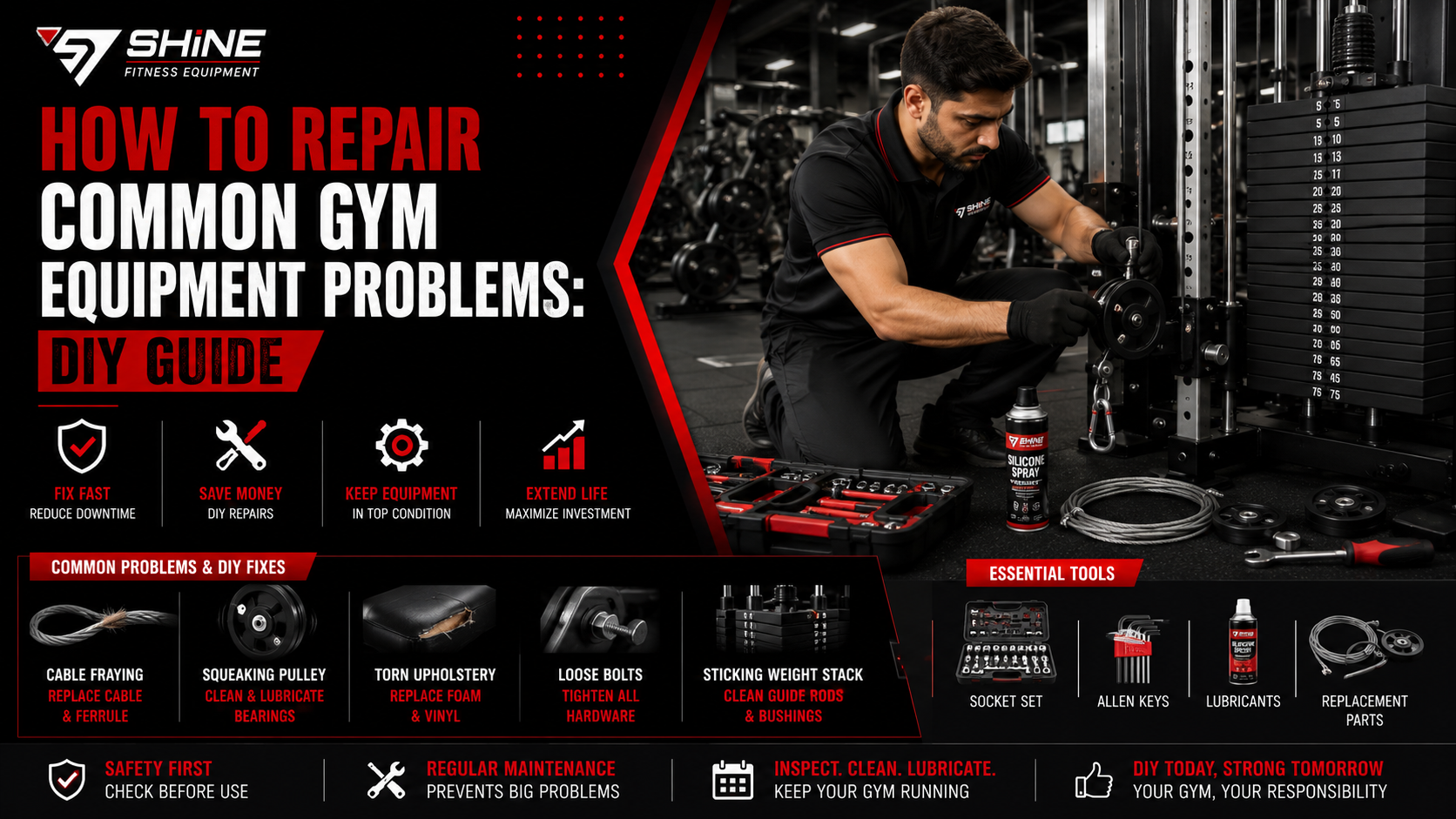
Before you attempt any gym equipment repair, build a proper toolkit. Basic gym equipment maintenance does not need exotic tools – most jobs need standard mechanic gear. Keep this kit near your service room so problems get fixed the day they appear, not the week after.
- Metric socket and wrench set (10 mm to 24 mm covers most machines)
- Allen key set – both metric and imperial
- Rubber mallet, phillips and flathead screwdrivers
- Silicone spray, white lithium grease, and a light machine oil
- Replacement cables, snap hooks, and thimbles kept in inventory
- Multimeter for any equipment with electronic consoles
Cable and Pulley System Repairs
Cable issues are the number one gym equipment repair call. Fraying, snapping, and slipping are common on cable machine repair jobs across commercial gyms. Inspect cables weekly by running a rag along the length – any snags on the rag mean the cable is starting to fray and should be replaced before it fails under load.
How to Replace a Frayed Cable
Cable replacement is one of the easier gym equipment repair jobs. Follow this sequence:
- Unload all weight plates and lower the weight stack to the bottom
- Remove the handle or attachment from the working end of the cable
- Trace the cable back through each pulley – take photos as you go
- Detach the ferrule at the weight stack anchor point
- Feed the new cable through in reverse order, matching the original path
- Re-attach the ferrule, load a light weight, and test full range twice
Fixing Squeaking or Sticky Pulleys
A squeaking pulley almost always means dry bearings or trapped dust. Remove the pulley cover, wipe the axle clean, and apply a small drop of light machine oil to each bearing. Avoid over-lubricating – excess oil attracts dust and creates a worse problem within weeks. If the squeak returns quickly, the bearing itself has failed and needs replacement.
Bench and Rack Frame Repairs
Frame issues on benches and racks are usually cosmetic – scratched paint, loose bolts, or torn padding. For serious frame problems like cracks or bent welds, contact your gym equipment manufacturer rather than attempting a DIY weld. But for the common gym bench repair jobs like tightening hardware and replacing pads, you can handle everything in-house.
Loose Bolts and Rattles
Every month, walk your gym floor with a socket set and check every visible bolt. Vibration and shifting loads slowly loosen hardware. Tighten to snug – do not over-torque or you will strip the thread. Rattling adjustable benches usually just need the pivot bolt and locking pin tightened.
Replacing Torn Upholstery
Torn or cracked upholstery is a common gym equipment repair task. Most benches use a plywood backing with foam and vinyl. Unscrew the pad from the frame, peel back the vinyl, replace the foam if compressed, and staple new vinyl tight around the back. High-density foam and marine-grade vinyl last three to four years in commercial settings.
Common Problems and Quick Fixes
Here is a quick reference table for the most common gym equipment repair calls and what to check first.
| Problem | Most Likely Cause | DIY Fix |
| Cable slipping | Worn ferrule or loose pulley | Replace ferrule, tighten pulley |
| Squeaking motion | Dry bearing or dirty rod | Clean and light lubrication |
| Weight stack sticks | Bent guide rod or bushing | Clean rod, replace bushing |
| Loose adjustment pin | Worn detent spring | Replace pin assembly |
| Wobbly bench | Loose frame bolts | Tighten all hardware |
| Handle grip peeling | UV or sweat degradation | Replace grip sleeve |
Weight Stack Guide Rod Problems
Guide rods on weight stacks are precision components. When strength training machines start to feel notchy or catch during a set, the guide rods usually need cleaning and light re-lubrication. This is one of the highest-impact gym equipment repair jobs because it directly affects the user experience of every workout.
Cleaning and Lubricating Guide Rods
Unload all weight plates. Wipe both guide rods top to bottom with a clean cotton rag soaked in isopropyl alcohol. Dry them fully. Apply a very light coat of silicone spray or white lithium grease – a thin film only. Run the weight stack up and down several times to distribute. Skip this step and the stack becomes gritty within weeks.
Lat Pulldown and Row Machine Repairs
The lat pulldown machine takes constant hard pulls and often shows wear first on the swivel above the seat. When the swivel starts creaking or the cable begins twisting oddly, remove and repack the swivel bearing with fresh grease. It is a ten-minute gym equipment repair job that most owners keep putting off until the cable actually breaks.
Knee Pad and Thigh Roller Wear
Knee pads on lat pulldowns get crushed and cracked over time. Replacement pads are inexpensive and universally sized. Unscrew the old pad, thread on the new one, and tighten the retention nut. Do the same for leg extension roller pads.
Functional Trainer Cable Servicing
A functional trainer typically has two long cables travelling through many pulleys. This makes gym equipment repair on functional trainers more involved than on single-station machines. Inspect the cable path monthly and photograph the routing before you disassemble anything. The photo will save you when reassembling.
Pulley Swivel and Bracket Checks
Adjustable pulley brackets on functional trainers rely on locking pins that wear over years of use. If a bracket wobbles at any height setting, the pin sleeve is worn and needs replacement. Order the exact spare from your manufacturer – universal parts rarely fit precisely and can create safety issues.
When to Stop DIY and Call a Professional
DIY gym equipment repair has clear limits. Call a professional immediately if you see:
- Any crack in a weight-bearing weld or frame tube
- Bent or twisted guide rods, safety spotter arms, or J-hooks
- Electronic console failures on treadmills or ellipticals
- Hydraulic seat cylinder leaks on commercial benches
- Any repair that would void your warranty if attempted in-house
Sourcing the Right Spare Parts
Successful gym equipment repair depends on having the right gym equipment parts available fast. Build a small parts inventory of the items that fail most often – cables, ferrules, snap hooks, upholstery pads, and bearing kits. This turns a week-long outage into a one-hour fix.
Always buy replacement parts from the original manufacturer where possible. Off-brand cables and ferrules often fail early or do not match the load rating of the original spec. The saving of a few hundred rupees can cost you a much bigger repair down the line.
Preventive Maintenance Schedule
The best gym equipment repair is the one you avoid. Set up a simple preventive maintenance calendar and follow it religiously.
- Daily – wipe all upholstery, handles, and touch points with disinfectant
- Weekly – inspect all cables end to end for fraying or twist
- Monthly – walk the floor with a socket set and tighten every visible bolt
- Quarterly – lubricate all pulley bearings and guide rods
- Annually – professional service call for full inspection and warranty check
Need Professional Help or Genuine Spares?
Some gym equipment repair jobs are too complex, too dangerous, or too critical to try in-house. When that is the case, work with a manufacturer who has real service infrastructure. At Shine Fitness, we stock genuine spares for every machine we build and offer factory-trained service support across India. Reach out through our contact page for repair support, spare parts, or annual maintenance contracts on your setup.
Conclusion
Most gym equipment repair jobs are well within reach of a competent gym owner with a basic toolkit and a systematic approach. Cable replacement, bolt tightening, upholstery renewal, and pulley cleaning are all doable in-house and dramatically extend the life of your machines. Reserve professional service for structural, electrical, and hydraulic issues where DIY carries safety risks. The single biggest factor that separates gyms with reliable equipment from those constantly out of service is a preventive maintenance routine that runs whether or not anything is broken. Build the routine, keep spare parts in stock, and gym equipment repair goes from being a stressful emergency to a quick, planned task that keeps your members happy for years.
Frequently Asked Questions (FAQ)
1. How often should I inspect gym equipment for repair issues?
Inspect visually every day, run through cables and hardware weekly, and do a thorough monthly check with hands-on testing. Preventive inspection catches most issues before they become failures.
2. How much does professional gym equipment repair cost in India?
A service visit typically ranges from ₹1,500 to ₹5,000 depending on distance and complexity, plus parts. Annual maintenance contracts often work out cheaper for busy commercial gyms with multiple machines.
3. Can I use car grease or WD-40 on gym equipment?
Avoid WD-40 as long-term lubricant – it evaporates and attracts dust. Use silicone spray for rods, white lithium grease for bearings, and a light machine oil for small pivots. Car grease is too thick for most gym machine applications.
4. How long do gym cables usually last?
Cables in commercial gyms typically last one to three years depending on quality and load. In home settings, expect five to seven years. Replace at first sign of fraying – do not wait for a break.
5. Is it safe to weld a cracked gym equipment frame?
Only if done by a certified welder familiar with load-bearing structures – and only after consulting the manufacturer. Improper welding can create a false repair that fails catastrophically under load. Frame cracks usually mean the machine should be replaced or professionally rebuilt.
6. What is the most common gym equipment repair issue?
Cable fraying and pulley squeaking together account for over half of all commercial gym service calls. Both are preventable with weekly inspection and monthly light lubrication.
7. Do I need special training to do gym equipment repair?
Not for basic repairs. Cable replacement, hardware tightening, and pad replacement can be learned in an afternoon. For anything involving electronics, hydraulics, or welding, hire a trained technician.