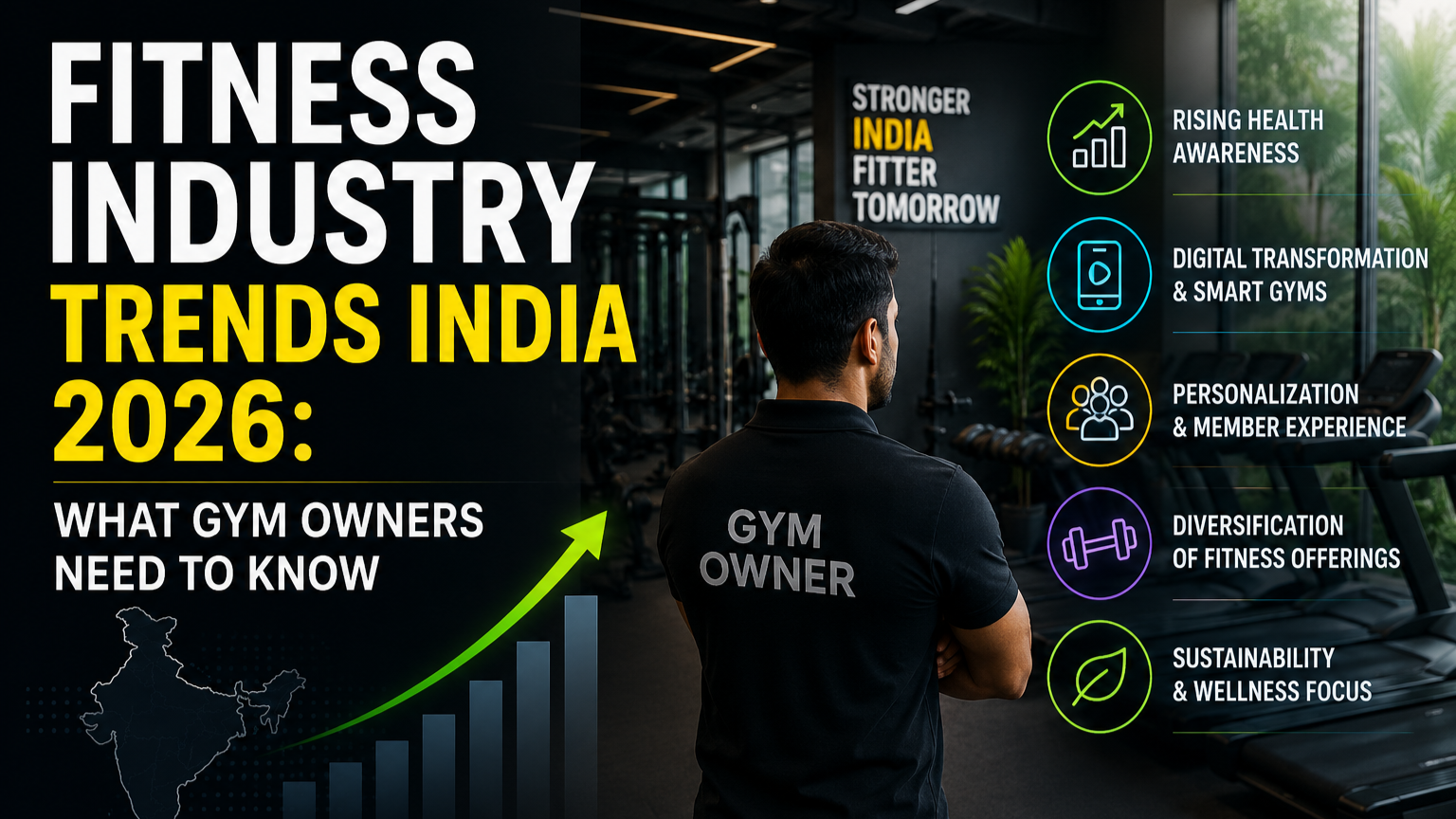
India’s fitness sector has shifted from a niche urban interest into a fast-moving, technology-driven industry, and 2026 is proving to be a defining year. For anyone planning to open a facility, expand a chain, or refresh an aging floor, understanding where the market is heading matters just as much as choosing the right gym equipment manufacturer to build it with. The decisions made this year on technology, layout, and equipment quality will shape member experience and profitability for the next decade.
The numbers tell a clear story. India’s fitness equipment market was valued at roughly USD 793 million in 2024 and is projected to grow at around 10% annually through the early 2030s, according to IMARC Group estimates. Paid gym memberships have reached an estimated 13.6 million and are expected to nearly double by 2030. Behind that demand sits a maturing supply chain of manufacturers, distributors, and facility operators all competing to meet rising buyer expectations.
This guide breaks down the trends that actually matter for gym owners in 2026 what’s driving them, where the opportunities sit, and how to make smart equipment and investment decisions as the market evolves.
The State of India’s Fitness Market in 2026
Before getting into specific trends, it helps to understand the scale of what’s happening. India now has roughly 46,500 fitness facilities, and that figure is forecast to climb toward 65,500 by 2030. Growth is no longer concentrated only in metros; tier-2 and tier-3 cities are emerging as some of the most active expansion zones.
Several forces are pushing this growth at once:
- Rising health awareness, partly driven by lifestyle disease and post-pandemic priorities
- Higher disposable incomes and a young, fitness-curious population
- Corporate wellness programs subsidizing memberships and equipment
- Franchise and investor interest fueling new gym openings
- The normalization of fitness as a community and social activity
For equipment buyers, this means demand is strong but expectations are higher than ever. Members walking into a gym in 2026 expect well-maintained, modern, and often connected machines. That raises the bar for every facility owner and, by extension, for every fitness equipment manufacturer supplying them.
Trend 1: Smart and Connected Fitness Equipment
If there’s a single headline trend for 2026, it’s connectivity. The American College of Sports Medicine ranked wearable technology as its number one global fitness trend for the year, and that data-first mindset is reshaping the machines on the gym floor too.
Smart and connected equipment treadmills, bikes, and strength systems with screens, sensors, and app integration now represents the largest share of the smart fitness segment globally. These machines track performance, deliver on-demand classes, and sync with members’ wearables to build unified health profiles.
What this means for gym owners
- Members increasingly expect equipment that talks to their phones and watches
- Connected machines support retention by gamifying progress and personalizing workouts
- Data from equipment can inform programming, staffing, and floor layout decisions
The practical takeaway is that smart fitness technology is moving from a premium add-on to a baseline expectation, especially in urban and boutique facilities. When evaluating new purchases, it’s worth asking manufacturers how their equipment handles connectivity, software updates, and data integration.
Trend 2: Hybrid Training and the Home Gym Boom
The line between the commercial gym and the home setup keeps blurring. Hybrid fitness where members combine in-person sessions with at-home and virtual workouts has become a permanent fixture rather than a pandemic holdover. Consumers now expect flexibility: a connected machine on a busy weekday at home, the full gym experience on weekends.
This has two consequences for the industry. First, home gym trends are pushing demand for compact, durable, well-engineered equipment that doesn’t feel like a downgrade from commercial gear. Second, gyms are responding by offering app-based programming and community features to stay relevant outside their four walls.
For manufacturers, the hybrid shift has expanded the market. The same engineering principles that make a commercial machine reliable—solid frames, smooth resistance, quality materials are now sought after by serious home buyers willing to invest once in equipment that lasts.
Trend 3: Strength Training Takes Center Stage
Cardio built the Indian fitness market, but strength training is increasingly driving it. There’s a clear cultural shift toward resistance work for muscle health, longevity, and functional capacity rather than aesthetics alone. ACSM has highlighted progressive, inclusive strength training as a leading trend, with growing emphasis on making it accessible to all ages and abilities.
For gym owners, this changes the equipment mix. A floor that’s heavy on treadmills and light on quality strength stations risks feeling dated. The trend favors:
- Plate-loaded and selectorized strength training equipment
- Functional training rigs and free-weight zones
- Specialized stations, from abdominal exercise machines to lower-body isolation units
- Multi-functional setups that maximize output per square foot
Commercial gym equipment is being chosen for versatility and durability, since strength stations see constant, heavy use. This is exactly where product engineering and material quality separate a machine that lasts a decade from one that wears out in a year.
Trend 4: Recovery, Wearables, and Data-Driven Workouts
Fitness in 2026 is as much about recovery as effort. Wearables that track heart rate variability, sleep, and recovery readiness are helping members and trainers avoid overtraining and program smarter. Recovery tools like compression therapy, percussion devices, and infrared options are appearing in facilities as add-on revenue streams.
The broader theme is data-driven training. With a large share of members now using apps and wearables to monitor progress, gyms that can plug into that ecosystem hold an advantage. For equipment buyers, it reinforces the value of machines that capture and share usage data, and of facility designs that include dedicated recovery and stretching zones.
Trend 5: Expansion Into Tier-2 and Tier-3 Cities
Some of the most promising gym business growth opportunities in 2026 sit outside the major metros. Rising incomes and awareness in smaller cities are creating demand that’s still underserved. Franchise models and investor backing are accelerating this expansion.
For new operators in these markets, equipment strategy is critical:
- Prioritize durability over novelty. Service networks may be thinner outside metros, so reliable machines reduce downtime.
- Choose a manufacturer with strong support. Spare parts availability and responsive service matter more when you’re farther from a major hub.
- Balance the floor. A practical mix of cardio, strength, and functional equipment serves a broad first-time membership base.
- Plan for growth. Modular layouts and scalable supplier relationships make future expansion smoother.
A capable gym machine manufacturer that can deliver consistently across regions becomes a genuine business partner in these markets, not just a vendor.
Trend 6: Sustainability, Customization, and Active Aging
A few quieter trends are worth watching because they shape buyer decisions in 2026:
- Sustainability. Eco-friendly materials and energy-conscious equipment are gaining traction as both consumers and operators factor environmental impact into purchasing.
- Customization. Gyms increasingly want equipment that reflects their brand custom upholstery colors, logos, and configurations that create a distinct identity.
- Active aging and inclusive fitness. Programs for older adults and diverse populations are expanding, raising demand for equipment with intuitive adjustments, comfortable ergonomics, and accessible designs.
These trends point toward manufacturers who offer flexibility and thoughtful engineering rather than one-size-fits-all catalogs.
What These Trends Mean for Gym Owners and Buyers
Trends are only useful if they translate into better decisions. Here’s how to apply them when planning a purchase or a new facility.
How to Evaluate a Gym Equipment Manufacturer
The manufacturer you choose affects your gym for years through reliability and support. When comparing options, look at:
- Manufacturing technology and capability—modern fabrication, precision finishing, and in-house quality control
- Track record—years in the industry and a visible base of established clients
- After-sales support—warranty terms, spare parts availability, and service responsiveness
- Safety and compliance—equipment built to recognized durability and safety standards
- Scalability—the ability to deliver consistently as your business grows
Ask for references, request to see units in working facilities, and pay attention to how openly a supplier discusses materials and construction.
What Defines High-Quality Equipment
Across cardio equipment production and strength machine manufacturing alike, the fundamentals are consistent:
- Heavy-gauge steel frames with clean, strong welds
- Commercial-grade upholstery, sealed bearings, and corrosion-resistant finishes
- Smooth, consistent resistance from quality cables and pulleys
- Comfortable, adjustable ergonomics that encourage correct use
- Clear safety features and stable footprints
These details determine whether a machine survives years of heavy traffic or develops problems within months. Maintenance and reliability—accessible service points, replaceable pads, standardized parts directly affect your total cost of ownership.
Planning Your Gym Investment
Smart equipment buying in 2026 comes down to a long-term lens:
- Match your equipment mix to current demand strength, functional, connected cardio, and recovery.
- Weigh upfront cost against durability; reliable machines protect revenue by minimizing downtime.
- Factor in connectivity and member experience, not just specifications.
- Build a relationship with a manufacturer who can support you as you scale.
Equipment that holds up is equipment that keeps earning. That principle hasn’t changed even as the technology around it has.
Conclusion
India’s fitness industry in 2026 is defined by smarter equipment, hybrid training, a strong shift toward strength and recovery, and rapid expansion into newer cities. For gym owners, the opportunity is real but so is the need to invest wisely in equipment that’s built to last and supported for the long term. The right choices on technology, durability, and supplier relationships will separate the facilities that thrive from those that struggle to keep up.
That’s where the right partner makes the difference. As an experienced gym equipment manufacturer, Shine Fitness combines robust engineering, premium materials, and a full range of strength, cardio, and functional products designed for India’s demanding commercial market. Trusted as a reliable gym machine manufacturer and fitness equipment manufacturer, and recognized among India’s largest gym equipment manufacturers, the team focuses on building durable, ergonomic equipment that meets the expectations of today’s members and operators.
If you’re planning a new facility, expanding into a growing market, or upgrading to equipment you can count on, it’s worth exploring your options and discussing your specific goals. Reach out for a consultation or product overview, and build your gym around equipment made to perform for years.
Frequently Asked Questions
What are the biggest fitness industry trends in India for 2026?
The leading trends include smart and connected equipment, hybrid in-person and at-home training, a strong shift toward strength and functional fitness, recovery-focused programming, and rapid gym expansion into tier-2 and tier-3 cities. Wearable technology and data-driven workouts also rank highly.
How fast is India’s fitness equipment market growing?
India’s fitness equipment market was valued at around USD 793 million in 2024 and is projected to grow at roughly 10% annually through the early 2030s, according to industry estimates. Rising memberships, home fitness demand, and corporate wellness programs are key drivers.
How do I choose the right gym equipment manufacturer in India?
Evaluate manufacturing capability, industry track record, after-sales service, warranty terms, and safety standards. Ask for references, review existing installations where possible, and confirm the supplier can provide spare parts and scale with your business as it grows.
Is smart fitness equipment worth the investment for a new gym?
For most urban and boutique facilities, yes. Members increasingly expect connectivity and app integration, and smart equipment supports retention through personalization and progress tracking. Balance it against your budget and clientele, and confirm the manufacturer supports software and connectivity reliably.
Which equipment should I prioritize when opening a gym in 2026?
A practical mix works best: connected cardio, a strong selection of strength and functional training equipment, and dedicated recovery space. Prioritize durability and versatility, especially for high-use strength stations, and match your floor to local demand.
Why are tier-2 and tier-3 cities important for gym businesses?
Rising incomes and health awareness in smaller cities are creating strong, underserved demand. These markets offer real growth opportunities, but they reward operators who choose durable equipment and manufacturers with dependable service and parts support.
What makes gym equipment durable enough for commercial use?
Durability comes from heavy-gauge steel frames, quality welds, commercial-grade upholstery, sealed bearings, and corrosion-resistant finishes, combined with smooth resistance systems. Good maintenance access and replaceable parts also extend a machine’s working life under heavy daily use.