The fitness industry has changed a lot over the past decade, and one decision still sits at the top of every gym owner’s checklist: choosing between a treadmill and an elliptical. Both machines remain the backbone of any cardio floor, and picking the right mix can shape how members feel about their workout experience. As more people return to structured exercise and demand better facilities, gym owners are under pressure to invest in cardio equipment that performs well, lasts long, and keeps users safe. Understanding how a treadmill and an elliptical differ in design, function, and long-term value is the first step toward building a gym floor that members trust and keep coming back to.
This guide breaks down the real differences between these two machines, looks at how they are built, and helps you decide what works best for a commercial setting. If you are also weighing this choice for personal use, our guide on whether a treadmill or elliptical trainer is right for you is a helpful companion read.
Why This Comparison Matters for Commercial Gyms
A commercial gym is not a home setup. Machines run for many hours each day, often without long breaks. They face heavy users, mixed fitness levels, and constant wear. Because of this, the choice between cardio machines is not just about preference. It is a business decision that affects member satisfaction, maintenance costs, and the overall reputation of your facility.
Treadmills and ellipticals both deliver strong cardiovascular results, but they serve slightly different needs. Knowing those needs helps you spend your budget wisely and plan a floor that suits your members.
Here is why getting this choice right matters:
- Cardio machines are usually the most used equipment in any gym.
- Poor quality machines lead to frequent breakdowns and unhappy members.
- The right mix improves traffic flow during peak hours.
- Smart buying decisions protect your long-term investment.
Understanding the Treadmill
The treadmill is the most recognized piece of cardio equipment in the world. It offers a simple, natural movement that almost everyone understands: walking, jogging, or running on a moving belt.
Strengths of the Treadmill
Treadmills are popular for good reasons. They suit a wide range of fitness goals and remain a favorite for serious runners and beginners alike.
- They allow high-intensity training, including sprints and incline work.
- They burn a high number of calories during running sessions.
- They support running performance for athletes and event training.
- They offer adjustable speed and incline for progressive workouts.
Things to Consider With Treadmills
Treadmills also come with a few challenges that gym owners should plan for. The running motion places more stress on the joints, which may not suit every member. They also have moving belts and motors, which means more parts that need regular care.
A high-quality treadmill built with strong materials and a reliable motor can handle these demands far better than a budget unit. This is where build quality becomes a deciding factor.
Understanding the Elliptical
The elliptical machine offers a smooth, low-impact workout. The user’s feet stay on the pedals throughout the motion, which removes the hard landing that comes with running.
Strengths of the Elliptical
Ellipticals have grown in popularity because they suit a wide audience, including older members and people recovering from injury.
- They reduce stress on knees, hips, and ankles.
- They work both the upper and lower body at the same time.
- They are easier for beginners and less confident users.
- They allow longer workout sessions with less fatigue.
Things to Consider With Ellipticals
The elliptical motion can feel unnatural to first-time users, and it takes a short adjustment period. It also burns calories slightly differently compared to running, though the gap is small when intensity is matched. For most gyms, the comfort benefit outweighs these minor points.
Treadmill vs Elliptical: A Side-by-Side Look
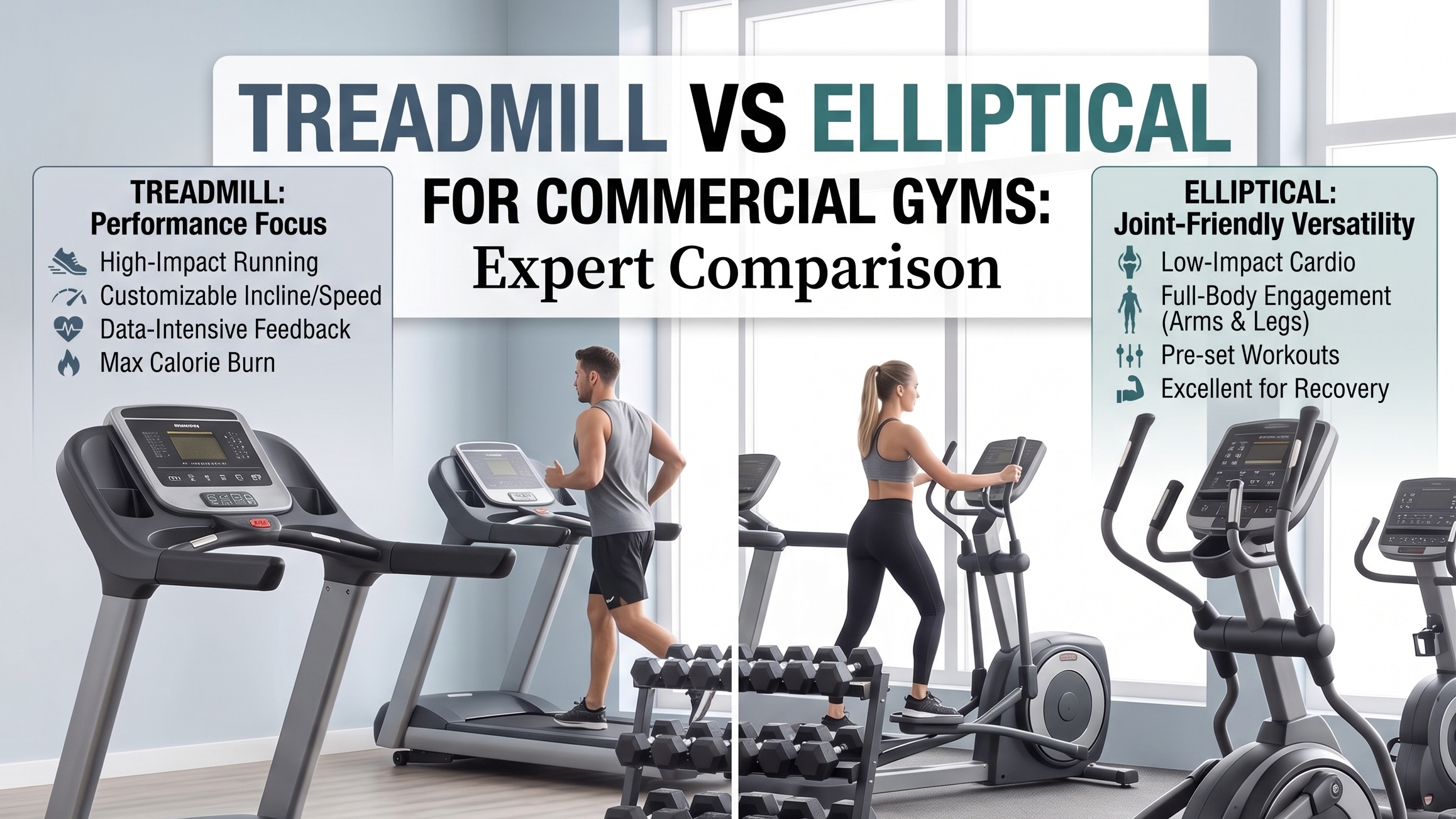
When you compare the two directly, the picture becomes clearer. Treadmills favor performance and intensity. Ellipticals favor comfort and accessibility. A well-planned commercial gym usually needs both, but the right balance depends on your member base.
- Impact level: Treadmills are higher impact, ellipticals are low impact.
- Target users: Treadmills suit runners and athletes, ellipticals suit a broad and mixed crowd.
- Maintenance: Treadmills need more regular service due to belts and motors.
- Workout style: Treadmills focus on lower body, ellipticals engage the full body.
What Gym Owners Should Look for in Build Quality
No matter which machine you choose, quality is what protects your money. Cheap equipment may look attractive at first, but it often leads to higher repair bills and downtime. A trusted gym equipment supplier will always be open about how their machines are built and tested.
When working with a reliable fitness equipment manufacturer, you should expect strong engineering and honest information about materials. Commercial gyms run their machines hard, so the difference between a basic frame and a heavy-duty frame shows up fast. For a deeper checklist, see our guide on how to choose the right gym equipment manufacturer for your commercial facility.
Key build factors to check include:
- Frame strength and the type of steel used in the structure.
- Motor power and rating for treadmills, ideally tested for continuous use.
- Quality of bearings, rollers, and moving joints on ellipticals.
- Belt and deck quality, including shock absorption systems.
- Weight capacity that suits a commercial environment.
Durability and Safety Standards
Durability and safety go hand in hand. A machine that breaks down is not just costly; it can also be dangerous. This is why safety standards matter so much in fitness equipment manufacturing.
A professional manufacturer follows strict testing for stability, electrical safety, and structural strength. Machines should hold steady during fast movement and should not wobble or shift under heavy use.
Safety features worth checking include:
- Emergency stop systems on treadmills.
- Non-slip surfaces on pedals and decks.
- Stable handrails and support bars.
- Smooth, controlled resistance changes.
Strong safety design protects members and also protects your business from liability concerns.
Innovation and Modern Manufacturing Technology
The fitness world keeps moving forward, and modern machines now offer far more than basic cardio. Today’s manufacturing technology allows smarter, quieter, and more efficient equipment.
Many commercial machines now include connected screens, workout tracking, and app support. These features improve the user experience and help gyms stand out in a competitive market. Behind the scenes, better engineering and precise production methods create machines that run smoother and last longer.
Modern innovation in cardio equipment manufacturing includes:
- Quieter motors and improved drive systems.
- Energy-efficient designs that lower running costs.
- Digital displays with workout data and entertainment.
- Smart sensors that track heart rate and performance.
While this article focuses on cardio, the same engineering care applies across the floor. A complete supplier often handles both cardio and strength training equipment, which makes it easier to plan a full gym setup from one trusted source.
Customization Options for Commercial Buyers
Every gym has its own identity, and many owners want equipment that reflects their brand. This is where customization becomes valuable. A capable manufacturer can adjust colors, finishes, and even add branding to machines.
Customization helps in several ways:
- It creates a consistent and professional look across the gym floor.
- It supports brand identity and member loyalty.
- It allows layouts and sizes that fit your specific space.
- It gives boutique studios a unique feel that sets them apart.
For distributors and commercial buyers, customization also adds value when selling to their own clients.
Planning Your Gym Floor and Cardio Mix
Choosing equipment is only part of the job. You also need a smart layout. The way you arrange treadmills and ellipticals affects traffic flow, comfort, and safety.
A few practical planning tips:
- Place high-demand machines where they are easy to reach.
- Leave enough space between units for safe movement.
- Mix treadmills and ellipticals so members have options during busy hours.
- Keep sight lines open so staff can monitor the floor.
The right cardio mix depends on your audience. A performance-focused gym may lean toward treadmills, while a wellness or rehab-focused facility may prefer more ellipticals. Most gyms do well with a balanced selection.
Maintenance and Long-Term Investment Value
Commercial equipment is a long-term investment, and maintenance is part of protecting that investment. Treadmills generally need more attention because of their moving belts and motors. Ellipticals usually need less, but their joints and bearings still require regular checks.
Good maintenance habits include:
- Cleaning machines daily to remove dust and sweat.
- Lubricating treadmill belts on schedule.
- Checking bolts, joints, and moving parts often.
- Keeping a service log for each machine.
When you buy from a quality source, machines last longer and hold their value better. This is the real meaning of long-term investment value: lower repair costs, less downtime, and happier members over many years.
How the Right Equipment Supports Business Growth
Equipment choices have a direct link to business growth. Members notice when machines are reliable, comfortable, and modern. A well-equipped gym keeps members longer, attracts new sign-ups, and builds a strong reputation.
Reliable cardio equipment also reduces stress for owners. Fewer breakdowns mean fewer complaints and lower repair spending. Over time, this stability frees up budget for marketing, staff, and expansion.
Following current fitness industry trends, members now expect:
- Clean, modern, and well-maintained machines.
- Low-impact options for joint-friendly training.
- Connected features and progress tracking.
- A safe and comfortable workout space.
Meeting these expectations is one of the simplest ways to grow a fitness business.
Conclusion
Choosing between a treadmill and an elliptical does not have to be difficult once you understand how each machine fits your members and your goals. The treadmill offers high-intensity performance, while the elliptical delivers comfort and low-impact training. Most successful commercial gyms invest in a smart balance of both, supported by strong build quality, solid safety standards, and modern features.
The real key is partnering with the right people. A trusted gym equipment supplier and an experienced fitness equipment manufacturer can guide you toward equipment that performs well for years and supports steady growth. Commercial gyms thrive when their machines are durable, safe, and built with care. At Shine Fitness Equipment, we help gym owners, distributors, and fitness businesses build high-performing floors with reliable cardio and strength equipment designed for long-term value. Explore our full range of gym equipment or contact our team to plan your next gym setup.
Frequently Asked Questions
Which is better for a commercial gym, a treadmill or an elliptical?
Neither one is automatically better, since each serves a different need. Treadmills suit runners and high-intensity training, while ellipticals support low-impact, joint-friendly workouts. Most commercial gyms benefit from offering both so members have flexible options during busy hours.
How long should commercial cardio equipment last?
Good quality commercial machines can last many years with proper care, often well beyond the lifespan of budget units. The exact lifespan depends on build quality, daily usage, and regular maintenance. Buying from a trusted manufacturer is the best way to protect this long-term investment.
Are ellipticals safer than treadmills?
Ellipticals are lower impact, which makes them gentler on knees, hips, and ankles, and a good fit for older or recovering members. Treadmills are still safe when built well and used correctly, especially with features like emergency stops. Both machines are safe when they meet proper manufacturing and safety standards.
What should I check before buying commercial cardio machines?
Focus on frame strength, motor rating, weight capacity, and the quality of moving parts like bearings and belts. You should also confirm the equipment meets safety standards and comes with clear warranty support. A reliable supplier will share this information openly.
Can fitness equipment be customized for my gym brand?
Yes, many manufacturers offer customization for colors, finishes, and branding to match your gym identity. Customization helps create a consistent, professional look across the floor. It is especially useful for boutique studios and distributors who want a distinct appearance.
How much maintenance do treadmills and ellipticals need?
Treadmills usually need more attention because of their belts, decks, and motors, including regular lubrication. Ellipticals need less frequent service, but their joints and bearings still require routine checks. A simple maintenance schedule keeps both machines running smoothly and safely.
Does the choice of cardio equipment affect business growth?
Yes, reliable and comfortable equipment improves member satisfaction and retention. Fewer breakdowns mean lower repair costs and fewer complaints, which frees up budget for growth. Modern, well-maintained machines also help attract new members and strengthen your gym’s reputation.