A multi-gym is the closest thing to a full commercial gym floor squeezed into a single frame. Instead of buying a separate chest press, lat pulldown, leg extension, and cable station, one well-built home multi-gym machine can cover most of those movements from a single footprint. This guide explains what to look for, compares the main types available in India, and shows how a multi-gym fits alongside other strength equipment if you’re building out a complete home setup rather than starting from scratch.
Multi-gyms range enormously in price and capability, from compact single-station home units under ₹25,000 to full four-station commercial machines well past ₹1,00,000. The right choice depends on how many people will use it, how much space you have, and how many distinct exercises you actually need covered in one machine. Interest in a home multi gym machine has grown steadily among Indian buyers who want gym-style variety without paying for a monthly membership or dedicating an entire room to individual machines.
This guide is built around the most common questions buyers ask before choosing a home multi gym machine: how many stations do I actually need, what weight range is enough, and how does a multi-gym compare to simply buying individual machines one at a time.
What Is a Home Multi-Gym Machine, Exactly
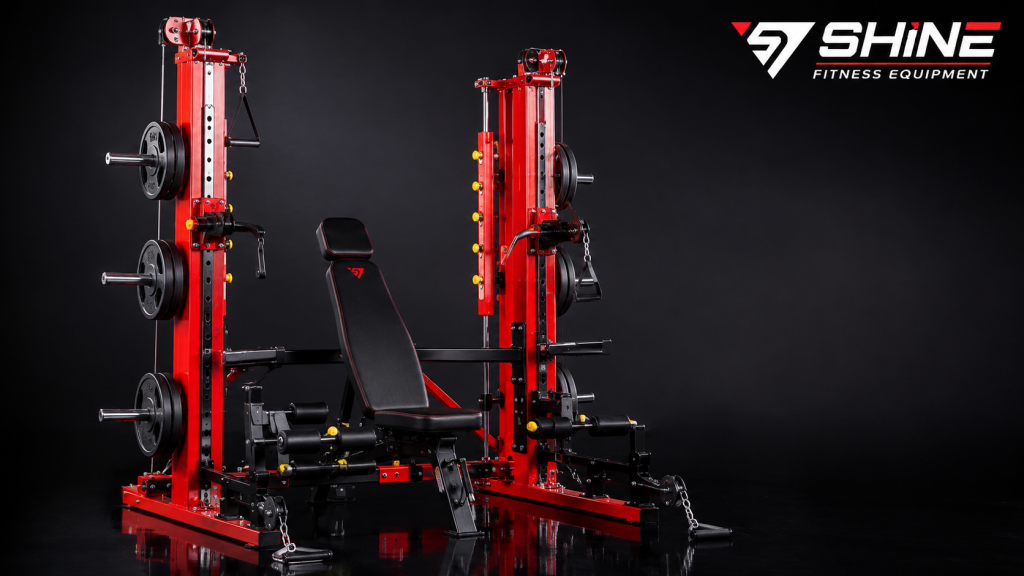
A multi-gym combines two or more exercise stations typically a weight stack, pulley system, and adjustable bench or seat into one frame. Instead of separate machines for chest press, lat pulldown, leg extension, and rowing, a single multi-station unit lets you switch between exercises by changing the pulley attachment or seat position. This makes it especially useful for home users who want gym-style variety without dedicating a full room to individual machines.
Types of Multi-Gym Machines Available in India
Not all multi-gyms are built the same way, and understanding the categories helps narrow down the right fit:
- Single-station home units: Compact frames covering 3-5 exercises, ideal for one user and tight spaces; typically priced ₹15,000-₹30,000.
- Two-station units: Slightly larger frames allowing two people to train different exercises simultaneously, common in ₹30,000-₹70,000 range.
- Four-station commercial units: Full gym-floor machines with four independent weight stacks, suited to small studios or serious home users with dedicated space; typically ₹80,000 and above.
- Plate-loaded multi-press stations: Instead of a fixed weight stack, these use standard Olympic plates, giving more resistance flexibility and lower long-term cost per kilogram of resistance.
Key Features to Check Before Buying
- Number of exercise stations: More stations mean more variety but also a larger footprint match this to your actual room size, not an ideal wish list.
- Weight stack range: Home units typically max out around 80-100 kg per stack; check this against your current and expected future strength levels.
- Cable and pulley quality: Look for aircraft-grade steel cables and sealed pulleys, since these wear out fastest under regular use and are the most common point of failure.
- Frame footprint and ceiling height: Some multi-gyms need 7+ feet of vertical clearance for the pulley system always check dimensions against your room before ordering.
Comparing Home Multi-Gym Machine Options by Budget
| Budget Range | Typical Configuration | Best Suited For |
| ₹15,000 to ₹30,000 | Single-station, 3-5 exercises, PVC weight stack | Beginners, small apartments |
| ₹30,000 to ₹70,000 | Two-station, steel weight stack, more attachments | Serious home users, small families |
| ₹70,000 to ₹1,50,000 | Four-station commercial-style frame | Home studios, small gyms, societies |
| ₹1,50,000+ | Multi-station with premium cable systems | Commercial gyms, fitness clubs |
Building a Complete Workout Station Around a Multi-Gym
A multi-gym covers a lot of ground, but a genuinely complete setup usually pairs it with a few supporting pieces of equipment:
Functional Trainer for Extra Versatility
If a full multi-gym feels too large for your space, a functional trainer offers similar cable-based versatility chest press, rows, cable flys, and more, in a narrower, wall-mountable frame.
Lat Pulldown and Cable Stations
A dedicated lat pulldown machine is a common add-on for buyers whose multi-gym doesn’t include a high pulley station, and a separate cable cross over machine adds a wider range of angles for chest and shoulder work than a single-station multi-gym typically allows.
Leg Training Attachments
Multi-gyms with a built-in leg station cover basic leg extension and curl work, but for more targeted training, a standalone leg curl and extension machine gives finer control over range of motion and resistance.
Smith Machine and Squat Rack Combo
For buyers who want barbell-based training alongside their multi-gym, a Smith Machine with Squat Rack covers squats, presses, and guided barbell movements in one compact 2-in-1 frame.
Multi-Gym vs Buying Individual Machines
This is one of the most common questions buyers face when planning a home setup, and the right answer depends on space and budget more than anything else.
- Space efficiency: A multi-gym almost always uses less total floor area than the equivalent set of individual machines it replaces.
- Upfront cost: Buying individual machines piece by piece spreads cost over time, while a multi-gym requires a larger single purchase upfront.
- Exercise variety: Individual machines usually offer better biomechanics for each specific movement, since they’re purpose-built rather than a compromise design.
- Multiple users: A multi-gym with only one station means one person trains at a time, while separate machines let a household train simultaneously.
Maintenance That Keeps a Multi-Gym Running Smoothly
A home multi gym machine involves more moving parts than a bench or a rack, so a bit of regular upkeep goes a long way toward avoiding costly repairs:
- Cable inspection: Check cables every few months for fraying, especially near the pulley wheels, and replace at the first sign of wear rather than waiting for a snap.
- Pulley lubrication: A light lubricant on pulley wheels keeps the movement smooth and prevents the jerky resistance that wears cables down faster.
- Bolt tightening: Vibration from regular use gradually loosens frame bolts; a quick check every month prevents wobble from turning into structural play.
- Weight stack alignment: Make sure the weight stack moves freely within its guide rods without rubbing, since misalignment accelerates wear on both the stack and the cable.
What a Home Multi-Gym Machine Typically Costs Across India
Pricing for a home multi gym machine isn’t uniform across the country, and a few factors explain most of the variation:
- Manufacturer-direct pricing: Buying directly from a manufacturer, particularly in equipment-producing hubs like Ahmedabad, often saves 15-25% compared to buying through a multi-layered retail chain.
- Delivery and installation: Multi-gyms are heavy and bulky, so freight and installation charges can add a meaningful amount to the final price, especially outside major cities.
- Stack material: PVC-filled weight stacks are cheaper than solid steel or cast iron stacks but tend to wear faster under heavy daily use.
- After-sales support: Manufacturers offering local service and spare parts availability are often worth a slightly higher upfront price, since cable and pulley replacements are inevitable over years of use.
How a Multi-Gym Complements a Bench and Dumbbell Setup
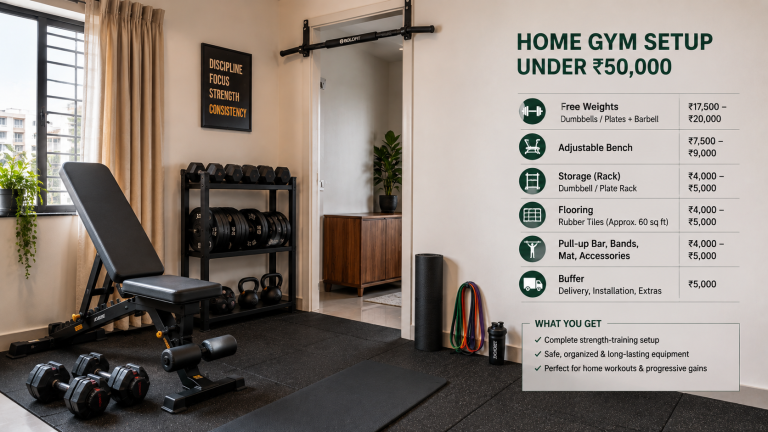
Most home gyms don’t start with a multi-gym; they start with a bench and a dumbbell set, then add a multi-station machine once the routine sticks and budget allows. If you already own or are considering an adjustable bench for home use, our adjustable bench press guide covers ten options under ₹15,000 that pair naturally with a multi-gym addition later. Similarly, if you’re still building your dumbbell collection, our dumbbell set price guide breaks down cost by weight range so you can budget the full setup in stages.
Space Planning for a Multi-Gym at Home
A multi station gym machine needs more planning than a bench or a rack, mainly because of pulley clearance and total footprint. Before ordering, measure the full extended length of the frame, not just its resting footprint, since seated leg extension and lat pulldown positions extend the usable space needed on either side. If your apartment is on the smaller side, our guide to compact home gym ideas covers layout strategies that also apply to fitting a multi-gym into a limited room.
As a gym equipment manufacturer in india supplying both commercial clubs and home users for close to two decades, Shine Fitness builds multi-station strength equipment on the same frame and cable standards used across our full strength equipment range. If you’re unsure which configuration single-station, two-station, or a full four-station unit fits your space and training goals, get in touch with our team for a recommendation based on your actual room dimensions.
Who Should Buy a Home Multi-Gym Machine
Not every home gym needs a full multi-station unit right away. A home multi gym machine makes the most sense once you’ve been training consistently for a few months with just a bench and dumbbells and know you’ll stick with it long-term. It’s also a strong choice for households with more than one person training, since a single frame can serve the whole family rather than each member needing separate equipment. On the other hand, if you’re still figuring out your training routine or have very limited space, starting smaller with a bench and a functional trainer is usually the more practical first step before committing to a full multi-gym purchase.
Conclusion
A home multi gym machine is one of the most space-efficient ways to cover a genuinely complete workout without filling a room with individual machines, and for most Indian households, one well-chosen unit ends up replacing what would otherwise be four or five separate pieces of equipment. Start by matching the number of stations to your actual available space and household size, check the weight stack range against your current strength level, and don’t overlook cable and pulley quality, since that’s what determines how long the machine lasts under regular use. Whether you go with a compact single-station unit or a full four-station commercial-style frame, pairing it with a solid bench and a basic dumbbell set gets you a home gym that covers nearly every major muscle group.
Frequently Asked Questions
1. How much space does a home multi gym machine actually need?
Most single-station units need roughly 6x6 feet including clearance for seated positions, while four-station commercial units can require 10x10 feet or more always check the fully extended footprint, not just the resting size.
2. Is a multi-gym machine good for beginners?
Yes. Multi-gyms are often easier and safer for beginners than free weights, since the guided movement patterns and adjustable weight stack reduce the risk of poor form on compound exercises.
3. What weight stack range is enough for a home multi-gym?
For most home users, an 80-100 kg weight stack is sufficient for years of progressive training, and plate-loaded models can be extended further as strength increases.
4. Can a multi-gym machine replace a full home gym setup?
Yes, a good multi-gym covers chest, back, shoulders, arms, and legs in one frame, though most users still add a dedicated bench and a set of dumbbells for exercises a multi-gym doesn’t cover well.
5. How long does a home multi-gym machine typically last?
With regular maintenance checking cables, lubricating pulleys, and keeping the frame dry a well-built multi-gym can last well over a decade of consistent home use.
6. What’s the difference between a weight-stack multi-gym and a plate-loaded one?
A weight-stack machine uses a fixed pin-adjustable stack, which is faster to change between sets, while a plate-loaded machine uses standard Olympic plates, offering more resistance flexibility and often a lower long-term cost.
7. Do I need professional installation for a home multi-gym machine?
Most manufacturers recommend professional assembly, since correct cable tensioning and frame alignment directly affect both safety and how smoothly the pulley system operates over time.