Choosing the right gym flooring India is one of the most under-discussed decisions in setting up a commercial fitness space. Members judge a gym in the first thirty seconds - and the floor is what they see first, hear when weights drop, and feel under every squat. This complete gym flooring India guide walks you through the material options, thickness requirements for heavy machines, real-world pricing, installation tips, and long-term maintenance so you invest correctly the first time. Whether you are laying floor for a full commercial gym, a boutique studio, or a serious home setup, the same principles apply - the surface has to protect your slab, cushion your members, and survive years of hard use.
Get the flooring wrong and you will spend years fighting cracked tiles, dented plates, complaints about noise, and premature slab damage. Get it right and it disappears - quietly doing its job for a decade or more. Let us go through every option.
Why Gym Flooring Choice Matters More Than You Think
Gym flooring India options range from ₹120 per sq ft to over ₹1,500 per sq ft depending on material, thickness, and finish. The temptation to save money at the start is huge - but the flooring under a squat rack or deadlift platform absorbs 300 to 500 kg impact repeatedly. Cheap flooring collapses in months. Good flooring lasts decades. The right choice depends on what heavy gym equipment you plan to use, how many members you expect, and whether the space handles Olympic lifting.
Beyond durability, the right gym flooring India solution controls noise, prevents injuries from slips, protects the concrete slab beneath, and dampens vibration that can annoy neighbours in multi-storey buildings. Every one of these matters more than most gym owners realise until they experience the problem.
Main Types of Gym Flooring in India
There are five common gym flooring India categories used in commercial setups today. Each has strengths, weaknesses, and ideal use cases.
1. Rubber Tile Flooring
Interlocking rubber gym flooring tiles are the most popular commercial option. They come in 15 mm, 20 mm, 25 mm, and 40 mm thickness. Higher thickness means better impact absorption. Tiles usually measure 500 mm × 500 mm or 1000 mm × 1000 mm and interlock without adhesive, making them replaceable if damaged.
2. Rubber Roll Flooring
Rubber rolls come in 1.25 m and 1.8 m widths, cut to length. They install faster than tiles and have fewer seams, which is cleaner-looking and easier to mop. Best for cardio floors and general training areas. Thickness typically ranges from 6 mm to 12 mm.
3. EPDM Rubber Flooring
EPDM is a premium synthetic rubber with better colour options and UV resistance. It costs more than standard SBR rubber but looks noticeably better in high-visibility spaces like reception areas and functional training zones. Colours stay vibrant for years.
4. Foam Puzzle Mats
Foam mats are the cheapest gym flooring India option. They work in home setups and low-load stretching areas but should never be used under weights. Foam compresses permanently under heavy static loads and offers zero protection to your concrete slab.
5. Vinyl and PVC Flooring
Vinyl-based sports flooring works well in group class studios where aerobic and functional workouts happen. It is smooth, easy to clean, and non-porous. Not suitable for free-weight areas where dropped plates would damage the surface.
Gym Flooring India Comparison Table
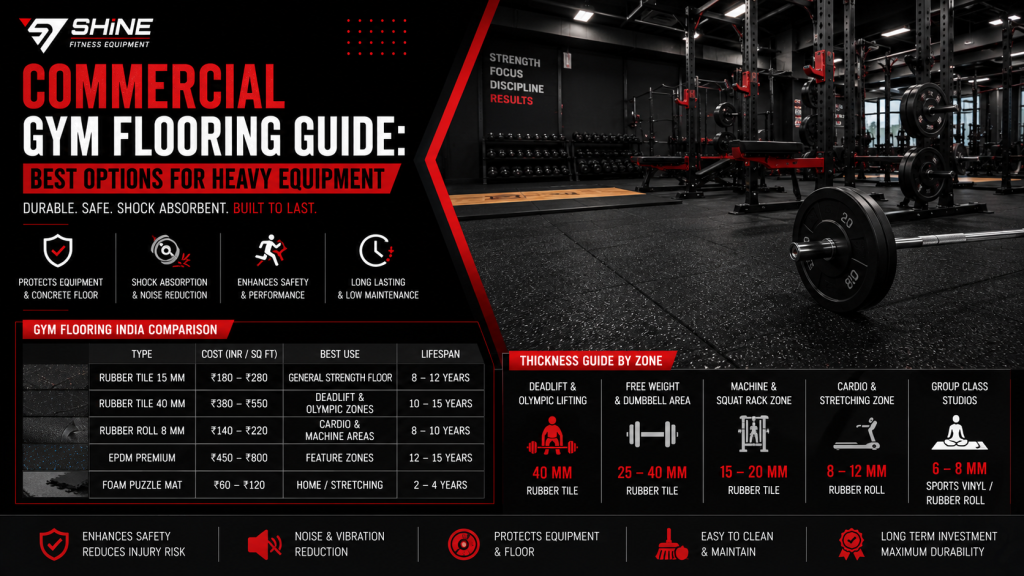
Here is a quick reference comparison of the main options and where each fits best in a commercial setup.
| Type | Cost (INR / sq ft) | Best Use | Lifespan |
| Rubber Tile 15 mm | ₹180 to ₹280 | General strength floor | 8 to 12 years |
| Rubber Tile 40 mm | ₹380 to ₹550 | Deadlift & Olympic zones | 10 to 15 years |
| Rubber Roll 8 mm | ₹140 to ₹220 | Cardio & machine areas | 8 to 10 years |
| EPDM Premium | ₹450 to ₹800 | Feature zones | 12 to 15 years |
| Foam Puzzle Mat | ₹60 to ₹120 | Home / stretching | 2 to 4 years |
Thickness Requirements for Heavy Equipment Zones
The single most important gym flooring India decision is thickness. Different zones need different protection. Under plate loaded racks and dumbbell areas, plate drops are common - you need serious impact absorption. Under cable machines and benches, footprint stability matters more than drop protection. Match the thickness to what actually happens in that zone.
Zone-Wise Thickness Recommendations
- Deadlift platforms and Olympic lifting: 40 mm rubber tile or dedicated lifting platform
- Free weight and dumbbell area: 25 mm to 40 mm rubber tile
- Machine and squat rack zone: 15 mm to 20 mm rubber tile
- Cardio and stretching zones: 8 mm to 12 mm rubber roll
- Group class studios: 6 mm to 8 mm sports vinyl or thin rubber roll
Squat Rack and Power Rack Flooring
The area under a squat rack flooring zone deserves special attention. Even without dropped weights, the static load of a loaded barbell plus lifter regularly exceeds 300 kg concentrated on four contact points. Standard 15 mm tile is fine for the racks themselves, but if lifters unload plates by dropping them, upgrade that specific station to 25 mm or 40 mm tile.
Some gyms build a raised lifting platform - usually 200 cm × 250 cm - with 40 mm rubber tile in the drop zones and hardwood or thick rubber in the centre where feet stand. This is the gold standard for serious lifting and works well in Indian commercial gyms.
Installation Best Practices
Great gym flooring India products fail if installed on a bad substrate. The concrete slab underneath must be level, dry, and smooth. Any moisture in the slab will delaminate rubber over time. Any dip or crack transfers into the flooring and shows as an uneven surface. For any gym setup India project, spend a day preparing the slab before laying a single tile.
Pre-Installation Checklist
- Slab must be fully cured - minimum 28 days after concrete pour
- Test moisture with a calcium chloride kit - below 3 lb/1000 sq ft
- Grind or self-level any dips greater than 3 mm across a metre
- Vacuum thoroughly - dust under tiles causes shifting later
- Allow tiles to acclimate in the space for 24 hours before laying
Adhesive vs Loose Lay
Interlocking tiles usually stay in place without glue, especially in rooms over 30 sq m. For smaller rooms or high-traffic entrance zones, glue-down installation prevents tile creep. Rolls always need adhesive along seams and perimeters. Use double-sided rubber flooring tape or approved polyurethane adhesive.
Maintenance and Cleaning
Gym flooring India products are low-maintenance if you set up the right routine. Skip cleaning and dust builds up in seams, grit scratches the surface, and sweat stains set permanently. Follow this simple routine:
- Daily - dry mop or vacuum to remove dust and grit
- Twice weekly - damp mop with neutral pH cleaner (no bleach)
- Weekly - deep clean high-traffic zones with rubber-safe degreaser
- Monthly - inspect tiles for edge lifting, seam gaps, or damage
- Never use solvent-based cleaners - they degrade rubber over time
Storage Zones and Dumbbell Area Flooring
The area around a dumbbell stand takes hidden abuse - dumbbells are dropped from waist height dozens of times daily. Use 25 mm rubber tile in a two-metre radius around every dumbbell rack. Cheap flooring in this zone will show dents and rips within six months. Do not compromise here.
Similarly, the loading zones around plate storage racks accumulate steady wear from bumper plates being loaded and unloaded. Thicker rubber pays for itself here through a much longer replacement cycle.
Set Up Your Gym Right - Talk to the Experts
Choosing the right gym flooring India solution goes hand in hand with choosing the right equipment. At Shine Fitness - a leading gym equipment manufacturer based in Ahmedabad - we help commercial gyms, studios, and home users across India plan complete setups that include equipment layout, floor loading, and space design. Get in touch through our contact page for a personalised gym setup consultation and flooring recommendation.
Conclusion
Gym flooring India selection is not just a cosmetic choice - it is a structural and safety decision that impacts every workout in your gym for the next decade. Match thickness to actual load, invest more under free-weight zones and less under cardio, always prepare the slab properly, and follow a simple daily cleaning routine. Rubber tiles between 15 mm and 40 mm cover almost every scenario for Indian commercial gyms, with EPDM as an upgrade for feature areas. Foam mats work for homes and stretching only. Get the base right and the equipment on top of it will perform, last longer, and give your members a professional experience they will notice from the moment they walk in. A great gym starts from the floor up.
Frequently Asked Questions (FAQ)
1. What is the best gym flooring for heavy weightlifting in India?
For deadlifting and Olympic lifting zones, use 40 mm interlocking rubber tiles or a dedicated raised lifting platform. For general free-weight areas, 25 mm rubber tiles work well and offer the right balance between cost and impact absorption.
2. How much does commercial gym flooring cost in India?
Expect ₹140 to ₹280 per square foot for standard 15 mm rubber tiles, ₹380 to ₹550 per square foot for 40 mm heavy-duty tiles, and ₹450 to ₹800 per square foot for premium EPDM finishes. Add 15 to 20 percent for installation.
3. Can I install gym flooring myself?
Interlocking tiles can be laid by two people over a weekend for smaller spaces. Rolls and glued installations are better handled by professionals who can manage seam alignment and adhesive application correctly.
4. How thick should gym flooring be under a squat rack?
A minimum of 15 mm rubber tile works for the rack footprint, but the drop zones on either side of the rack should be 25 mm or thicker to handle dropped plates safely.
5. Does rubber flooring smell after installation?
New rubber tiles have a mild odour that fades within 7 to 14 days. Good ventilation during and after installation shortens the process. Premium EPDM flooring has significantly less smell than standard SBR rubber.
6. How do I clean rubber gym flooring properly?
Sweep or vacuum daily, damp mop with a neutral pH cleaner two to three times a week. Avoid bleach, ammonia, or solvent-based cleaners as they degrade the rubber. Rinse thoroughly and dry to prevent slip hazards.
7. How long does gym flooring last in a commercial setting?
Quality 15 to 25 mm rubber flooring lasts 8 to 12 years under normal commercial use. Heavy 40 mm tile and premium EPDM can last 12 to 15 years or more. Poor cleaning, wrong thickness, and inadequate slab prep can cut lifespan in half.