Setting up a gym in India right now? You're walking into one of the most competitive markets in the world, and honestly, that works in your favor. Whether you're building a 500-square-foot studio in Pune or a 10,000-square-foot commercial setup in Hyderabad, choosing the right gym equipment manufacturer can make or break your investment. I've spent the better part of a decade watching this industry evolve, and 2026 is shaping up to be the year where Indian-made equipment finally rivals (and sometimes beats) the imported giants in both quality and price. This guide breaks down exactly what you'll pay, what specs to demand, and where the real value sits in today's market.
Let me be straight with you upfront: gym equipment pricing in India isn't transparent. Walk into ten different showrooms and you'll get ten different quotes for what looks like the same treadmill. There's a reason for that, and by the end of this article, you'll understand how to navigate it without overpaying.
Why 2026 Is a Turning Point for Indian Gym Equipment Buyers
Something interesting has happened over the last three years. Domestic manufacturing capacity has exploded, raw steel prices have stabilized after the 2023-2024 volatility, and "Make in India" incentives have pushed even traditionally import-dependent brands to set up local production lines. The result? Indian buyers are seeing 15-30% better pricing on commercial-grade equipment compared to just two years ago.
But here's the catch not all manufacturers have kept pace with quality standards. Some are cutting corners on weld quality, bearing grades, and upholstery density to hit aggressive price points. Knowing the difference between a ₹1.2 lakh treadmill that lasts 12 years and a ₹85,000 one that dies in 18 months is everything.
The Three Buyer Categories Dominating the Market
When I look at who's purchasing gym equipment in India today, almost every buyer falls into one of these buckets:
- Home gym enthusiasts spending between ₹40,000 and ₹3 lakhs on a complete personal setup
- Boutique studio owners investing ₹8-25 lakhs for specialized facilities (CrossFit, functional training, pilates)
- Commercial gym operators budgeting ₹40 lakhs to ₹2 crores for full-scale chains and corporate fitness centers
Your category determines almost everything: the warranty you need, the duty cycle of motors, even the type of upholstery foam density that makes sense.
Cardio Equipment Price List 2026
Cardio machines are where most gym budgets get blown. They're the most used pieces of equipment in any facility, and they're also the ones that fail first when you cheap out. Here's the realistic 2026 pricing landscape from established gym machine manufacturer networks across India.
Treadmills: The Backbone of Every Gym
Treadmills account for roughly 25-35% of cardio equipment spending in most setups. The price spread is genuinely wild because the components vary so dramatically.
Home-Use Treadmills (Residential)
- Entry-level motorized: ₹28,000 to ₹45,000 (1.5-2.0 HP continuous duty, 110-120 kg user weight)
- Mid-range home models: ₹50,000 to ₹85,000 (2.5-3.0 HP, auto-incline, 130 kg capacity)
- Premium residential: ₹90,000 to ₹1,60,000 (3.5+ HP, cushioned deck, 150 kg capacity, app integration)
Commercial Treadmills
- Light commercial: ₹1,80,000 to ₹2,80,000 (4.0 HP AC motor, 160 kg capacity)
- Full commercial: ₹3,20,000 to ₹5,50,000 (5.0+ HP, 180 kg capacity, military-grade belt, 10+ year frame warranty)
- Premium commercial (imported or top-tier Indian): ₹6,50,000 to ₹12,00,000
What separates a ₹3 lakh treadmill from an ₹8 lakh one? Motor duty cycle, deck thickness (premium decks are 25-32mm vs. 18-22mm in standard models), belt ply count (4-ply vs. 2-ply), and console electronics. Don't get sold on cosmetic features, focus on the motor's continuous duty rating, not peak HP.
Ellipticals, Bikes & Rowers
- Elliptical trainers (commercial): ₹1,20,000 to ₹4,50,000
- Spin bikes: ₹18,000 to ₹85,000 (home), ₹95,000 to ₹2,20,000 (commercial)
- Recumbent bikes: ₹35,000 to ₹1,80,000
- Air bikes (Assault-style): ₹38,000 to ₹1,40,000
- Rowing machines: ₹45,000 (magnetic) to ₹2,80,000 (air/water resistance commercial)
- Stair climbers/steppers: ₹1,80,000 to ₹6,50,000
The rowing machine market deserves special attention. After the CrossFit explosion across Indian metros, rowers have become genuine profit centers for gyms. A good commercial rower from a reliable fitness equipment manufacturer should hold its calibration for at least 5 years with daily heavy use.
Strength Training Equipment Price List 2026
Strength equipment is where Indian manufacturers have really come into their own. The welding quality, powder coating, and pulley systems coming out of Punjab, Delhi NCR, and Tamil Nadu factories now genuinely compete with international brands at 40-60% lower price points.
Selectorized Machines (Pin-Loaded)
These are the standard gym machines with weight stacks. The market in 2026 looks like this:
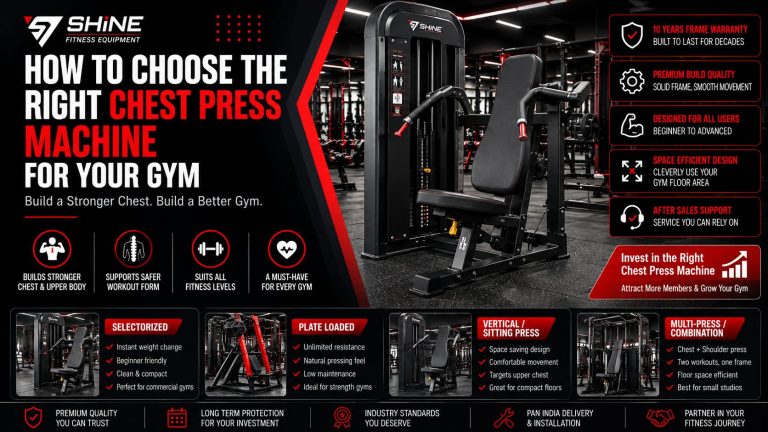
- Chest press machine: ₹85,000 to ₹2,80,000
- Lat pulldown: ₹70,000 to ₹2,40,000
- Leg press (45-degree): ₹1,20,000 to ₹3,80,000
- Leg extension/curl combo: ₹95,000 to ₹2,60,000
- Cable crossover (functional trainer): ₹1,40,000 to ₹4,50,000
- Smith machine: ₹85,000 to ₹3,20,000
- Hack squat: ₹1,10,000 to ₹2,90,000
When evaluating selectorized machines, look at three things: weight stack guide rod thickness (should be 25mm minimum for commercial), cable specification (military-spec aircraft cable with 7×19 construction), and pulley bearings (sealed ball bearings, not bushings).
Plate-Loaded Equipment
Plate-loaded machines are seeing massive growth because they're cheaper to manufacture and many serious lifters prefer them. Pricing has come down significantly:
- Plate-loaded chest press: ₹55,000 to ₹1,80,000
- Plate-loaded row: ₹50,000 to ₹1,60,000
- T-bar row station: ₹35,000 to ₹95,000
- Belt squat machine: ₹85,000 to ₹2,40,000
- Pendulum squat: ₹1,20,000 to ₹3,50,000
Free Weight Equipment
This is where things get interesting for budget-conscious buyers because Indian manufacturing absolutely dominates here.
- Olympic barbell (20kg, calibrated): ₹8,500 to ₹35,000
- Rubber bumper plates (per kg): ₹280 to ₹650
- Cast iron plates (per kg): ₹140 to ₹220
- Power rack/squat rack: ₹45,000 to ₹2,80,000
- Half rack: ₹35,000 to ₹1,80,000
- Adjustable bench: ₹18,000 to ₹85,000
- Flat bench (commercial): ₹12,000 to ₹38,000
- Dumbbells (hex rubber, per kg): ₹220 to ₹450
A practical tip: buy your barbells and plates from specialist manufacturers, not general gym equipment companies. The metallurgy on calibrated competition plates and high-tensile barbells requires different expertise than building cable machines.
Functional Training & Accessories Price List
The functional training boom isn't slowing down. CrossFit-style boxes and HIIT studios are popping up in every tier-2 city, and the equipment list keeps expanding.
Rigs and Structural Equipment
- 6-station outdoor/indoor rig: ₹1,80,000 to ₹4,50,000
- 8-station competition rig: ₹2,80,000 to ₹6,50,000
- Wall-mounted pull-up station: ₹18,000 to ₹65,000
- Plyometric boxes (3-in-1 wooden): ₹4,500 to ₹12,000
- Sled (push/pull): ₹15,000 to ₹45,000
Small Equipment & Accessories
This category often gets overlooked in budgets but adds up fast:
- Kettlebells (per kg, competition grade): ₹380 to ₹650
- Medicine balls (set of 6): ₹8,000 to ₹22,000
- Battle ropes (15m, 50mm): ₹4,500 to ₹12,000
- Resistance bands (commercial set): ₹3,500 to ₹8,500
- TRX-style suspension trainers: ₹3,800 to ₹15,000
- Foam rollers, yoga mats, accessories: ₹15,000 to ₹50,000 per gym setup
Specifications That Actually Matter
I've sat through hundreds of gym equipment sales pitches, and most of them throw around specifications that sound impressive but mean almost nothing in real-world performance. Here's what to actually look at when comparing manufacturers.
For Cardio Equipment
Motor specifications should be expressed as continuous duty horsepower (CHP), not peak HP. A "4.0 HP" treadmill might only have 2.5 CHP, which means it'll overheat under continuous use. For commercial settings, demand 4.0+ CHP minimum.
Frame warranty tells you more about manufacturer confidence than any brochure claim. Anything under 10 years on a commercial frame is a red flag. Premium manufacturers offer lifetime frame warranties.
Deck thickness and belt construction determine longevity. Look for 25mm+ phenolic-treated decks and 2-ply belts at minimum for home, 4-ply for commercial.
For Strength Equipment
Steel gauge matters enormously. Commercial-grade equipment should use 11-gauge (3mm) or 7-gauge (5mm) steel for primary structural members. Anything thinner is residential-grade regardless of how it's marketed.
Welding quality is harder to assess visually, but TIG-welded joints are significantly stronger than MIG-welded ones. Reputable manufacturers will tell you which they use.
Upholstery density should be 60 kg/m³ or higher for commercial benches. Lower density foam compresses within months under heavy use.
Cable specifications on selectorized machines should be 7×19 aircraft-grade with nylon coating. Cheaper 7×7 cables fray within 18-24 months.
How to Choose the Right Gym Equipment Manufacturer in India
This is where the real money gets saved or wasted. After working with dozens of manufacturers across India, I've developed a framework that consistently identifies the better suppliers.
Verify Manufacturing, Not Just Branding
Many companies brand themselves as manufacturers but actually import or rebrand. Ask to visit the factory. Reputable manufacturers in cities like Jalandhar, Meerut, Chennai, and Coimbatore happily welcome facility tours.
Check Real Installation References
A manufacturer should provide you with 5-10 facilities currently using their equipment. Visit two or three. Talk to those gym owners about reliability, service response time, and parts availability after 2-3 years of use.
Examine After-Sales Infrastructure
The cheapest equipment becomes the most expensive when you can't get parts. Ask specifically about:
- Service technician availability in your city
- Spare parts inventory and lead times
- Average response time for breakdown calls
- Warranty claim history (request data)
Demand Detailed Specifications in Writing
Verbal commitments mean nothing. Get exact specifications motor brands, bearing grades, steel certifications, upholstery foam density in writing before paying any deposit.
Real Budget Examples for Different Gym Types
Numbers are abstract until you see them applied. Here's how recent setups have actually budgeted in 2026.
Home Gym Setup (₹1.5-2 Lakh Budget)
A serious home gym for one or two users typically includes:
- Power rack with pull-up bar: ₹55,000
- Olympic barbell with bumper plates (100kg set): ₹42,000
- Adjustable bench: ₹22,000
- Adjustable dumbbells or rubber hex set: ₹35,000
- Cardio piece (entry-level commercial bike or rower): ₹38,000
- Accessories and flooring: ₹15,000
Boutique Studio (₹15-20 Lakh Budget)
For a 1,500 sq ft functional training studio:
- 6-station rig with attachments: ₹3,80,000
- 4 spin bikes (commercial): ₹3,60,000
- 2 rowing machines: ₹2,40,000
- Free weight setup (full): ₹2,80,000
- Functional accessories (kettlebells, boxes, ropes): ₹1,50,000
- Flooring, mirrors, sound: ₹3,00,000
Full Commercial Gym (₹60-80 Lakh Budget)
A 5,000 sq ft commercial facility typically allocates:
- Cardio zone (12-15 machines): ₹22-28 lakhs
- Selectorized strength line (15-18 machines): ₹25-32 lakhs
- Free weight area with racks and platforms: ₹8-12 lakhs
- Functional zone: ₹5-8 lakhs
- Flooring and aesthetics: ₹5-8 lakhs
Hidden Costs Most Buyers Forget
The equipment quote is rarely the final number. Plan for:
- Logistics and installation: 8-12% of equipment cost for outstation deliveries
- Flooring: ₹250-650 per sq ft depending on quality
- GST: 18% on most equipment (factor this in if quotes are ex-GST)
- Mirror and aesthetic work: ₹3-8 lakhs for proper commercial setup
- Annual maintenance contracts: 5-8% of equipment value per year after warranty
- Spare parts buffer: Keep ₹50,000 to ₹2 lakhs aside depending on facility size
FAQ: Gym Equipment Pricing in India 2026
What is the average cost to set up a commercial gym in India in 2026?
A standard commercial gym of 3,000-5,000 sq ft typically requires ₹45-90 lakhs for complete setup including equipment, flooring, aesthetics, and installation. Premium facilities with imported equipment can run ₹1.5-2.5 crores. Mid-tier setups using quality Indian-manufactured equipment hit the sweet spot at around ₹60-75 lakhs.
Which Indian gym equipment manufacturer is best for commercial use?
Several established players dominate the commercial space, including manufacturers based in Jalandhar (the traditional hub), Meerut, and emerging clusters in Chennai and Bengaluru. The "best" depends on your specific needs some excel at strength equipment, others at cardio. Always evaluate based on installation references in commercial settings similar to yours, not on marketing claims.
How long does quality commercial gym equipment last?
With proper maintenance, commercial-grade strength equipment from reputable manufacturers should last 12-20 years. Cardio equipment typically has a 7-12 year useful life with daily commercial use. Cheaper equipment marketed as commercial often fails within 3-5 years, making it far more expensive in total cost of ownership.
Is Indian-made gym equipment as good as imported?
For 80% of equipment categories, yes. Indian manufacturers have closed the quality gap significantly on strength equipment, free weights, and functional training gear. Imported equipment still holds advantages in premium cardio (especially treadmills above ₹6 lakhs) and high-end electronic features. For most commercial gym applications, Indian-manufactured equipment delivers equivalent performance at 40-60% lower cost.
What warranty should I expect from a gym machine manufacturer?
Standard commercial warranty terms in 2026 are: lifetime on frames, 5-7 years on parts, 2-3 years on labor, and 1-2 years on upholstery and electronics. Anything significantly shorter than this suggests the manufacturer isn't confident in their build quality.
How can I verify if a fitness equipment manufacturer is genuine?
Ask for the factory address and visit if possible. Genuine manufacturers will have GST registration as a manufacturing entity (not just trading), ISO 9001 certification, IS standard compliance certificates for specific equipment categories, and a portfolio of installed commercial sites you can verify independently. Request to speak with at least three existing customers who have been using their equipment for over two years.
What's the price difference between home and commercial gym equipment?
Commercial equipment typically costs 2.5-5x more than home equivalents because of heavier-gauge steel, higher-duty motors, better bearings, and higher-density upholstery. A home treadmill at ₹50,000 might appear similar to a ₹2.5 lakh commercial unit, but the commercial version is built to handle 8-12 hours of daily use versus 1-2 hours for home models.
Should I buy gym equipment online or directly from manufacturers?
For commercial purchases above ₹5 lakhs, always buy directly from manufacturers. You'll get better pricing (no marketplace commission), customization options, direct warranty handling, and access to commercial-only product lines that aren't sold through e-commerce. Online platforms work fine for home equipment and small accessories under ₹50,000.
How much should I budget for annual maintenance?
Plan for 5-8% of your original equipment investment annually for maintenance, parts, and service contracts. A ₹60 lakh equipment setup should budget ₹3-5 lakhs per year for proper maintenance. This investment significantly extends equipment life and prevents catastrophic failures.
Can I customize gym equipment from Indian manufacturers?
Yes, and this is one of the genuine advantages of buying domestically. Most established Indian manufacturers offer custom color schemes, upholstery colors, branding, and even minor structural modifications for orders above certain volumes (typically 8-10 machines). Imported brands rarely offer this flexibility at any price point.
Final Thoughts
The gym equipment market in India has matured to a point where smart buyers have genuine choices. The days of either overpaying for imported gear or accepting subpar quality are behind us. What you need now is the knowledge to separate marketing from substance which is exactly what this guide has tried to give you.
If I had to leave you with one piece of advice from years of watching this industry: the cheapest quote almost always becomes the most expensive purchase. Equipment that breaks down kills gym revenue faster than any marketing problem can. Spend your time evaluating manufacturers as carefully as you'd evaluate hiring a head trainer, because the equipment you choose will outlast most of your staff.
The Indian fitness industry is heading somewhere remarkable. Cities that didn't have a single proper gym five years ago now have ten. The manufacturers serving this growth are getting better every quarter. Your timing for entering this market or upgrading your existing facility is genuinely good provided you make decisions based on specifications and references, not just price.
Get the quotes, visit the factories, talk to existing customers, read the contracts carefully. The right equipment partner will support your business for the next decade or longer. The wrong one will become your most expensive lesson.