Buying gym machines is a serious capital investment, and understanding your gym equipment warranty before signing the invoice can save you lakhs of rupees over the life of your setup. A good gym equipment warranty protects you against manufacturing defects, structural failure, and premature component wear - issues that would otherwise leave you paying for repairs on machines that should have lasted decades. This guide breaks down exactly what every gym equipment warranty should cover, what red flags to watch for, and how to compare warranty terms across manufacturers so you never overpay for weak coverage.
Whether you are opening a commercial gym, upgrading a fitness studio, or building a serious home setup, the fine print in a gym equipment warranty tells you more about a brand than any brochure. Let us walk through the standard components, industry benchmarks, and negotiation points.
Why a Gym Equipment Warranty Actually Matters
Gym machines take punishment daily. A cable stack in a busy gym absorbs thousands of pulls per week. A leg press supports hundreds of kilos through full range. A commercial gym equipment setup without proper warranty coverage puts the entire financial risk of failure on you. Frame cracks, bearing failures, weld defects, and upholstery tears do happen - and quality manufacturers stand behind their build with meaningful coverage.
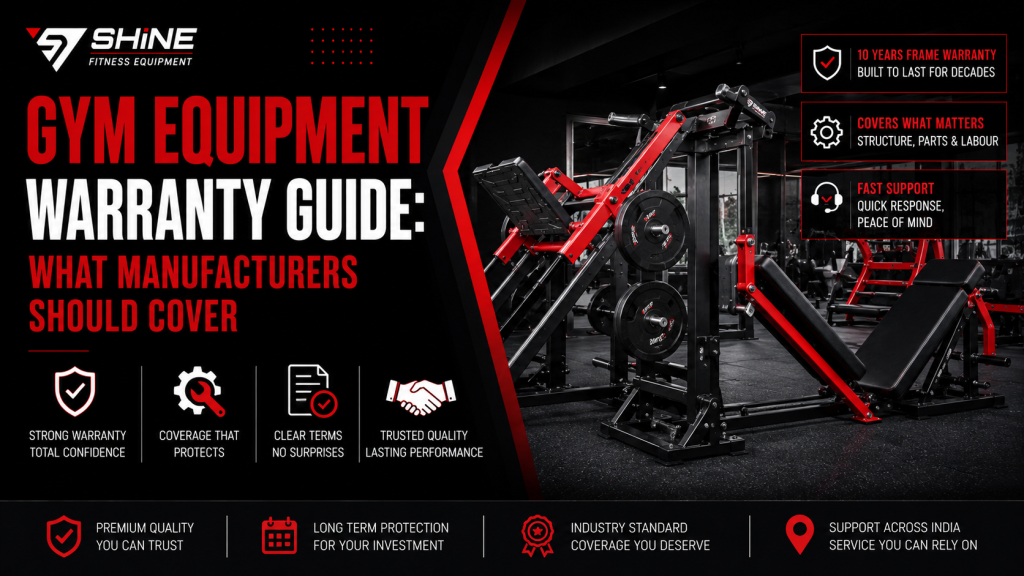
A strong gym equipment warranty is also a filter. Brands that offer ten-year frame warranties are quietly telling you their steel gauge, welding, and quality control are built to last. Brands that offer only one year on everything are signalling the opposite. Reading the warranty is the fastest way to judge a manufacturer.
Standard Warranty Components You Should Expect
A comprehensive gym equipment warranty is layered - different parts of the same machine carry different coverage periods based on how they wear. Here is the industry-standard breakdown you should look for when comparing quotes.
| Component | Commercial Standard | Home Use Standard |
| Frame / Structure | 10 years to lifetime | Lifetime |
| Welds | 5 to 10 years | Lifetime |
| Pulleys & Bearings | 3 to 5 years | 5 to 7 years |
| Cables | 1 to 3 years | 3 years |
| Upholstery & Pads | 1 to 2 years | 2 to 3 years |
| Paint & Finish | 1 year | 2 years |
| Labour | 1 to 2 years | 1 year |
Frame and Structural Coverage
The frame is the skeleton of every machine. A serious gym equipment manufacturer will cover the frame for 10 years to lifetime on commercial installations. Structural warranty covers cracks, weld failures, and any deformation under normal use - but does not cover damage from misuse, drops, or unauthorized modification.
Moving Parts and Wear Items
Pulleys, bearings, guide rods, and cables are working parts. A reasonable gym equipment warranty covers these for two to five years depending on usage. Anything shorter than one year on commercial cables is a warning sign - that manufacturer is expecting failure.
Upholstery, Paint, and Cosmetic Items
Pads, vinyl covers, and paint finish are cosmetic wear items. One to two years is normal. If the pads are stitching poorly or the paint chips within months, a good manufacturer will replace them under a gym equipment warranty claim.
What a Good Gym Equipment Warranty Should Include
When you compare warranty documents, check that these clauses are present and clearly worded. Missing clauses often turn into disputes later.
- Written coverage terms with clearly defined start date - usually invoice date or installation date
- Free replacement of any defective structural component within the frame warranty period
- On-site labour coverage for at least one year after installation
- Named contact person or service desk with response time commitment
- Clear list of exclusions - misuse, water damage, unauthorized repair, cosmetic wear
- Transferability clause if you sell or relocate the equipment
Common Warranty Exclusions to Watch For
Every gym equipment warranty has exclusions. That is normal. What you need to watch for are exclusions that quietly gut the entire coverage. If a manufacturer excludes "normal wear and tear" on strength equipment warranty claims without defining what counts as normal, they can deny almost any repair request. Push for specific definitions in writing.
Some standard exclusions are fair - damage from fire, flood, rust from outdoor storage, or use in unauthorized settings. Others are red flags: exclusions on structural failure, welds, or frame paint under normal indoor use suggest the manufacturer knows their build has issues.
Red Flag Exclusions
- Any structural exclusion during the frame warranty period
- Vague "commercial use surcharges" that void coverage in gym settings
- Requirement to buy proprietary maintenance kits to keep warranty active
- No coverage for freight or installation damage
- Warranty voided by any third-party service - even routine cleaning
Commercial vs Home Use: Different Coverage
A gym equipment warranty is not one-size-fits-all. Commercial fitness equipment is used by dozens of people daily, while home equipment sees five to ten hours a week at most. Manufacturers reflect this in coverage. Commercial warranties are often shorter in years but cover higher-load components. Home warranties run longer because the wear is lower.
When a manufacturer offers the same warranty for both settings, dig deeper. Either the commercial coverage is generous (a good sign) or the home coverage has been shortened (a bad one). Always confirm which tier applies to your purchase in writing.
How to Compare Warranties Across Manufacturers
Do not just compare warranty length in years. A ten-year warranty on structure means nothing if the cables and pulleys only carry one year. Look at the weakest link. Also confirm what happens after warranty expires - many good gym equipment India manufacturers offer paid extended service contracts, spare part availability, and lifetime access to replacement components at reasonable prices.
Questions to Ask Before You Buy
- What is the exact frame warranty duration, and does it cover welds too?
- Who pays for freight of replacement parts - you or the manufacturer?
- How long is on-site labour covered, and what is the service response time?
- Are spare parts available for at least ten years after purchase?
- Can the warranty transfer if you sell the equipment or move locations?
Warranty for Plate Loaded and Bench Equipment
Different equipment categories have different failure patterns. Plate loaded equipment has fewer moving parts than cable machines, so warranty focus shifts to frame, bushings, and weight sled bearings. Benches are simpler still - frame and upholstery are the main coverage points.
For a good gym bench warranty, expect lifetime frame coverage and two to three years on padding. Anything less on the frame is a compromise. The bench sees direct load bearing every rep, so this is not a component to save money on.
Maintenance Requirements That Protect Warranty
A gym equipment warranty is a contract - both sides have obligations. Most manufacturers require basic gym machine maintenance at documented intervals to keep the warranty valid. Skipping maintenance can void your claim, so keep records.
Typical requirements include weekly cleaning of cables and guide rods, monthly bolt tightening checks, quarterly lubrication of pulleys, and annual professional service. None of these are burdensome, but they must be documented if you want a smooth warranty claim later.
Trust the Brand, Not Just the Paper
A gym equipment warranty is only as good as the manufacturer honouring it. Choose a brand with a real service network, an operating factory, and a track record. At Shine Fitness, we back every piece of commercial gym equipment with clear, written warranty terms and direct factory support. Talk to our team on the contact page to get a full warranty breakdown before you commit to any purchase.
Conclusion
A well-written gym equipment warranty is one of the most important documents you will sign when setting up a gym. It reveals build quality, sets financial protection against failure, and defines your service relationship for the life of the equipment. Do not skim it. Insist on layered coverage - lifetime or ten years on structure, two to five years on moving parts, one to two years on cosmetics, and clear labour terms. Confirm exclusions are reasonable, spare parts will be available long-term, and the manufacturer has the service infrastructure to actually honor claims. A great warranty from a serious manufacturer is not a marketing gimmick - it is the difference between a gym setup that pays back for twenty years and one that becomes an expensive headache within three.
Frequently Asked Questions (FAQ)
1. What is the average gym equipment warranty in India?
For commercial gym machines in India, expect five to ten years on structure, two to three years on moving parts, and one year on cosmetics. Home-use equipment typically carries longer coverage of ten years to lifetime on frames.
2. Does a gym equipment warranty cover normal wear and tear?
No. Warranties cover manufacturing defects and premature failure - not gradual wear from normal use. Cables stretching, pads softening, and paint chipping over years are considered wear and tear.
3. Can I transfer my gym equipment warranty if I sell the machine?
It depends on the manufacturer. Some warranties are transferable to a second owner with proof of purchase, while others are strictly for the original buyer. Confirm the transferability clause before you buy.
4. What voids a gym equipment warranty most often?
The most common voiding causes are unauthorized repairs, use of non-approved parts, moving equipment without informing the manufacturer, and skipping documented maintenance schedules.
5. Is on-site labour usually included?
For commercial installations, quality manufacturers include one to two years of on-site labour coverage. After that, you pay for service visits but parts remain under warranty according to component terms.
6. How do I file a warranty claim?
Contact the manufacturer directly with your invoice, installation date, photos of the issue, and a written description of the fault. Good manufacturers respond within 48 to 72 hours with either a service visit or replacement dispatch.
7. What should I do before buying to protect myself?
Get the full warranty terms in writing before payment. Read every exclusion. Confirm spare part availability for at least ten years. Check reviews for the manufacturer’s actual service response, not just marketing claims.