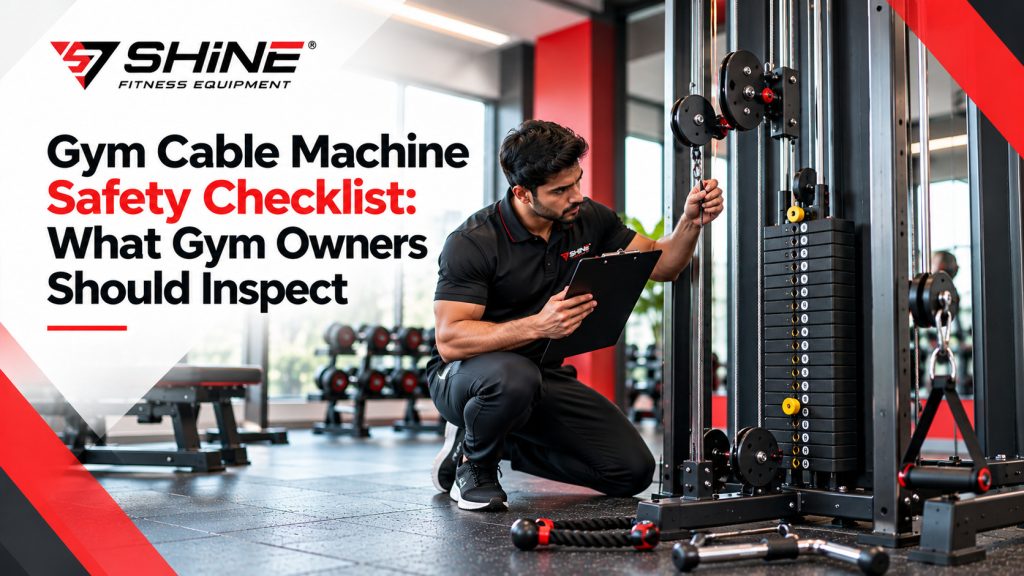
A gym cable machine is one of the most used stations on any training floor, which also makes the gym cable machine one of the most important units to inspect. Cables stretch, pulleys wear, pins loosen and weight stacks drift out of alignment long before a member notices anything wrong. This guide explains exactly what gym owners should check on every gym cable machine, how often to check it, which warning signs demand immediate action and how a structured cable machine inspection routine protects members, staff and your equipment investment.
Why Gym Cable Machine Safety Deserves Its Own Checklist
Most strength equipment is static: a bench or rack has few moving parts. A gym cable machine is different. Every gym cable machine combines a steel cable under repeated tension, multiple rotating pulleys, a guided weight stack, selector pins, handles, carabiners and an adjustable column, all working together hundreds of times a day.
When one component of a gym cable machine fails, the result is rarely a slow decline. A frayed cable can snap under load, a seized pulley can shred the cable jacket, and a misaligned weight stack can jam mid-rep. Because every user depends on that chain of parts, a dedicated cable machine inspection is more useful than a general walk-around of the gym floor.
Regular checks also support your broader gym equipment safety inspection programme. Insurers, franchise auditors and facility managers increasingly expect documented maintenance records, and a gym cable machine is often the first piece of commercial gym equipment they look at.
How a Gym Cable Machine Works
Understanding the load path of a gym cable machine makes inspection easier. When a user pulls a handle, force travels through the attachment and carabiner into the cable, around a series of pulleys and into the top plate of the weight stack. The selector pin determines how many plates are lifted, while guide rods keep the stack moving vertically. The cable is a type of wire rope, so a gym cable machine is subject to the same fatigue, abrasion and corrosion issues found in any wire-rope system.
Every point where the cable bends, clamps or rubs is a potential wear point. That is why cable machine inspection effort should focus on contact surfaces rather than just the visible length of cable.
Cable Machine Inspection: What to Check on the Gym Cable Machine Cable
The cable is the single most critical component of a gym cable machine. Inspect its full length, including sections hidden inside the frame shrouds, by slowly moving the stack through its range of motion.
Daily and Weekly Gym Cable Machine Checks
- Fraying or broken strands: Even one or two exposed wire strands indicate fatigue. Replace the cable rather than taping or trimming it.
- Jacket damage: Cracks, bubbles, flat spots or splits in the nylon coating allow moisture and grit inside, which speeds internal wear.
- Kinks and bird-caging: A kink or a section where strands open up like a cage means the cable has been overloaded or twisted and the gym cable machine should be taken out of service.
- End fittings: Check ball ends, swaged sleeves and threaded terminals for cracks, slippage or corrosion where the cable enters the fitting.
- Tension: Excess slack causes the stack to bounce and the cable to jump pulleys. Adjust tension according to the manufacturer's procedure.
If any of these issues appear, tag the gym cable machine "out of order" until a replacement cable of the correct specification is fitted. A consistent cable machine inspection habit catches these faults early.
Cable Pulley Inspection: Small Parts, Big Consequences
A worn pulley is one of the most common hidden causes of cable failure on a gym cable machine. A proper cable pulley inspection looks at each wheel individually rather than assuming they wear evenly.
During a cable pulley inspection, spin each pulley by hand with no load. It should rotate smoothly and quietly without wobble. Grinding, clicking or flat spots usually point to failing bearings. Next, look at the groove: a sharp edge, a deep channel worn into the plastic or nylon, or visible cracks mean the pulley is damaging the cable every time the gym cable machine moves.
Also check that pulley guards and covers are intact. Guards keep the cable seated and stop fingers and clothing from entering the pinch point. Finally, confirm that axle bolts are tight and that swivel pulleys on adjustable columns rotate freely through their full arc. Including a cable pulley inspection in your weekly routine costs a few minutes and can prevent a cable replacement.
Weight Stack Safety Checks on Every Gym Cable Machine
The weight stack is where most member interaction happens, which is why weight stack safety checks should be part of every daily opening routine for each gym cable machine.
What to Look for in the Stack
- Guide rods: They should be straight, clean and lightly lubricated as specified by the manufacturer. Dry or bent rods cause plates to stick and drop unevenly.
- Selector pin: The pin must insert fully, lock securely and be attached by its lanyard. Replace bent, mismatched or missing pins immediately; members should never use improvised pins.
- Plate condition: Look for cracked plates, damaged bushings and chipped edges that could catch during movement.
- Top plate and selector rod: Check that holes are not elongated and that the rod connection to the cable is secure.
- Rubber bumpers: Worn or missing bumpers at the bottom of the stack increase noise and shock loading on the cable.
Weight stack safety checks also include making sure the stack shroud is in place. An enclosed stack prevents members from reaching between plates, and regular weight stack safety checks keep the gym cable machine moving smoothly.
Frame, Fasteners and Attachments
A gym cable machine is only as safe as the structure holding everything together. Inspect welds for cracks, especially around high-load areas such as the top pulley housing and column carriages. Confirm that floor anchoring bolts are tight where the manufacturer requires the gym cable machine to be anchored.
Adjustable columns and pop-pins deserve particular attention. Spring-loaded pins should snap fully into position, and carriages should not drift under load. Handles, rope attachments, ankle straps and carabiners wear quickly, so check stitching, grips and gate springs. A damaged carabiner can release a handle mid-rep, which is a genuine injury risk on any commercial gym equipment.
Recommended Gym Cable Machine Inspection Frequency
Different checks suit different intervals. The table below shows a practical gym cable machine schedule gym owners can adapt to their own usage levels and manufacturer guidance.
| Inspection Area | Daily | Weekly | Monthly | Notes |
| Visible cable condition | Yes | Yes | Yes | Full-length check weekly |
| Pulley rotation and grooves | — | Yes | Yes | Spin each pulley unloaded |
| Selector pins and lanyards | Yes | Yes | Yes | Replace missing pins immediately |
| Guide rods and lubrication | — | Yes | Yes | Follow manufacturer lubricant type |
| Attachments and carabiners | Yes | Yes | Yes | Remove worn handles from floor |
| Frame, welds and fasteners | — | — | Yes | Torque bolts as specified |
| Professional service | — | — | — | At manufacturer's recommended interval |
A high-traffic gym cable machine should be checked towards the more frequent end of each interval, because wear is driven by repetitions, not by calendar time.
Building a Gym Equipment Safety Inspection Routine
A checklist only works when someone owns it. Turn your gym cable machine checks into part of a wider gym equipment safety inspection system with clear responsibilities.
Practical Steps to Set It Up
- Assign ownership: Name a staff member responsible for daily and weekly checks of each gym cable machine, and a technician or service partner for monthly and annual work.
- Use a written log: Record the date, machine, findings and actions taken. This record is valuable for insurance and franchise audits.
- Tag out faulty equipment: Keep "out of order" tags at the front desk so any staff member can remove a machine from use instantly.
- Keep spare parts: Stock commonly worn items such as selector pins, carabiners and handles to minimise downtime.
A consistent gym equipment safety inspection routine also helps you spot patterns. If one gym cable machine needs pulleys more often than others, it may be misaligned or overused, and that insight can guide layout or replacement decisions.
Common Gym Cable Machine Mistakes Gym Owners Make
Even well-run facilities fall into habits that shorten equipment life:
- Waiting for members to report problems instead of inspecting each gym cable machine proactively.
- Replacing a cable without checking the pulleys that damaged it.
- Using general-purpose lubricants on guide rods or cables when the manufacturer specifies otherwise.
- Fitting non-matching replacement cables or pins that do not meet the original specification.
Avoiding these mistakes keeps your commercial gym equipment running reliably and reduces emergency repair costs.
When to Repair and When to Replace a Gym Cable Machine
Most cable station issues are fixable with standard parts. Cables, pulleys, bearings, pins and attachments are consumables and should be replaced as they wear. Replacement of the whole gym cable machine is more appropriate when the frame shows structural cracks, parts are no longer available, or repair costs approach the value of a new unit.
If you are upgrading, use what you learned during inspections. A gym cable machine with an enclosed stack, sealed bearings, quality cable specifications and easy access for servicing will make future checks quicker. Reviewing build quality before buying commercial gym equipment is far cheaper than managing a poorly designed machine for years.
Frequently Asked Questions
How often should a gym cable machine be inspected?
A gym cable machine should receive quick visual checks daily, a detailed cable and pulley check weekly, and a frame and fastener check monthly. Busy commercial gyms should also book professional servicing at the interval recommended by the manufacturer.
What are the signs a gym cable machine cable needs replacing?
Replace a cable when you see broken or exposed wire strands, kinks, bird-caging, a split or bubbled jacket, or damage at the end fittings. Never repair a damaged cable with tape; take the machine out of service until a correct replacement is fitted.
Why is cable pulley inspection important?
A cable pulley inspection identifies worn grooves, cracked wheels and failing bearings that quietly damage the cable on every repetition. Catching pulley problems early protects the cable, keeps movement smooth and prevents sudden failures during use.
What do weight stack safety checks include?
They cover guide rod condition and lubrication, secure selector pins with lanyards, cracked plates or bushings, the selector rod connection, bottom bumpers and the stack shroud. These checks take minutes and should be part of the daily opening routine.
Can gym staff carry out cable machine inspection themselves?
Yes, trained staff can handle a daily and weekly cable machine inspection covering cable condition, pins, attachments and pulley rotation. Tension adjustment, cable replacement and structural repairs are better handled by a qualified technician following the manufacturer's procedures.
Should inspection records be kept?
Yes. A written log of each gym equipment safety inspection shows what was checked, what was found and what was fixed. It supports insurance and audit requirements and helps you identify machines that wear faster than expected.
What should I do if a member reports a gym cable machine problem?
Tag the gym cable machine out of order immediately, inspect the reported area and any connected components, and keep it out of use until the issue is resolved. Record the report and the repair in your maintenance log.
Conclusion
A safe gym cable machine depends on many small parts working together: the cable, every pulley, the weight stack, pins, attachments and the frame. A structured routine of daily, weekly and monthly checks catches wear before it becomes a failure, protects members and extends equipment life. Treat inspection as an ongoing system with clear ownership and records rather than an occasional task, and every gym cable machine on your floor will stay reliable for longer.
If you are reviewing your current cable stations or planning an upgrade, compare build quality, serviceability and component specifications before you buy a new gym cable machine, and read our guide on what to verify before purchasing a cable crossover machine. Explore the Shine Fitness cable equipment range or speak to the team for guidance based on your facility's usage and layout.