Introduction
Ask ten lifters which machine builds bigger legs and you'll likely start an argument. The hack squat machine and the leg press both have loyal fans, and both have earned their place on serious gym floors. But they train the body in different ways, and choosing between them, or knowing when to use each, can make a real difference in your results.
This question matters beyond the individual lifter, too. As demand for effective lower-body training grows, commercial gyms, studios, and home setups are investing in both machines. For facility owners and equipment buyers, understanding the strengths of each piece of strength training equipment helps you stock a floor that members actually use and that supports long-term business growth.
The leg press lets you move heavy loads with strong back support. The hack squat machine guides you through a squat-like motion that hammers the quads while keeping the spine protected. Each has trade-offs in muscle activation, range of motion, safety, and learning curve.
In this guide, we'll compare the two head to head, explain which builds legs more effectively and for whom, and walk through what separates a well-built machine from a poor one. Whether you're chasing stronger legs or deciding what to buy for your gym, you'll leave knowing exactly how these machines stack up.
What Is a Hack Squat Machine?
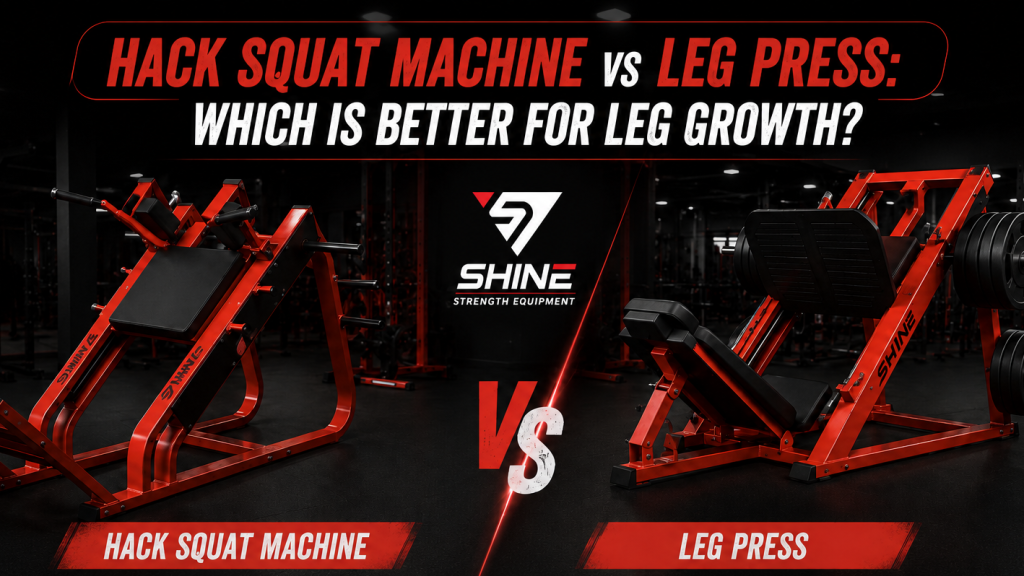
The hack squat machine is an angled, plate-loaded or selectorized machine that guides you through a squatting motion. You stand on a platform with your back and shoulders against padded supports, then bend your knees to lower and drive back up. The fixed track keeps the movement stable while still letting your body travel through a deep, squat-like pattern.
Because the back is supported and the bar path is controlled, the hack squat removes much of the balance demand of a free-weight squat. That lets you focus pressure squarely on the legs, especially the quads, without worrying about tipping forward or stabilizing a heavy bar.
It's a favorite for building quad size and strength, and it's common in commercial gyms alongside leg presses and other lower-body stations.
What Is a Leg Press?
The leg press is a machine where you sit or recline and push a weighted platform away with your feet. Your back stays supported against a pad while your legs do the work. Foot placement on the platform can shift the emphasis between quads, glutes, and hamstrings.
The leg press shines when it comes to moving heavy loads safely. Because you're seated and supported, you can often handle more weight than on a squat, which makes it popular for building raw leg strength and size. It's also approachable for beginners and gentle on the lower back when used correctly.
Hack Squat Machine vs Leg Press: The Key Differences
Both machines train the legs, but the details set them apart. Here's how they compare across the factors that matter most.
Muscles Worked
Both hit the major leg muscles, but with different emphasis:
- Hack squat machine: Heavily targets the quadriceps, with strong involvement from the glutes and some hamstring and calf activation. The squat-like motion also recruits stabilizing muscles.
- Leg press: Works the quads, glutes, and hamstrings, with the exact balance shifting based on foot placement. A higher foot position hits glutes and hamstrings more; a lower position emphasizes quads.
In short, the hack squat leans more quad-dominant and squat-specific, while the leg press is more adjustable across the whole lower body.
Range of Motion and Movement Pattern
- The hack squat moves through a deeper, more natural squat pattern, which can mean greater muscle stretch and fuller activation.
- The leg press uses a pushing motion with a range you can control by adjusting depth, though very deep reps require good mobility and control.
For lifters who want a squat-style stimulus without barbell balance demands, the hack squat feels more transferable.
Safety and Joint Stress
- The leg press keeps you seated and supported, which is easy on the lower back and beginner-friendly. Pushing too deep or locking out hard can stress the knees, so form matters.
- The hack squat supports the spine well, but the deeper knee bend places more demand on the knees and requires controlled technique.
Neither is inherently dangerous when used properly. Both protect the lower back far better than free-weight squats, which is part of their appeal.
Skill and Learning Curve
- The leg press is one of the easiest leg machines to learn, making it ideal for newcomers.
- The hack squat has a slightly steeper curve because of the squat depth and foot positioning, but it's still far simpler than a barbell back squat.
Here's a quick side-by-side summary:
| Factor | Hack Squat Machine | Leg Press |
|---|---|---|
| Main emphasis | Quad-dominant, squat pattern | Adjustable across legs |
| Range of motion | Deeper, squat-like | Controlled push |
| Lower-back stress | Low | Very low |
| Knee demand | Moderate to high | Low to moderate |
| Max load potential | High | Very high |
| Beginner-friendly | Moderate | High |
So, Which Is Better for Leg Growth?
The honest answer: it depends on your goal, but both are excellent, and most lifters benefit from using each.
For pure quad development and a squat-style stimulus, the hack squat machine often has the edge. The deep range of motion and quad emphasis make it a powerful tool for building size and strength in the front of the legs.
For maximum loading and overall leg volume with minimal back strain, the leg press is hard to beat. You can pile on weight safely and adjust foot placement to target different muscles across multiple workouts.
A few practical takeaways:
- Want bigger quads fast? Prioritize the hack squat.
- Recovering from a back issue or new to training? The leg press is a safe, effective starting point.
- Chasing complete leg development? Use both, rotating emphasis through your program.
- Limited on space or budget? Choose based on your members' or your own primary goal.
There's no need to pick a permanent winner. The strongest programs, and the best-equipped gyms, include both.
How to Use Each Machine Effectively
Getting results comes down to technique and smart programming. A few guidelines:
- Warm up properly with lighter sets before heavy work on either machine.
- Control the eccentric, lowering slowly rather than dropping the weight.
- Use a full but safe range of motion, avoiding harsh lockouts that stress the knees.
- Set foot placement intentionally on the leg press to target your chosen muscles.
- Keep your back supported against the pad throughout each rep.
- Progress gradually, adding weight only when form stays clean.
For most people, 3 to 4 sets of 8 to 15 reps builds solid leg size and strength. Pair these machines with hamstring and calf work for balanced development.
What Makes a High-Quality Hack Squat Machine
If you're buying rather than just training, build quality becomes the deciding factor. These machines endure heavy loads and constant use, so engineering matters. Here's what to look for.
Materials and Durability
The frame carries enormous stress, so quality starts there:
- Heavy-gauge, powder-coated steel that resists flexing and corrosion.
- Smooth, durable linear bearings or rollers for a clean, quiet glide.
- Sealed components and quality welds that hold up over years of use.
Cheap materials lead to wobble, wear, and downtime, which frustrate members and cost owners money.
Ergonomics and User Comfort
A machine that fits more body types gets used more. Look for adjustable shoulder pads, comfortable back support, and a platform large enough for varied foot placements. Thoughtful ergonomics keep the movement natural and reduce strain, encouraging consistent use.
Safety Standards
Reliable equipment meets recognized safety standards for weight capacity, stability, and secure locking mechanisms. Sturdy safety catches and smooth, predictable motion protect users during heavy lifts. Always confirm load ratings and certifications before purchasing.
Customization and Smart Technology
Modern manufacturing technology gives buyers more options than ever:
- Custom upholstery and branding to match a gym's identity.
- Weight stack or plate-loaded configurations to suit different facilities.
- Smart fitness technology, like rep tracking and app integration, increasingly popular as home gym trends and connected workouts grow.
These choices let you tailor equipment to your space and audience rather than settling for a generic build.
How to Evaluate a Gym Equipment Manufacturer
The machine is only as good as the company behind it. When you choose a supplier, you're also choosing your future support experience. Weigh these factors:
- Engineering and build quality, backed by real durability testing and quality materials.
- Product range, from strength training equipment and abdominal exercise machines to cardio equipment production, which signals genuine manufacturing depth.
- Warranty and service, since strong coverage reduces long-term ownership risk.
- Parts and maintenance support, which keeps machines running and minimizes downtime.
- Reputation and track record, confirmed through reviews, references, and years in the industry.
A dependable partner makes ownership smoother long after delivery day.
Long-Term Investment Value for Gym Owners
For a business buyer, leg machines are assets, not just expenses. A durable, popular machine generates returns through years of member use and low maintenance, while a cheap unit that breaks down or sits idle quietly drains profit.
When planning a gym investment, consider:
- Cost per year of service, not just the upfront price.
- Downtime and repair costs, which erode margins over time.
- Member satisfaction and retention, since reliable, comfortable equipment keeps people coming back.
- Longevity and resale value, where reputable, well-built equipment holds up best.
Quality almost always costs less over the full lifespan of the machine, which is the mindset behind every smart facility purchase.
Conclusion
When it comes to building strong, muscular legs, both the hack squat and the leg press deliver, just in different ways. The hack squat machine offers a deep, quad-focused, squat-style stimulus, while the leg press lets you move heavy loads safely and adjust emphasis across the legs. For complete development, most lifters and well-equipped gyms benefit from having both rather than choosing one.
For owners and buyers, the bigger lesson is that quality equipment is a long-term investment. Durable materials, sound product engineering, solid safety standards, comfortable ergonomics, and reliable after-sales support separate a machine worth owning from one that becomes a costly headache. Choosing a trusted partner protects that investment for years.
If you're sourcing dependable lower-body machines, working with an established gym machine manufacturer matters. Shine Fitness builds commercial-grade equipment engineered for heavy daily use, durability, and user comfort. As a respected hack squat machine manufacturer in India and one of India's largest gym equipment manufacturers, the company offers a wide range of strength and cardio machines built to professional standards.
To find the right fit for your facility, reach out for a consultation, request a product catalog, or explore customization options for your space. The right equipment partner helps your gym deliver better workouts, happier members, and stronger long-term growth.
FAQ Section
1. Is the hack squat machine better than the leg press for leg growth?
Both build legs effectively. The hack squat is more quad-dominant with a deeper, squat-like motion, while the leg press allows heavier loads and adjustable muscle emphasis. For complete development, using both is ideal rather than choosing one over the other.
2. What muscles does the hack squat machine work?
The hack squat machine primarily targets the quadriceps, with strong involvement from the glutes and additional activation of the hamstrings and calves. The supported squat motion also engages stabilizing muscles, making it an efficient compound exercise for lower-body strength and size.
3. Is the hack squat machine safe for beginners?
Yes, when used with proper form. The back support and guided motion make it far safer than barbell squats. Beginners should start light, control the movement, and avoid excessive depth until comfortable, gradually increasing weight as technique improves.
4. Which is easier on the lower back, hack squat or leg press?
Both protect the lower back well because they support the spine. The leg press is especially gentle since you remain seated and fully supported, making it a strong choice for lifters managing back concerns or returning from injury.
5. What should gym owners look for in a quality hack squat machine?
Prioritize heavy-gauge steel frames, smooth bearings, secure safety catches, comfortable adjustable padding, and recognized safety standards. Also consider warranty, parts availability, and the manufacturer's reputation, since these factors determine long-term reliability and total cost of ownership.
6. Is a hack squat machine a good investment for a commercial gym?
It is. The hack squat is consistently popular for leg training and suits a wide range of users. A durable, well-built machine offers years of low-maintenance service, supporting member retention and making it a strong long-term asset for any facility.
7. Can a hack squat machine be customized for my facility?
Yes. Many manufacturers offer custom upholstery, branding, weight configurations, and smart fitness technology like rep tracking. Customization lets you match the machine to your gym's space, audience, and identity rather than settling for a standard model.