Building a workplace fitness center is no longer a perk reserved for tech giants and corporate headquarters. Companies of every size are discovering that an on-site gym pays for itself through lower absenteeism, stronger retention, and employees who simply feel better at work. But the difference between a gym that gets used every day and one that collects dust often comes down to a single early decision: the gym equipment manufacturer you choose to partner with. Get that right, and the rest of the project becomes far easier to manage.
This guide walks through the full process of setting up a corporate fitness center, from understanding what your space actually needs to evaluating manufacturers, planning your layout, and protecting your investment for the long haul. Whether you're a facility operator, an HR leader, or a business owner weighing the numbers, the goal here is to give you a clear, practical roadmap rather than a sales pitch.
Why Corporate Gyms Are Becoming a Workplace Priority
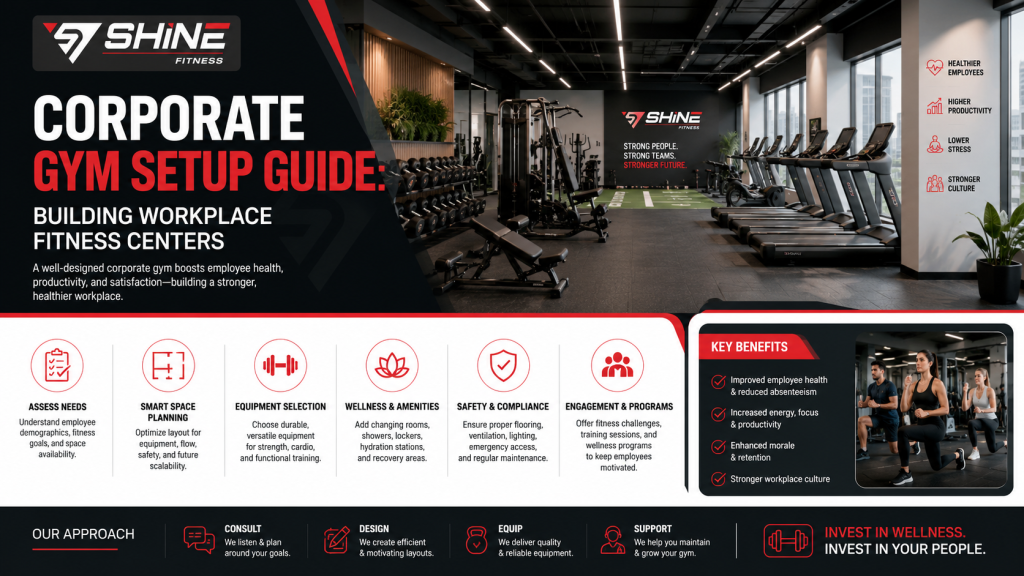
The demand for workplace wellness has shifted from "nice to have" to a genuine recruitment and retention tool. Employees increasingly expect their workplace to support their health, and a well-equipped fitness center signals that a company takes that seriously.
There are solid business reasons behind the trend:
- Reduced healthcare costs as employees stay more active and manage stress better.
- Higher productivity, since regular movement is linked to sharper focus and energy.
- Stronger retention, because perks tied to daily wellbeing are hard to replicate elsewhere.
- Fewer sick days, with active employees generally taking less time off.
- A visible culture signal that helps attract talent during hiring.
The catch is that none of these benefits materialize if the gym isn't actually pleasant and reliable to use. Cheap machines that wobble, break, or feel uncomfortable get abandoned quickly. That's why the equipment decision sits at the center of any successful corporate gym project.
What a Workplace Fitness Center Actually Needs
Before you start comparing brands, it helps to understand the categories of equipment that make a corporate gym functional for a wide range of fitness levels. Unlike a home setup built around one person's preferences, a workplace gym serves beginners and seasoned lifters in the same room.
Cardio Equipment
Cardio machines are usually the most-used items in any shared gym, so they need to handle heavy daily traffic. A balanced selection typically includes:
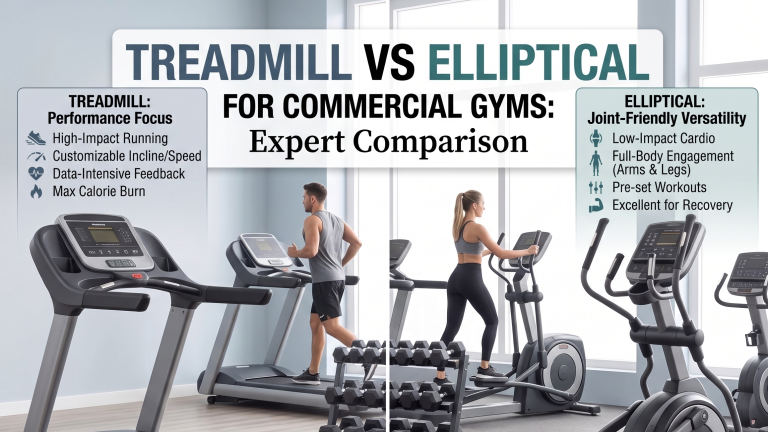
- Treadmills with strong motors and shock-absorbing decks for joint comfort.
- Ellipticals and cross-trainers for low-impact options.
- Stationary and recumbent bikes that suit different mobility levels.
- Rowing machines, which deliver a full-body workout in a small footprint.
Cardio equipment production has advanced considerably in recent years, with quieter motors, better cushioning, and integrated screens becoming standard. For a corporate setting, prioritize machines rated for commercial use rather than home-grade versions, which simply aren't built for the volume.
Strength Training Equipment
Strength training equipment forms the backbone of a serious gym. For a workplace facility, a mix of guided and free-weight options works best because it accommodates newcomers who want safety and experienced members who want range.
- Selectorized machines (pin-loaded) for safe, intuitive resistance training.
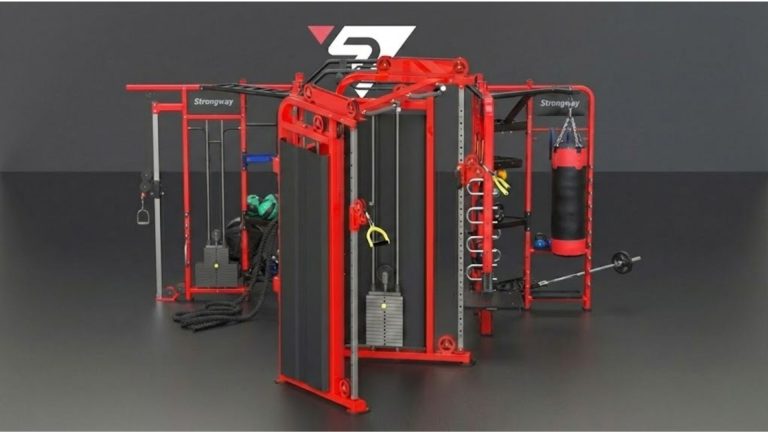
- Cable and functional trainers that allow dozens of movement patterns in one unit.
- Free weights, including dumbbells, barbells, and benches.
- Plate-loaded machines for users who want heavier, progressive loading.
Good strength equipment is defined by smooth motion, stable frames, and biomechanics that protect the joints. A reputable gym machine manufacturer will design these products around how the human body actually moves, not just how the machine looks on a showroom floor.
Functional and Abdominal Training Zones
Open functional areas have become essential as training styles evolve. A modest open space with the right tools lets employees stretch, do mobility work, or run quick bodyweight circuits.
- Abdominal exercise machines such as ab benches, crunch stations, and rotary torso units.
- Kettlebells, medicine balls, and resistance bands for versatile conditioning.
- Stretching mats and foam rollers for recovery.
- A small turf or rubber strip for sled work and dynamic movements.
This zone tends to deliver high value per square foot, since it serves many users with relatively inexpensive gear.
How to Choose the Right Gym Equipment Manufacturer
Once you know what you need, the harder task begins: separating manufacturers that build lasting equipment from those that cut corners. The right partner influences everything from initial cost to how often your machines need repair five years from now. Here's how experienced buyers evaluate their options.
Manufacturing Technology and Engineering
The quality of a finished machine starts long before assembly. Manufacturers that invest in precision engineering, robotic welding, and proper quality control produce equipment that holds up under stress. Ask about how products are designed and tested.
- How are frames welded and reinforced at stress points?
- What load-testing does the equipment undergo before release?
- Is product engineering handled in-house or outsourced?
- How long has the manufacturer been producing this category?
A serious fitness equipment manufacturer will answer these questions readily and often welcome a factory visit or video walkthrough.
Material Quality and Durability
Material quality is where the gap between a five-year machine and a fifteen-year machine becomes obvious. The grade of steel, the thickness of tubing, the quality of bearings and pulleys, and the type of upholstery all determine how the equipment performs under constant use.
- Commercial-grade steel frames resist flexing and rust over time.
- Sealed bearings and high-grade cables keep cable machines smooth for years.
- Durable, tear-resistant upholstery survives daily contact and cleaning.
- Quality powder-coating protects against scratches and corrosion.
Cheaper materials feel fine on day one but reveal their weaknesses fast in a high-traffic environment. Durability isn't a luxury in a corporate gym; it's the difference between a one-time purchase and constant replacements.
Safety Standards and Compliance
In a shared facility used by employees of varying experience, equipment safety standards carry real weight, both for user wellbeing and for liability. Look for manufacturers whose products meet recognized safety certifications and include thoughtful safety features.
- Clear weight stack guards and pinch-point protection.
- Stable bases that won't tip during dynamic movements.
- Intuitive adjustment mechanisms that reduce the risk of misuse.
- Visible instructions or guidance on the machines themselves.
Reliable safety engineering protects your people and your organization, and it reflects a manufacturer's overall commitment to quality.
Customization Capabilities
Every workplace is a different shape, with different ceiling heights, floor plans, and brand identities. Strong customization capabilities let you tailor equipment to your space rather than forcing your space to fit generic machines.
- Custom upholstery colors to match company branding.
- Compact or modular designs for tighter rooms.
- Logo placement on machines and benches.
- Flexible configurations that grow with your facility.
A manufacturer willing to adapt its products signals a partnership mindset, which matters when you may want to expand the gym later.
Planning the Layout of a Corporate Fitness Center
Even excellent equipment underperforms in a poorly planned room. Layout shapes traffic flow, safety, and how welcoming the space feels, which directly affects how often employees actually show up.
A few principles guide a good layout:
- Group equipment by function so cardio, strength, and functional zones each have their own area.
- Leave generous clearance around machines, especially free-weight and functional zones where people move dynamically.
- Place cardio near windows or screens to make longer sessions more enjoyable.
- Keep heavy machines against walls and lighter, flexible gear in open central space.
- Plan for sightlines so a single staff member or member can see most of the room.
Don't overlook the supporting details either: proper flooring to absorb impact and reduce noise, adequate ventilation, mirrors to help with form, and clearly marked walking paths. These elements turn a room full of machines into a space people genuinely want to use.
Budgeting and Long-Term Investment Value
Corporate gym budgets vary widely, but the smartest buyers think in terms of long-term ownership value rather than upfront price alone. A machine that costs more but lasts twice as long and rarely needs repair is almost always the better financial decision.
When you build your budget, account for more than the equipment sticker price:
- Delivery, installation, and any space preparation.
- Flooring, mirrors, and ventilation upgrades.
- Ongoing maintenance and the cost of spare parts.
- Eventual upgrades or expansions as usage grows.
A useful way to compare options is total cost of ownership over five to ten years. Under that lens, well-built commercial equipment from a trusted manufacturer often wins comfortably over budget gear that needs frequent replacement. Treating the gym as a long-term asset, rather than a one-off expense, leads to far better outcomes.
Smart Fitness Technology in the Modern Workplace Gym
Smart fitness technology has moved from novelty to genuine driver of engagement. Connected equipment helps employees track progress, follow guided workouts, and stay motivated, which keeps your gym busy rather than empty.
Modern features worth considering include:
- Built-in screens with on-demand classes and metrics.
- App connectivity that lets users log workouts and follow programs.
- Heart-rate integration for data-driven training.
- Usage analytics that help facility managers understand which machines get the most traffic.
That last point is especially useful for businesses: knowing how the gym is actually used helps justify the investment and guide future purchases. The same technology trends shaping home gym design, where compact, connected equipment is increasingly popular, are influencing what employees now expect from a workplace facility too.
Maintenance, Reliability, and After-Sales Support
The relationship with your manufacturer doesn't end at delivery. In fact, after-sales support is where many corporate gym projects succeed or struggle. Machines in shared use need periodic servicing, and when something breaks, fast access to parts keeps the gym running.
Before you commit, clarify the support picture:
- What warranty covers frames, parts, and labor, and for how long?
- How quickly can replacement parts be sourced?
- Is preventive maintenance offered, and at what cost?
- Are service technicians available in your region?
User comfort and ergonomics also tie into reliability. Equipment designed around proper body mechanics not only feels better but tends to wear more evenly, reducing breakdowns. A manufacturer that stands behind its products with responsive support gives you confidence that your fitness center will stay operational for years.
Common Mistakes to Avoid
A few recurring missteps can undermine an otherwise solid corporate gym project. Knowing them in advance saves money and frustration:
- Buying home-grade equipment for a commercial setting that sees constant use.
- Underestimating space requirements, leaving the room cramped and unsafe.
- Ignoring maintenance planning, which leads to broken machines and lost engagement.
- Choosing on price alone, without weighing durability and support.
- Skipping employee input, so the gym ends up stocked with gear no one wanted.
Avoiding these traps comes down to planning carefully and choosing a manufacturing partner who understands commercial demands.
Conclusion
Setting up a workplace fitness center is a meaningful investment in your people and your business, and the quality of that investment rests largely on the equipment behind it. By understanding what your space needs, evaluating a gym equipment manufacturer on engineering, materials, safety, and support, and planning your layout and budget with the long term in mind, you give your corporate gym the best possible chance of becoming a space employees genuinely value.
The right partner makes all the difference. Working with an experienced gym machine manufacturer and a dependable fitness equipment manufacturer ensures your facility is built on equipment that lasts, performs, and keeps people coming back. As one of India's largest gym equipment manufacturer names trusted by commercial facilities, Shine Fitness brings the engineering, customization, and after-sales support that workplace projects demand.
If you're planning a corporate fitness center, it's worth exploring your equipment options and talking through your space with a knowledgeable team. Reach out to Shine Fitness for a consultation, request a product overview, or schedule a walkthrough of your facility to start building a gym your employees will actually use.
Frequently Asked Questions
How much does it cost to set up a corporate gym?
Costs vary widely based on size, equipment quality, and space preparation. A small workplace gym can start modestly, while larger commercial facilities require more. Focusing on long-term value rather than the lowest upfront price usually delivers the best return.
What equipment is essential for a workplace fitness center?
A balanced setup includes cardio machines like treadmills and bikes, strength equipment such as cable machines and free weights, and a functional zone with abdominal exercise machines and mats. The mix should serve both beginners and experienced users.
How do I choose a reliable gym equipment manufacturer?
Evaluate engineering quality, material grade, safety certifications, customization options, and after-sales support. A trustworthy manufacturer answers technical questions openly, offers solid warranties, and supplies replacement parts quickly when needed.
Is commercial gym equipment really worth the higher price?
Yes, in shared, high-traffic settings. Commercial-grade machines are built with stronger materials and engineering to handle constant use, lasting far longer than home equipment and reducing repair and replacement costs over time.
How much space does a corporate gym need?
It depends on your equipment and employee count, but generous clearance around machines is essential for safety and comfort. Even a compact room works well when zones are planned thoughtfully and traffic flows smoothly.
How can smart fitness technology improve employee engagement?
Connected equipment offers guided workouts, progress tracking, and usage data that keep employees motivated and help managers understand how the gym is used. This engagement is what turns a fitness center from an empty room into a daily habit.
What kind of maintenance does a workplace gym require?
Regular cleaning, periodic servicing of moving parts, and prompt repairs keep equipment safe and reliable. Partnering with a manufacturer that offers preventive maintenance and fast access to spare parts makes ongoing upkeep far easier.