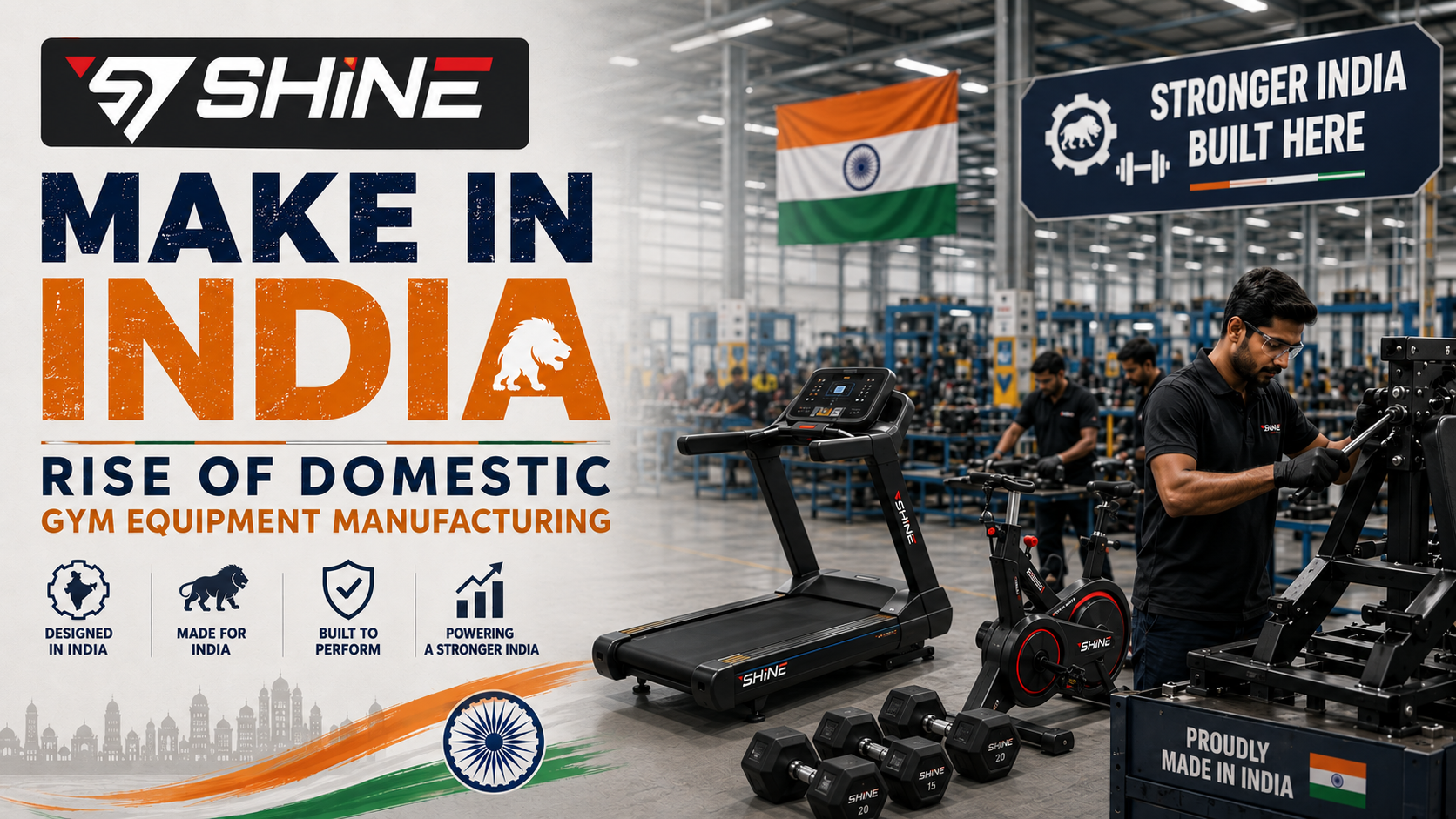
For years, serious commercial gyms in India looked overseas for their machines. If you wanted a reliable rack, a smooth treadmill, or a strength line that could survive heavy daily use, imported brands felt like the safe bet. That has changed fast. Today, a well-run Indian gym equipment manufacturer can match imported quality on durability, engineering, and finish often at a far more sensible price. The “Make in India” push has turned domestic manufacturing into a genuine competitive advantage, and gym owners are paying attention.
This shift matters whether you run a single neighborhood studio, operate a chain of fitness facilities, or distribute equipment to others. Demand for quality gym equipment keeps climbing as more Indians treat fitness as a daily habit rather than a New Year resolution. Buyers now expect commercial-grade build quality, smart features, and long service life without the long lead times and steep costs of importing.
In this guide, we’ll break down why domestic manufacturing is booming, how to evaluate a manufacturer properly, and what truly separates equipment built to last from equipment built to look good in a brochure.
The Make in India Push Behind Domestic Gym Equipment Manufacturing
The growth of Indian fitness equipment manufacturing isn’t an accident. Several forces have lined up at once.
Government initiatives encouraging local production have made it easier and more attractive to build machines domestically. At the same time, the cost and unpredictability of imports shipping delays, customs duties, currency swings pushed many buyers to look closer to home. Add a fast-growing fitness culture across metros and smaller cities alike, and you have a market that rewards capable local makers.
The result is a maturing industry. Indian manufacturers have invested in better steel sourcing, modern fabrication, and tighter quality control. Many now export, which says a lot about the standards they’ve reached.
For gym owners, the practical benefits are clear:
- Shorter delivery times, since machines aren’t crossing oceans.
- Easier servicing and spare parts, because support is local.
- Lower total cost without the import markup.
- Real customization, since you can work directly with the factory.
A strong domestic gym equipment manufacturer now offers the rare combination of quality, value, and responsiveness that imported suppliers struggle to match.
What a Modern Gym Equipment Manufacturer Actually Does
It’s easy to picture a manufacturer as just a factory stamping out machines. The reality is more involved, and understanding it helps you judge quality.
From Raw Steel to Finished Machine
A quality build starts long before assembly. It begins with material selection the grade of steel, the thickness of the tubing, the type of welds. A serious gym machine manufacturer controls each stage:
- Engineering and design, where load capacity, ergonomics, and safety are planned.
- Material sourcing, choosing steel and components that hold up under years of stress.
- Cutting, bending, and welding, where precision determines stability.
- Powder coating and finishing, which protects against rust, sweat, and wear.
- Upholstery and assembly, where comfort and detail come together.
- Testing and quality control, before anything ships.
Skip or rush any step, and the weakness shows up later wobbly frames, peeling coatings, or pads that crack within a year.
The Main Product Categories
A full-service fitness equipment manufacturer typically covers four core areas:
- Strength training equipment: plate-loaded machines, selectorized stacks, racks, benches, and free-weight gear built to handle constant heavy loading.
- Cardio equipment: treadmills, ellipticals, bikes, and rowers, where smooth motion and motor reliability matter most.
- Abdominal and core machines: ab benches, crunch stations, and rotary core trainers designed for controlled, comfortable movement.
- Functional and accessory equipment: cable stations, rigs, and smaller tools that round out a modern training floor.
The best manufacturers don’t just make these in isolation they design them to work as a coherent, well-spaced gym layout.
How to Evaluate a Gym Equipment Manufacturer
This is where many buyers go wrong. A glossy catalog says very little about how a machine performs after 18 months of daily use. Here’s a practical checklist to separate strong manufacturers from weak ones.
Material Quality and Durability
Durability lives in the details. Ask about steel grade and gauge, weld quality, and the type of coating used. Commercial machines should use heavy-duty frames and corrosion-resistant finishes, because gyms are humid, sweaty, high-traffic environments. Pads and grips wear fastest, so check whether they’re easy to replace.
A simple test: ask how the manufacturer’s equipment performs in a busy commercial setting over five years, and whether they can point to facilities still running it.
Safety Standards and Certifications
Equipment safety isn’t optional it’s a liability issue and a trust issue. Strong manufacturers follow recognized safety standards for load testing, stability, and pinch-point protection. Look for:
- Clear weight and load ratings.
- Smooth, guarded moving parts.
- Stable bases that don’t tip under uneven use.
- Quality cables, pulleys, and locking mechanisms.
A reputable maker will happily explain their testing process. Vague answers are a warning sign.
Customization Capabilities
One real advantage of buying domestically is customization. A capable manufacturer can adjust dimensions, colors, branding, and upholstery to fit your space and identity. This matters for boutique studios that want a distinct look, and for facilities working with unusual floor plans. Ask whether they offer:
- Custom colors and logo branding.
- Adjusted sizing for tight spaces.
- Tailored equipment packages for your gym type.
Why Manufacturing Technology Matters
Modern fabrication technology is a big reason Indian manufacturers have closed the quality gap. Computer-controlled cutting and bending produce consistent, precise frames. Robotic or jig-assisted welding creates stronger, cleaner joints. Automated powder-coating lines apply even, durable finishes that resist chipping and rust.
This precision translates directly into performance you can feel. A treadmill deck stays aligned. A cable machine glides without catching. A loaded press moves through a smooth, predictable path. These aren’t luxuries they’re the difference between equipment your members trust and equipment they quietly avoid.
Product engineering also drives ergonomics. Thoughtful design means natural movement paths, comfortable contact points, and adjustments that suit a wide range of body types. User comfort isn’t a soft benefit; comfortable members train more often and stay longer, which protects your business.
Smart Fitness and Changing Buyer Expectations
The fitness industry is moving toward connected, data-driven training, and buyers increasingly expect it. Smart fitness technology now shows up in many commercial machines through:
- Built-in screens and workout tracking.
- Heart-rate and performance monitoring.
- App connectivity that lets members log progress.
- Interactive programs that keep training engaging.
You don’t need every machine to be a smart machine. But a forward-looking manufacturer should understand these trends and offer connected options where they add real value. This is especially true for premium studios competing on experience.
The key is balance. Smart features should enhance a fundamentally well-built machine, not paper over a weak one. Flashy screens on a wobbly frame help no one.
Home Gym Trends and the Domestic Opportunity
Commercial gyms aren’t the only growth story. Home fitness has become a lasting habit for many Indians, and that’s opened a major opportunity for manufacturers and distributors alike.
Home buyers want compact, durable, good-looking equipment that fits real living spaces. This has pushed manufacturers to design space-saving strength stations, foldable cardio machines, and versatile multi-gyms. For distributors and entrepreneurs, partnering with a domestic maker that serves both commercial and home segments opens two revenue streams at once.
The same manufacturing strengths apply: durable materials, smart ergonomics, and reliable performance. A family using a machine daily expects the same dependability a gym does just in a smaller, friendlier package.
The Long-Term Investment Case
Gym equipment is a capital investment, not a casual purchase. The smartest buyers think in years, not months.
Cheap equipment often costs more over time. It breaks, needs frequent repair, and frustrates members who expect machines to work. Quality equipment, by contrast, keeps performing and protects your reputation. When you plan a gym investment, weigh these factors:
- Maintenance and reliability: How often will it need service, and how easy is upkeep?
- Spare parts availability: Can you get replacement pads, cables, and components quickly?
- Warranty and support: What’s covered, and for how long?
- Resale and longevity: Will it still be usable and presentable in five to seven years?
Local manufacturing strengthens every one of these. Spare parts arrive faster. Service teams are reachable. Warranty claims don’t get lost across borders. For a growing gym business, that reliability is the foundation of steady operations and happy members which is what ultimately drives revenue and word-of-mouth growth.
A well-chosen equipment partner doesn’t just fill your floor. It supports your business as you expand, add locations, or upgrade your offering.
Conclusion
The rise of domestic manufacturing has genuinely reshaped how India buys fitness equipment. A capable gym equipment manufacturer at home can now deliver the durability, engineering, and value that once required importing while offering faster service, real customization, and dependable local support. For gym owners, distributors, and fitness entrepreneurs, that’s a powerful shift worth acting on.
The fundamentals of a smart purchase stay the same no matter who you buy from. Focus on material quality, safety standards, ergonomics, and long-term reliability. Look past the catalog and judge how equipment performs under real, daily use. Whether you need a dependable gym machine manufacturer for a boutique studio, a full-range fitness equipment manufacturer for a large facility, or a partner with the scale to rival India’s largest gym equipment manufacturer, those priorities should guide every decision.
This is exactly the standard that brands like Shine Fitness aim to build around quality engineering, durable construction, and equipment designed to support real fitness businesses over the long run. If you’re planning a new gym, upgrading your floor, or exploring distribution opportunities, it’s worth comparing manufacturers carefully and asking the hard questions about durability, safety, and support.
Take the next step with confidence. Explore the product range, request specifications, and book a consultation to find equipment that fits your space, your members, and your growth plans. The right manufacturing partner is an investment that pays you back for years.
Frequently Asked Questions
What should I look for in a gym equipment manufacturer?
Focus on material quality, weld strength, and corrosion-resistant finishes, since these determine how long equipment lasts under heavy use. Check safety certifications, warranty terms, and spare-parts availability. A strong manufacturer will explain their testing process and point to facilities running their machines for years.
Is Indian-made gym equipment as good as imported equipment?
In many cases, yes. Modern Indian manufacturers use advanced fabrication technology, quality steel, and tight quality control that rival imported brands. The added benefits faster delivery, easier servicing, lower cost, and real customization often make domestic equipment the smarter overall choice for commercial buyers.
How much does commercial gym equipment cost?
Pricing varies widely based on the equipment type, build quality, brand, and whether you buy individual machines or full packages. Strength stations, cardio machines, and full gym setups all sit at different price points. Request a detailed quote and compare total value durability and support not just the upfront number.
What’s the difference between commercial and home gym equipment?
Commercial equipment is built for constant, heavy, multi-user load with reinforced frames and higher durability standards. Home equipment prioritizes a compact footprint, lighter use, and easy storage. Both should be well-built, but commercial machines are engineered to survive far more demanding daily traffic.
Can manufacturers customize gym equipment for my space?
Yes, this is a key advantage of buying from a domestic manufacturer. Many can adjust dimensions, colors, upholstery, and branding, and they can tailor equipment packages to your floor plan and gym type. Customization helps boutique studios stand out and helps tight spaces work efficiently.
How long does quality gym equipment last?
Well-built commercial equipment can perform reliably for several years, often five to ten or more with proper maintenance. Longevity depends on material quality, build standards, usage levels, and upkeep. Choosing durable machines and a manufacturer with strong parts and service support protects your investment over time.
Why is smart fitness technology becoming important?
Smart features like workout tracking, app connectivity, and performance monitoring keep members engaged and help facilities compete on experience. They add real value when built into a fundamentally solid machine. You don’t need it on every unit, but a forward-looking manufacturer should offer connected options where they matter.