Introduction
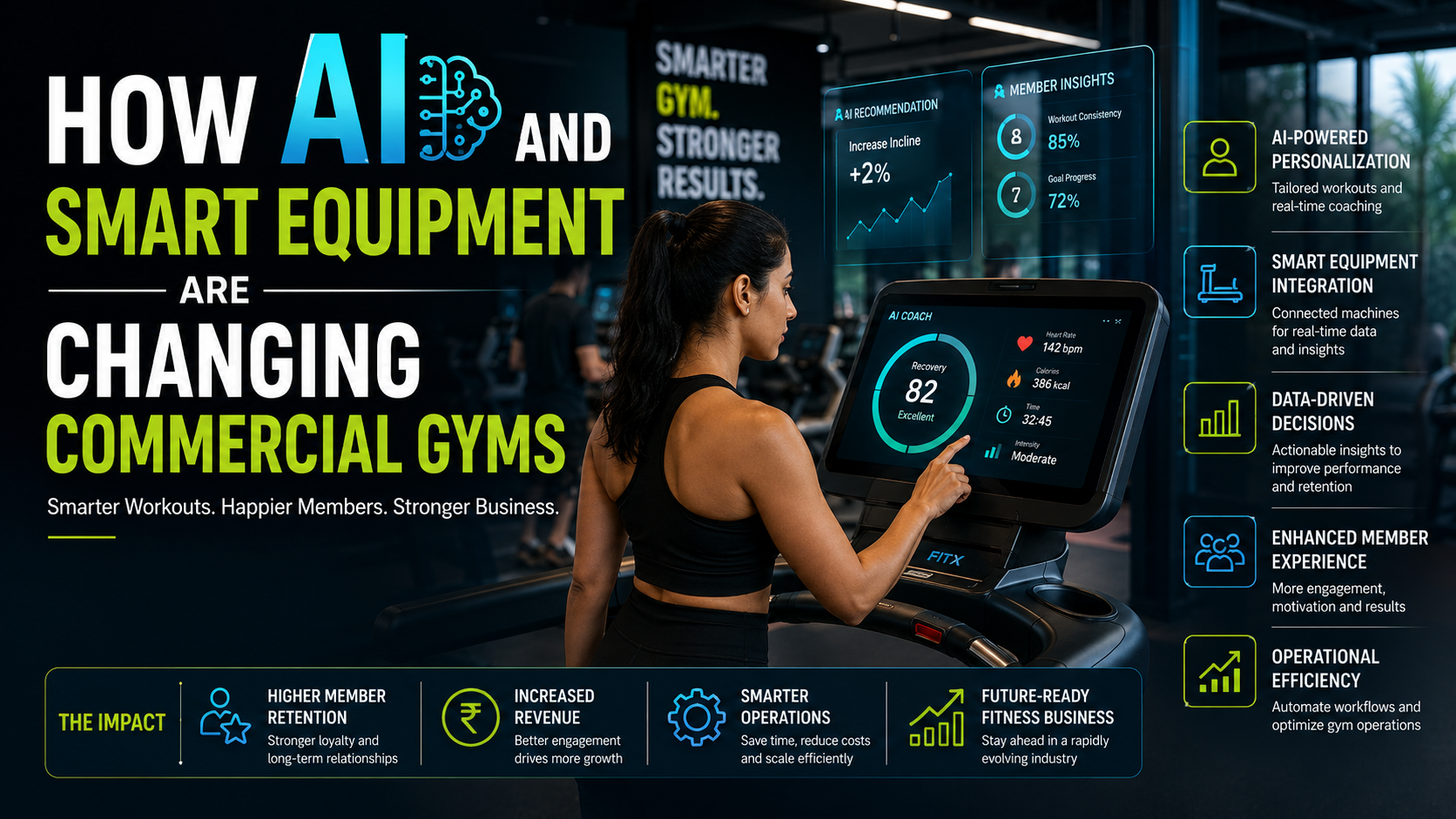
Walk into a modern fitness facility today and the difference is hard to miss. Touchscreens replace printed workout cards, machines adjust resistance on their own, and member apps track every rep before the towel hits the bench. Artificial intelligence and connected hardware have moved from novelty to expectation, and that shift is rewriting what gym owners ask of every commercial gym equipment manufacturer they work with. Buyers no longer want machines that simply hold weight they want platforms that engage members, generate data, and stay reliable under heavy daily use.
This matters because the fitness market is more competitive than it has ever been. Members compare facilities the way they compare apps, and a gym that feels dated loses them quickly. At the same time, boutique studios, hotel gyms, corporate wellness centers, and rehab clinics are all expanding, and each wants equipment tailored to its space and audience. For operators and distributors, that creates real opportunity but only if they understand what “smart” equipment actually delivers and how to invest in it wisely.
This article explains how AI and connected technology are changing commercial gyms, what’s happening behind the scenes in equipment manufacturing, and how to evaluate suppliers and protect your investment as the technology evolves. The goal is practical clarity, not hype.
The Smart Fitness Shift: Why Commercial Gyms Are Changing
A decade ago, “premium” equipment meant a heavier frame and better upholstery. Today it increasingly means connectivity, data, and intelligent feedback layered on top of solid engineering. Several forces are driving the change at once:
- Member expectations shaped by wearables and home fitness apps, which set a high bar for tracking and personalization.
- Operator economics, where retention and floor efficiency decide whether a facility thrives.
- The home gym boom, which pushed commercial spaces to offer experiences members can’t replicate at home.
- Maturing technology, as sensors, screens, and AI models became affordable enough to build into mainstream machines.
The result is a category where strength training equipment, cardio machines, and even functional rigs are expected to do more than move weight. They’re expected to inform, adapt, and connect.
What “Smart” Equipment Actually Means
The word “smart” gets stretched thin in marketing. In practice, it covers a few distinct capabilities, and understanding them helps buyers separate genuine value from gimmicks.
Connected Strength Machines
Connected strength equipment uses sensors, and sometimes motor- or cable-driven resistance, to track load, range of motion, and reps automatically. Some systems replace the traditional pin-and-stack with digital or electromagnetic resistance that can be adjusted in tiny increments or changed mid-set. The practical payoff:
- Automatic logging, so members never lose track of progress.
- Resistance that adapts to strength curves and fatigue.
- Easier progressive overload without re-racking plates.
AI Coaching and Form Tracking
The most visible leap is on-machine guidance. Using sensors or camera-based computer vision, equipment can count reps, flag poor form, and suggest corrections in real time. For a member who can’t afford a personal trainer, that feedback bridges a real gap and for a gym, it extends coaching capacity without adding staff. Even focused stations like abdominal exercise machines now appear with guided routines and tracking that keep members using them correctly.
Data, Apps, and Member Engagement
Behind the hardware sits software. Connected machines feed data into member apps and facility dashboards, which power personalized programs, challenges, and progress reports. For operators, the same data reveals how equipment is actually used which machines run hot, which sit idle, and how to plan the floor. That insight turns guesswork into informed decisions.
How AI Is Reshaping the Member Experience
For members, the everyday experience is where AI earns its keep. A first-time visitor can scan in, answer a few questions, and receive a routine matched to their goals and ability. As they train, machines recognize them, recall their settings, and adjust automatically.
Concrete improvements members notice include:
- Personalized programming that updates as performance changes, instead of static printed plans.
- Real-time feedback on tempo, range, and form that reduces injury risk and builds confidence.
- Seamless tracking across machines, wearables, and apps, so progress is visible and motivating.
- Lower barrier to entry for beginners, who often quit because they don’t know what to do.
These features directly support retention the single most important metric for most facilities. A member who sees progress and feels guided is a member who renews.
Behind the Scenes: AI in Equipment Manufacturing
The intelligence in modern gyms isn’t only in the machines on the floor. It’s increasingly built into how those machines are designed and produced. This is where the strongest manufacturers separate themselves, and where smart buyers should look closely.
Smarter Engineering and Durability
Advanced manufacturing technology has changed product development. Engineers now use detailed 3D modeling and simulation including finite element analysis to test how a frame handles stress long before a prototype is welded. That means weak points are identified and fixed in software, producing equipment that’s both lighter and stronger.
The benefits compound over a machine’s life:
- Frames engineered to handle years of high-volume commercial use.
- Movement paths refined to match natural biomechanics for user comfort and ergonomics.
- Tighter tolerances from robotic welding and automated cutting, improving consistency unit to unit.
- Better material quality and performance, since simulation guides where to use heavier-gauge steel and where it isn’t needed.
Predictive Maintenance and Reliability
Connected machines can also report on their own condition. Usage sensors track cycles on cables, bearings, and moving parts, allowing predictive maintenance replacing a component before it fails rather than after a member is left staring at an out-of-order sign. For a busy facility, fewer breakdowns mean more uptime, lower repair costs, and a more dependable experience. Reliability, once a quiet spec, becomes a competitive advantage.
What This Means for Gym Owners and Buyers
Technology is exciting, but equipment is still a capital investment that should pay back over years. The challenge for buyers is balancing innovation against fundamentals like durability, serviceability, and total cost of ownership.
A few principles help:
- Match technology to your audience. A boutique studio may need rich app integration; a no-frills strength gym may prioritize bulletproof builds over screens.
- Plan for the software lifecycle. Smart features depend on updates and support. Confirm how long the manufacturer will maintain the platform.
- Weigh total cost, not sticker price. Factor in installation, maintenance, parts availability, and expected lifespan.
- Protect against obsolescence. Favor modular designs and open ecosystems over closed systems that age out quickly.
- Don’t sacrifice the basics. A smart machine with a flimsy frame is a liability no software can fix.
How to Evaluate a Manufacturer in the Smart Era
The supplier behind the equipment matters more than ever, because you’re buying both hardware and an ongoing relationship. When assessing any gym machine manufacturer, look beyond the brochure:
- Engineering depth – do they design and test for real commercial loads, or rebadge generic imports?
- Adherence to equipment safety standards, with documentation rather than vague assurances.
- Customization capabilities – the ability to tailor dimensions, resistance, padding, and finishes to your facility.
- After-sales support – parts availability, warranty terms, and responsive service.
- A credible technology roadmap, so today’s smart features don’t become tomorrow’s dead ends.
A capable fitness equipment manufacturer should welcome these questions and answer them concretely. Hesitation is a warning sign.
Balancing Innovation With the Fundamentals
It’s easy to be dazzled by screens and apps, but the gyms that succeed treat technology as a layer on top of sound equipment, not a substitute for it. The fundamentals still decide whether a machine lasts and whether members trust it:
- Build quality – heavy-gauge steel, quality bearings, and commercial-grade upholstery.
- Ergonomics and adjustability – equipment that fits a wide range of body types safely.
- Smooth, biomechanically sound movement that protects joints and feels natural.
- Ease of maintenance, with accessible parts and straightforward servicing.
There’s also a clear link to home gym trends here. As more people build serious setups at home, the technology and ergonomic refinements developed for commercial floors increasingly trickle down — and commercial buyers benefit from manufacturers who innovate across both markets. The smartest investment blends durable engineering with the connected features members now expect.
The Business Opportunity Ahead
For owners, distributors, and entrepreneurs, the smart-equipment shift is more than a trend to keep up with it’s a growth opportunity. Facilities that adopt the right technology can differentiate themselves, justify premium memberships, and improve retention through better experiences. Data-driven insight helps operators run leaner, plan smarter floor layouts, and expand cardio, strength, and functional zones based on real usage rather than guesswork.
The fitness industry continues to expand across new formats and regions, and demand for well-built, intelligent commercial equipment is rising with it. Buyers who invest thoughtfully now in durable machines from manufacturers with genuine engineering and technology capability position themselves to grow for the next decade rather than chasing replacements.
Conclusion
AI and smart equipment are no longer the future of commercial gyms; they’re the present, and they’re raising the bar for everyone in the industry. The winning approach pairs intelligent features connected tracking, AI coaching, predictive maintenance with the timeless fundamentals of durable engineering, sound ergonomics, and reliable support. Get that balance right, and technology becomes a driver of retention, efficiency, and growth rather than an expensive distraction.
Choosing the right partner is the decisive step. As an established commercial gym equipment manufacturer, Shine Fitness combines advanced engineering, durable commercial-grade builds, and modern, member-focused features backed by the customization and support you’d expect from one of India’s largest gym equipment manufacturers. Whether you’re outfitting a new facility, upgrading to connected strength and cardio lines, or sourcing reliable machines at scale, it’s worth exploring the range and arranging a consultation to match the right equipment to your space, members, and long-term goals.
Frequently Asked Questions
1. What is smart gym equipment?
Smart gym equipment uses sensors, software, and sometimes AI to track workouts, adjust resistance, and give real-time feedback. It connects to apps and dashboards, helping members train better and giving operators useful data on equipment usage and performance.
2. Is AI fitness equipment worth the investment for commercial gyms?
For most facilities, yes — when chosen carefully. Smart features improve member engagement and retention, while predictive maintenance reduces downtime. The key is balancing technology with durable build quality and confirming long-term software and parts support.
3. How do I choose a commercial gym equipment manufacturer?
Look for proven engineering, adherence to safety standards, strong customization options, and reliable after-sales support. Evaluate total cost of ownership rather than sticker price, and confirm the manufacturer has a credible technology roadmap for connected products.
4. Does smart equipment require more maintenance?
Not necessarily. Well-built connected machines often need less unplanned maintenance because sensors enable predictive servicing. The fundamentals still matter most — quality frames, bearings, and components determine reliability far more than the software layer.
5. Will smart gym equipment become obsolete quickly?
It can if you choose closed, unsupported systems. To protect your investment, favor modular hardware and manufacturers committed to software updates and parts availability, so machines remain current and serviceable for many years.
6. What features should members look for in AI-powered machines?
Useful features include automatic rep and load tracking, real-time form feedback, personalized programming that adapts over time, and seamless syncing with apps and wearables. Together these make training more guided, measurable, and motivating.
7. How is AI changing fitness equipment manufacturing?
AI and advanced simulation let engineers test designs virtually, optimize material use, and improve durability before production. Automated welding and quality control add consistency, while connected components support predictive maintenance once machines are in use.