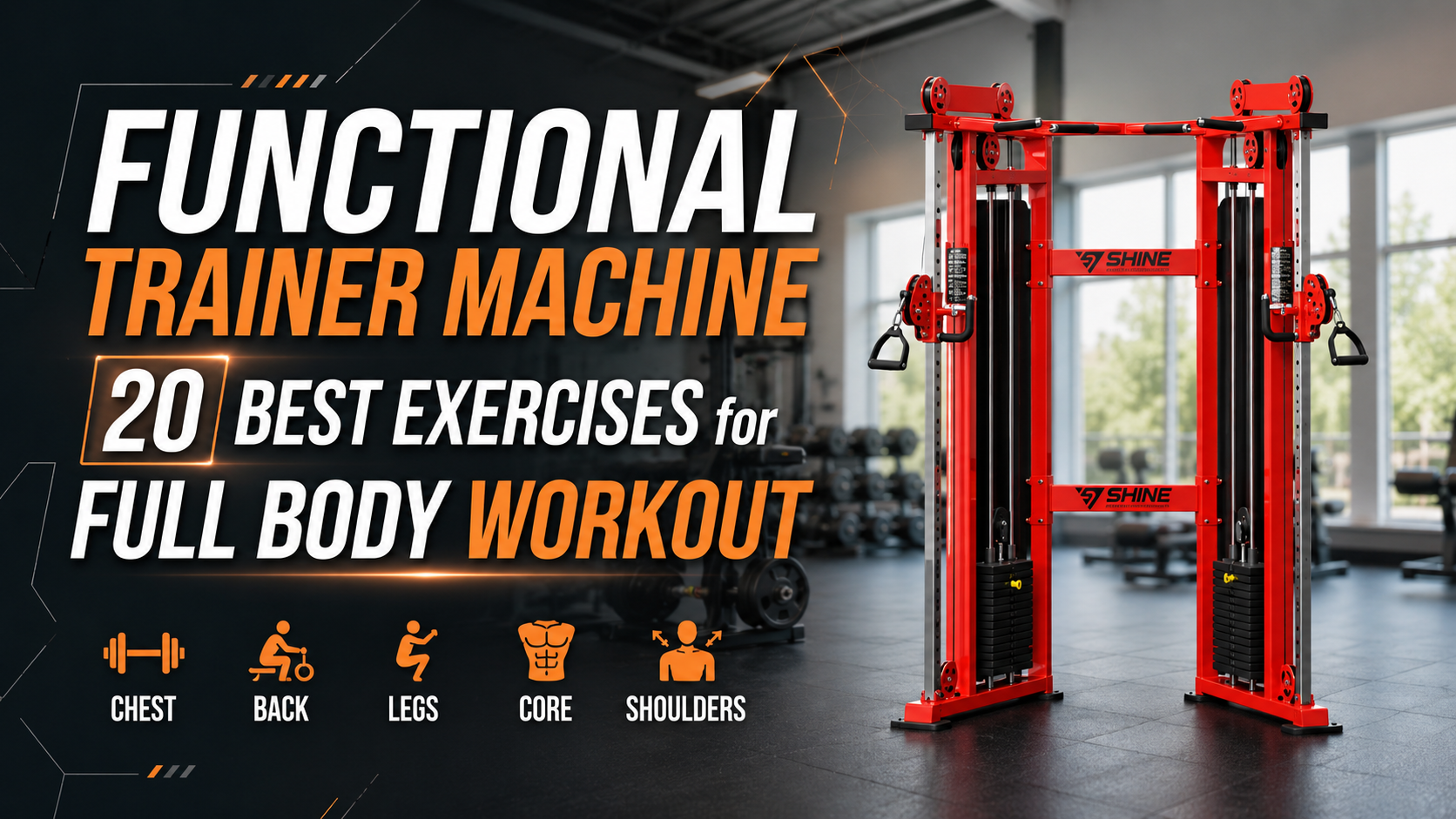
If there’s one piece of equipment that can replace half a gym floor, it’s the functional trainer machine. This versatile cable-based system has become a favourite in commercial gyms, training studios, and home setups because it lets users train nearly every muscle group from a single station. From strength and conditioning to rehab and mobility work, it adapts to almost any goal. In this guide, we’ll cover 20 of the best full-body exercises you can do on it, along with its benefits, proper use, and what truly defines a quality machine.
The popularity of the functional trainer reflects a bigger shift in the fitness industry toward versatile, space-saving equipment. Gym owners want machines that serve many members and many goals without taking up excessive floor space. For users, the freedom of movement and adjustable resistance make workouts more natural and effective. That combination of flexibility and performance is exactly why demand for this machine keeps growing.
What Is a Functional Trainer Machine?
A functional trainer machine is a dual-cable system with adjustable pulleys that allow movement in multiple directions. Unlike fixed machines that lock you into one motion, the cables let you train through natural, real-world movement patterns. This makes it ideal for building strength, improving balance, and developing functional fitness that carries over into daily life and sports.
The adjustable pulleys can be set at different heights, while the dual weight stacks allow each arm or side to work independently. This design supports everything from heavy strength training to light rehab exercises, all on the same machine.
Key Benefits of a Functional Trainer Machine
Before diving into the exercises, it helps to understand why this machine is such a valuable addition to any gym. Its benefits go well beyond simple convenience.
- Full-body versatility: Train every major muscle group from one station
- Natural movement patterns: Cables allow free, multi-directional motion
- Space efficiency: Replaces multiple machines in a compact footprint
- Suitable for all levels: Works for beginners, athletes, and rehab clients
- Joint-friendly resistance: Smooth, consistent tension reduces strain
- Independent arm training: Helps correct muscle imbalances
- Adjustable difficulty: Easy to scale resistance for any goal
- Improved core engagement: Many movements require active stabilization
For gym owners, these benefits translate directly into business value. A single machine that appeals to a wide range of members and goals tends to stay in constant use, making it one of the smartest long-term equipment investments available.
20 Best Functional Trainer Machine Exercises for a Full Body Workout
The real strength of this machine is its range of exercises. Below are 20 of the most effective movements, grouped by body area for a complete full-body workout.
Upper Body Pulling Exercises
- Cable Lat Pulldown – Builds back width and pulling strength
- Seated Cable Row – Targets the mid-back and rhomboids
- Single-Arm Cable Row – Corrects imbalances between sides
- Face Pulls – Strengthens rear delts and improves posture
- Cable Bicep Curls – Isolates the biceps with constant tension
Upper Body Pushing Exercises
- Cable Chest Press – Develops the chest with a natural pressing path
- Cable Chest Fly – Isolates the chest for a deep stretch and contraction
- Cable Triceps Pushdown – Builds the triceps effectively
- Standing Cable Shoulder Press – Trains the shoulders with core engagement
- Cable Lateral Raises – Targets the side delts for shoulder width
Lower Body Exercises
- Cable Squats – Adds resistance to a fundamental movement
- Cable Romanian Deadlifts – Strengthens hamstrings and glutes
- Cable Glute Kickbacks – Isolates and shapes the glutes
- Cable Lunges – Builds leg strength and balance
- Cable Hip Abductions – Targets the outer hips and glutes
Core and Functional Exercises
- Cable Woodchoppers – Trains rotational core strength
- Cable Pallof Press – Builds anti-rotation core stability
- Standing Cable Crunch – Targets the abdominals directly
- Cable Russian Twists – Strengthens the obliques
- Cable Anti-Rotation Hold – Improves core control and stability
Together, these movements cover every major muscle group, allowing users to build a complete, balanced workout from a single machine.
How to Use a Functional Trainer Machine Properly
Getting the most from this machine comes down to setup and form. Because the cables allow so much freedom, controlled technique is essential for safety and results.
- Adjust the pulleys: Set the height to match the exercise you’re performing
- Choose the right attachment: Use handles, ropes, or bars as needed
- Set the weight: Start light to master the movement before adding resistance
- Engage your core: Keep your torso stable throughout each rep
- Move with control: Avoid jerking; focus on smooth, deliberate motion
- Maintain full range: Complete each rep through its natural range of motion
Common Mistakes to Avoid
- Using too much weight and losing control of the cables
- Rushing through reps instead of controlling the movement
- Ignoring core engagement during standing exercises
- Setting the pulleys at the wrong height for the exercise
- Letting the weight stack slam at the end of each rep
A controlled tempo with proper setup will always deliver better results than heavy weight with poor form.
What Makes a High-Quality Functional Trainer Machine
Build quality directly affects safety, smoothness, and how long the machine lasts under heavy use. For any serious gym machine manufacturer, these are the factors that define a truly dependable unit.
Frame and Material Strength
A durable machine starts with a strong frame. Heavy-gauge steel, rust-resistant coatings, and reinforced welds ensure it handles years of daily use. Cheaper materials may lower the price but often fail under commercial demand.
Cable and Pulley Engineering
Smooth, reliable cables and pulleys are the heart of a functional trainer. High-quality bearings and durable cables provide consistent tension with no sticking or jerking. This directly affects both the user experience and the machine’s lifespan.
Comfort and Adjustability
A wide range of pulley positions, quality handles, and easy adjustments make the machine accessible to all users. The more adaptable it is, the more value it offers to a busy gym floor.
Safety Standards
Reliable equipment meets recognized safety standards, with secure weight stacks, stable frames, and smooth movement paths. For commercial gyms, this protects members and reduces liability.
Choosing the Right Equipment for Your Gym
Buying gym equipment is a long-term investment, so the decision deserves careful planning. Whether you’re opening a new facility or upgrading existing machines, a few priorities should guide your choice.
- Durability: Commercial-grade machines should handle years of daily use
- Maintenance needs: Choose equipment that’s easy to clean, service, and repair
- Customization options: A trusted fitness equipment manufacturer can tailor finishes, branding, and specs
- Warranty and support: Strong after-sales service protects your investment
- Space efficiency: A functional trainer’s compact footprint is a major advantage
- User appeal: Versatile, comfortable equipment drives member retention
Partnering with an experienced functional trainer machine manufacturer ensures you receive equipment engineered for real-world performance rather than just a low price. The right manufacturer understands how commercial gyms operate and builds machines designed to last.
Smart Trends Shaping Modern Fitness Equipment
The fitness industry continues to evolve, and equipment is becoming smarter and more user-focused. Today’s gyms increasingly seek machines that combine proven mechanics with modern technology.
- Smart tracking: Sensors that monitor reps, weight, and progress
- Compact home gym designs: Space-saving machines built for the growing home fitness market
- Customizable resistance: Adjustable systems that adapt to different training goals
- Improved ergonomics: Designs focused on comfort, joint safety, and accessibility
- Sustainable manufacturing: Eco-friendly materials and energy-efficient production
These trends point toward equipment that delivers both performance and lasting value. For gym owners, staying ahead of these developments helps attract and retain members in a competitive market.
Conclusion
The functional trainer machine stands out as one of the most versatile and valuable tools in modern fitness, offering a complete full-body workout from a single, space-saving station. With its natural movement patterns, adjustable resistance, and wide range of exercises, it suits everyone from beginners to advanced athletes. By understanding how to use it properly and investing in well-built equipment, both lifters and gym owners can get exceptional value from every session.
When it comes to durability and performance, the difference always comes down to engineering and craftsmanship. As a trusted fitness equipment manufacturer and dependable gym machine manufacturer, Shine Fitness designs equipment built to handle heavy commercial use while keeping users comfortable and safe. If you’re looking for a reliable functional trainer machine manufacturer that delivers quality, customization, and long-term value, we invite you to explore our range and reach out for a consultation. Build a stronger, more versatile gym with equipment designed to perform.
Frequently Asked Questions (FAQs)
1. What is a functional trainer machine used for?
A functional trainer machine is used for full-body strength training, conditioning, and rehab. Its dual adjustable cables allow natural, multi-directional movement. This makes it ideal for training nearly every muscle group from one station.
2. Is a functional trainer good for beginners?
Yes, it’s an excellent choice for beginners because the resistance is easy to control and adjust. The smooth cable motion is gentle on the joints. Beginners can start light and progress safely as they build strength.
3. Can a functional trainer replace a full gym?
For many users, it can cover most strength and conditioning needs in one machine. With the right attachments, it allows dozens of exercises for the entire body. It’s especially valuable for home gyms and space-limited facilities.
4. What should I look for when buying a functional trainer machine?
Focus on frame durability, smooth cable and pulley systems, and adjustability. Commercial buyers should also consider safety standards, warranty, and after-sales support. A reputable manufacturer ensures long-term reliability.
5. How many exercises can you do on a functional trainer?
You can perform dozens of exercises covering the upper body, lower body, and core. With adjustable pulleys and various attachments, the options are nearly unlimited. This versatility is what makes the machine so popular.
6. Is a functional trainer worth it for a home gym?
Yes, it’s one of the best investments for a home gym due to its versatility and compact design. It replaces multiple machines in a single unit. This makes it both space-efficient and cost-effective over time.
7. How much space does a functional trainer machine need?
Most functional trainers fit comfortably in a small workout area with room to move around the cables. Compact home models need even less space. Always allow clearance on both sides for full range of motion.