The pandemic permanently changed what members expect when they walk through your doors, and it quietly raised the bar for every gym equipment manufacturer supplying the commercial market. Spacing, sanitation, airflow, and surface materials are no longer afterthoughts handled during a renovation. They are design decisions made on day one, and many of them are determined by the machines you install rather than the building you lease. For gym owners and facility operators planning a new floor or refreshing an old one, understanding these safety features is now part of the core business case, not a nice-to-have.
This guide breaks down the safety-first design principles shaping commercial gyms today, explains how your choice of equipment supplier influences nearly all of them, and gives you a practical framework for evaluating partners before you sign a purchase order.
Why Post-COVID Changed Commercial Gym Design Forever
Before 2020, gym layout was driven mostly by capacity and aesthetics: pack in as many stations as the square footage allowed, keep sightlines clean, and make the space photograph well. Safety meant secure flooring and properly bolted racks.
That calculus shifted fast. Members became far more aware of shared surfaces, crowding, and air circulation. Even now that the acute crisis has passed, those expectations have stuck. People notice when machines are crammed together, when equipment looks worn and hard to wipe down, and when a room feels stuffy. A facility that addresses these concerns visibly earns trust, and trust drives retention.
The lasting changes worth designing around include:
- Permanent demand for personal space between cardio and strength stations
- Higher cleaning frequency, which punishes porous or poorly sealed materials
- A preference for touchless interaction wherever it’s practical
- Greater scrutiny of ventilation and overall air quality
- An expectation of durability, since members associate visible wear with poor hygiene
None of this requires reinventing the gym. It does require choosing equipment and a manufacturing partner built around these realities.
Essential Safety Features Every Modern Commercial Gym Needs
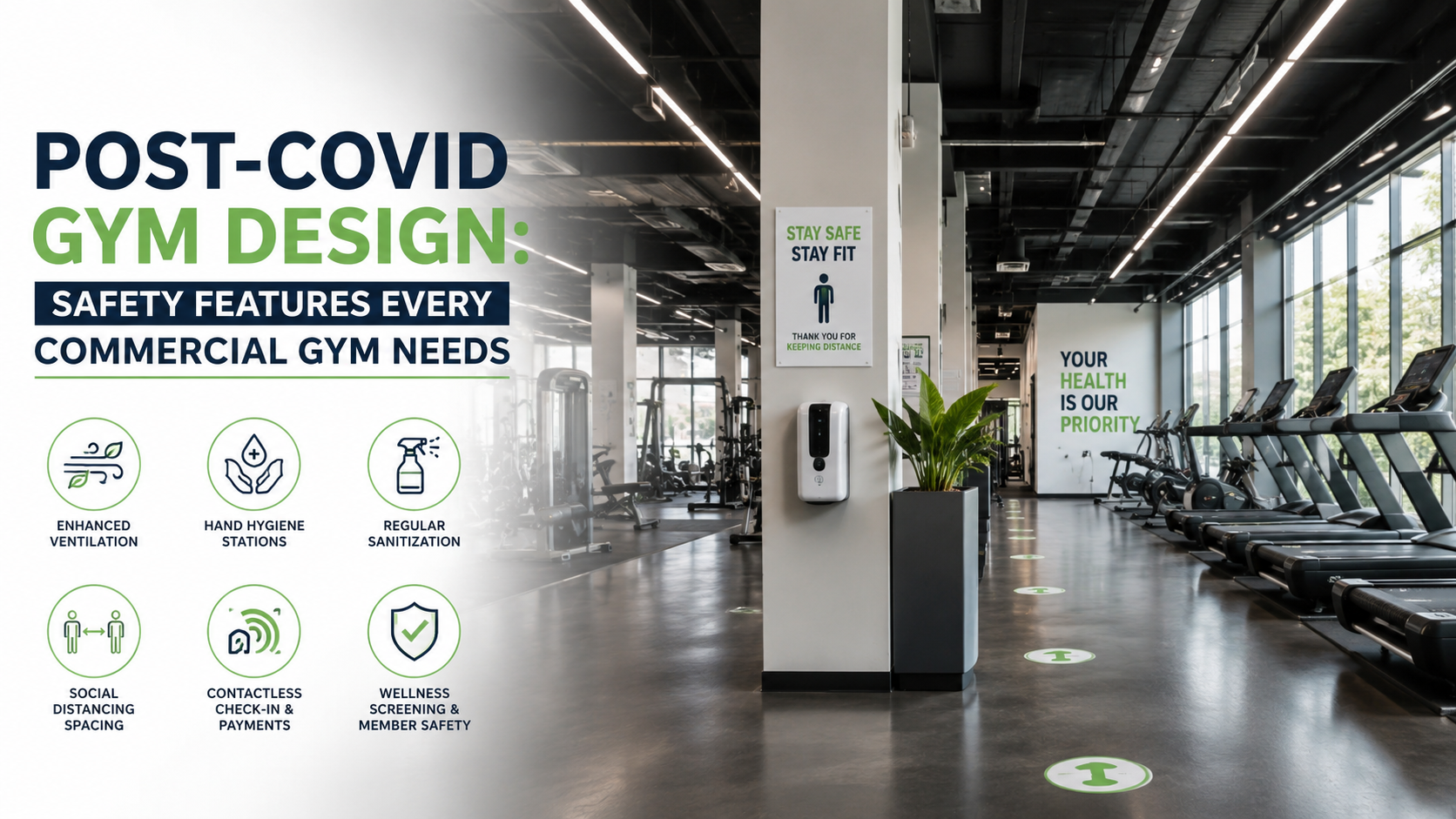
A safe post-COVID floor isn’t about a single hero feature. It’s a handful of design choices that compound. Here are the ones that matter most.
Smarter Equipment Spacing and Layout
The single most visible safety signal is space. Members read a crowded floor as a risk and a roomy one as a courtesy.
Good spacing depends on more than floor area. It depends on the footprint and geometry of each machine, which is set by the manufacturer long before delivery. Compact bases, smart cable routing, and stackable or wall-anchored designs let you maintain comfortable gaps without sacrificing station count.
Practical layout principles to apply:
- Keep a minimum buffer around cardio rows so users aren’t breathing on each other
- Position high-traffic stations away from entrances and walkways
- Use sightline-friendly equipment heights so staff can monitor the floor
- Plan one-way flow through functional and free-weight zones where space is tight
Touchless and Low-Contact Technology
Reducing the number of shared touchpoints is one of the clearest hygiene upgrades a gym can make. Modern equipment increasingly supports this through app-based check-ins, contactless workout tracking, QR-code instructions instead of laminated cards, and consoles that pair with a member’s phone rather than relying on a heavily handled touchscreen.
You won’t eliminate contact entirely, and you shouldn’t try. The goal is to cut the obvious, repeated touchpoints while keeping the experience simple for less tech-savvy members.
Antimicrobial and Easy-to-Sanitize Surfaces
This is where the manufacturer’s material choices matter enormously. Two machines can look identical and perform very differently after a year of hourly disinfectant wipe-downs.
Look for equipment engineered with:
- Sealed, non-porous upholstery that resists cracking and trapped moisture
- Antimicrobial coatings or finishes on high-contact grips and pads
- Smooth, weld-finished frames with fewer crevices for grime to collect
- Chemical-resistant powder coats that survive frequent cleaning without dulling
Cheap vinyl and unsealed seams degrade quickly under aggressive sanitation. When that happens, the equipment doesn’t just look bad; it becomes genuinely harder to keep clean, which defeats the purpose.
Improved Ventilation and Air Quality
Airflow is largely a building decision, but equipment placement supports or undermines it. Avoid blocking vents with tall machines, keep dense cardio clusters in well-circulated zones, and leave breathing room around high-exertion areas. Pairing thoughtful layout with upgraded HVAC and air purification makes the whole space feel fresher, which members notice immediately.
How Your Gym Equipment Manufacturer Shapes Safety
It’s easy to think of safety as something you “add” to a gym through cleaning protocols and signage. In reality, most of it is baked in at the factory. The manufacturer you choose determines the materials, the build tolerances, the footprint, and the long-term integrity of every station on your floor.
Material Quality and Durability
Commercial equipment endures abuse that home machines never face: hundreds of users a day, constant adjustment, heavy loads, and relentless cleaning. A serious fitness equipment manufacturer engineers around that reality with thicker gauge steel, sealed bearings, reinforced welds, and upholstery rated for commercial cycles.
Durability and hygiene are linked more closely than people assume. Equipment that holds up cosmetically and structurally stays easy to sanitize and signals care to members. Equipment that flakes, tears, or rusts becomes a hygiene liability no cleaning crew can fully fix.
Customization for Safer Layouts
Every space has its own constraints: low ceilings, narrow corridors, awkward columns, mixed-use rooms. A capable gym machine manufacturer offers customization that helps you solve these problems instead of forcing a generic layout into an imperfect room.
Useful customization options include:
- Adjusted footprints and frame dimensions for tight floors
- Upholstery colors and antimicrobial material upgrades
- Branded finishes that keep the space cohesive and professional
- Modular configurations that let you reconfigure as needs change
The ability to tailor equipment to your floor is often the difference between a layout that merely fits and one that feels safe, open, and intentional.
The Equipment Categories That Define a Safe Gym Floor
Different equipment categories carry different safety considerations. Planning each with hygiene and spacing in mind keeps the whole floor coherent.
Strength Training Equipment
Strength stations are touch-intensive: grips, pads, pins, and adjustment levers all see constant contact. Prioritize machines with sealed pads, smooth adjustment mechanisms that don’t trap grime, and finishes that survive frequent wiping. Selectorized machines with enclosed weight stacks are easier to keep clean and safer around busy floors than fully exposed setups in cramped rooms.
Cardio Equipment
Cardio rows are where spacing and ventilation matter most, since users breathe hard and sweat heavily. Choose treadmills, bikes, and ellipticals with wipeable consoles, sealed surfaces, and footprints that allow comfortable gaps. Connected cardio that syncs to a member’s own device reduces reliance on shared touchscreens.
Abdominal and Functional Training Machines
Core and functional zones often involve the most direct body contact with benches, pads, and mats. Abdominal exercise machines and functional trainers should feature non-porous, easily disinfected padding and stable, low-maintenance frames. Because functional areas tend to be open and high-traffic, generous spacing and clear flow are especially important here.
Smart Fitness Technology and the Connected Gym
Smart fitness technology has moved from novelty to expectation, and much of it supports safety as a side benefit. Connected machines, app integrations, and digital tracking reduce shared touchpoints while giving members a more personalized experience.
The advantages compound for operators:
- Usage data helps you understand peak times and rebalance crowded zones
- Predictive maintenance alerts flag wear before it becomes a hygiene or safety issue
- App-based onboarding cuts down on shared printed materials and staff contact
- Remote diagnostics keep machines running and reduce downtime
When evaluating connected equipment, weigh whether the technology genuinely improves the member experience or simply adds a screen. The best smart features are the ones members actually use without thinking about them.
How to Evaluate a Gym Equipment Manufacturer
Choosing a supplier is one of the highest-stakes decisions in opening or upgrading a gym. The right partner protects your investment for years; the wrong one creates a steady drain of repairs, replacements, and member complaints. Use this framework when comparing options.
- Build quality and standards. Ask about steel gauge, weld quality, upholstery ratings, and whether equipment meets recognized commercial safety standards.
- Material and hygiene engineering. Confirm that surfaces are sealed, sanitizer-resistant, and built to survive frequent cleaning.
- Customization capability. Determine how much they can adapt footprints, finishes, and configurations to your specific space.
- After-sales support. Spare parts availability, warranty terms, and service response times reveal how a manufacturer treats you after the sale.
- Track record and references. Look for proven installations in commercial settings similar to yours, and ask to speak with existing clients.
- Total cost of ownership. Compare not just sticker price but durability, maintenance burden, and expected lifespan.
A manufacturer that answers these questions clearly and specifically is usually one worth shortlisting. Vague answers or pressure to skip due diligence are red flags.
Long-Term Investment Value of Safety-First Equipment
Safety-focused equipment costs more upfront than bargain alternatives, and that gap intimidates some buyers. But the math favors quality over the life of the floor.
Durable, easy-to-sanitize machines deliver value in ways that compound:
- Lower replacement costs, because well-built equipment lasts years longer
- Reduced downtime, since reliable machines spend more time earning revenue
- Stronger retention, as members stay loyal to gyms that feel clean and cared for
- Better brand perception, which supports premium pricing and referrals
- Easier maintenance, lowering ongoing labor and repair expenses
A cheaper machine that fails or looks shabby within two years isn’t a saving; it’s a deferred cost plus a reputation hit. Viewed across a five-to-ten-year horizon, safety-first equipment is one of the more dependable investments a gym can make.
Home Gym Trends and What They Mean for Commercial Buyers
The home gym boom that accelerated during lockdowns hasn’t fully reversed. Many people now keep basic equipment at home and treat their commercial gym as a destination for the things they can’t replicate: heavy machines, variety, expert guidance, community, and a professionally maintained environment.
This raises the stakes for commercial operators. To compete with a member’s living room, your facility has to offer a noticeably superior, cleaner, and safer experience. That means investing in equipment, spacing, and hygiene standards a home setup simply can’t match. Far from undercutting commercial gyms, the home fitness trend rewards the ones that lean into professional-grade design and member confidence.
Conclusion
Post-COVID gym design is no longer a temporary response to a crisis; it’s the new baseline for what members expect and what successful facilities deliver. Smart spacing, low-contact technology, sanitizer-ready surfaces, and strong ventilation all work together to build trust, and most of them trace back to the equipment on your floor. That makes your choice of gym equipment manufacturer one of the most consequential safety decisions you’ll make.
The right partner brings engineering quality, hygienic materials, and customization that turns a generic room into a confident, safe space. A capable gym machine manufacturer and fitness equipment manufacturer should make these conversations easy, backing their products with proven durability and responsive support. Shine Fitness, recognized among India’s largest gym equipment manufacturers, builds commercial-grade equipment designed around exactly these modern safety and performance demands.
If you’re planning a new facility or upgrading an existing one, now is the time to design around safety from the ground up. Explore Shine Fitness’s commercial range, request a consultation, and build a gym your members trust the moment they walk in.
Frequently Asked Questions
1. What safety features should a post-COVID commercial gym prioritize?
Focus on generous equipment spacing, sanitizer-resistant surfaces, low-contact technology, and strong ventilation. These features reduce shared touchpoints and crowding while signaling cleanliness, which directly improves member trust and retention.
2. How does the gym equipment manufacturer affect gym safety?
The manufacturer determines materials, build quality, footprint, and durability, all of which shape how safe and hygienic a gym floor is. Sealed surfaces, antimicrobial finishes, and compact designs make daily sanitation and spacing far easier to maintain.
3. Is safety-focused commercial equipment worth the higher cost?
Yes. Durable, easy-to-clean equipment lasts longer, reduces downtime, and supports member retention. Over a five-to-ten-year lifespan, the lower replacement and maintenance costs typically outweigh the higher upfront price.
4. How much space should there be between gym machines?
Leave comfortable buffers, especially around cardio rows where users breathe heavily. Exact gaps depend on machine footprints and room size, so choosing equipment with efficient designs helps you maintain spacing without losing station count.
5. What materials are easiest to keep clean in a commercial gym?
Look for sealed, non-porous upholstery, smooth welded frames, and chemical-resistant powder-coated finishes. These resist cracking and trapped moisture under frequent disinfection, unlike cheap vinyl or unsealed seams that degrade quickly.
6. Does smart fitness technology improve gym safety?
It can. App-based check-ins, connected tracking, and device pairing reduce shared touchpoints, while usage data and maintenance alerts help operators manage crowding and catch equipment issues early.
7. How do I evaluate a gym equipment manufacturer before buying?
Assess build quality, hygienic materials, customization options, after-sales support, references, and total cost of ownership. A reliable manufacturer answers these questions clearly and offers proven commercial installations.