A small gym setup works best when every square foot has a purpose. In a 500–1000 sq ft space, the goal is not to fit as many machines as possible; the goal is to build a layout that feels open, useful, and profitable from day one. For gym owners, studio founders, and fitness brands, this size is ideal because it keeps the investment controlled while still allowing a serious training environment.
The right planning approach turns a compact floor into a high-value business asset. A well-designed small gym setup can support strength training, functional training, and beginner-friendly workouts without crowding the room. If you are building around a home gym setup in small space mindset, the same principles apply: choose versatile equipment, keep movement paths clear, and avoid buying machines that do only one job.
Why 500–1000 Sq Ft Works for a Compact Gym
This size range is practical because it sits between a home studio and a large commercial floor. It gives enough room for a clean layout, but it still forces smart decisions. That pressure is useful. It helps you focus on equipment that gets used daily, not equipment that just fills a corner.
A small gym setup in this range usually performs better when the equipment mix is balanced. You need a few anchor pieces for strength, one or two flexible stations, and enough floor space for bodyweight or functional work. That balance improves member satisfaction and keeps the room easier to maintain.
Problem: many compact gyms fail because they copy large commercial layouts without adjusting for scale.
Solution: build the floor around traffic flow, training priority, and equipment utility instead of trying to replicate a big-box club.
How much space does one training zone need?
A practical answer is 80–120 sq ft for a focused station, depending on the machine and the movement pattern.
For brands and investors working with small gym setup projects, this planning stage should happen before purchases. It is far easier to design a smart floor first than to fix a crowded floor later.
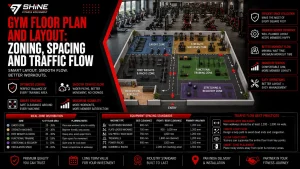
How to Plan the Layout in 5 Simple Steps
Step 1: measure usable space, not just total carpet area. Walls, columns, doors, mirrors, and storage areas all affect how the floor will work.
Step 2: divide the room into training zones. A compact gym usually needs a strength corner, a free-weight zone, a functional zone, and a small circulation path between them.
Step 3: place heavy machines along the perimeter. This keeps the center visually open and makes the room feel larger than it is.
Step 4: keep high-movement equipment near the widest clear area. Cable stations, adjustable benches, and warm-up tools should not block the main walkway.
Step 5: leave room for future upgrades. The setup should grow with demand, so plan at least one flexible corner that can accept an additional machine later.
A second useful rule is simple: every piece should justify its footprint. If one machine serves only one narrow exercise pattern, it may not deserve prime floor space in a 500–1000 sq ft gym.
A practical design trick is to think in “visual lanes.” One lane is for entry and movement, one lane is for strength work, and one lane is for accessory training. When those lanes are clear, the room feels easier to use even if the footprint does not change. This is especially important in gyms with mixed traffic, because members naturally move toward the cleanest and most open path.
Ceiling height also matters. A lower ceiling can still work well if you keep tall equipment near the sides and avoid stacking large visual blocks in the middle. In many compact gyms, the best results come from simple choices: a clean floor finish, mirrored wall placement, and equipment that does not dominate the eye. The space looks more premium when the body can move comfortably and the eye can scan the room without interruption.
What is the main layout rule for a compact gym?
Put the most stable equipment near the walls and keep the middle zone flexible.
A second useful rule is simple: every piece should justify its footprint. If one machine serves only one narrow exercise pattern, it may not deserve prime floor space in a 500–1000 sq ft gym.
Space-Saving Equipment List That Actually Works
A strong small gym equipment list starts with multifunctional equipment. That means you should choose machines and stations that support several movements, not isolated tools that duplicate each other. In a compact commercial floor, this approach usually delivers better usage density and better member flow.
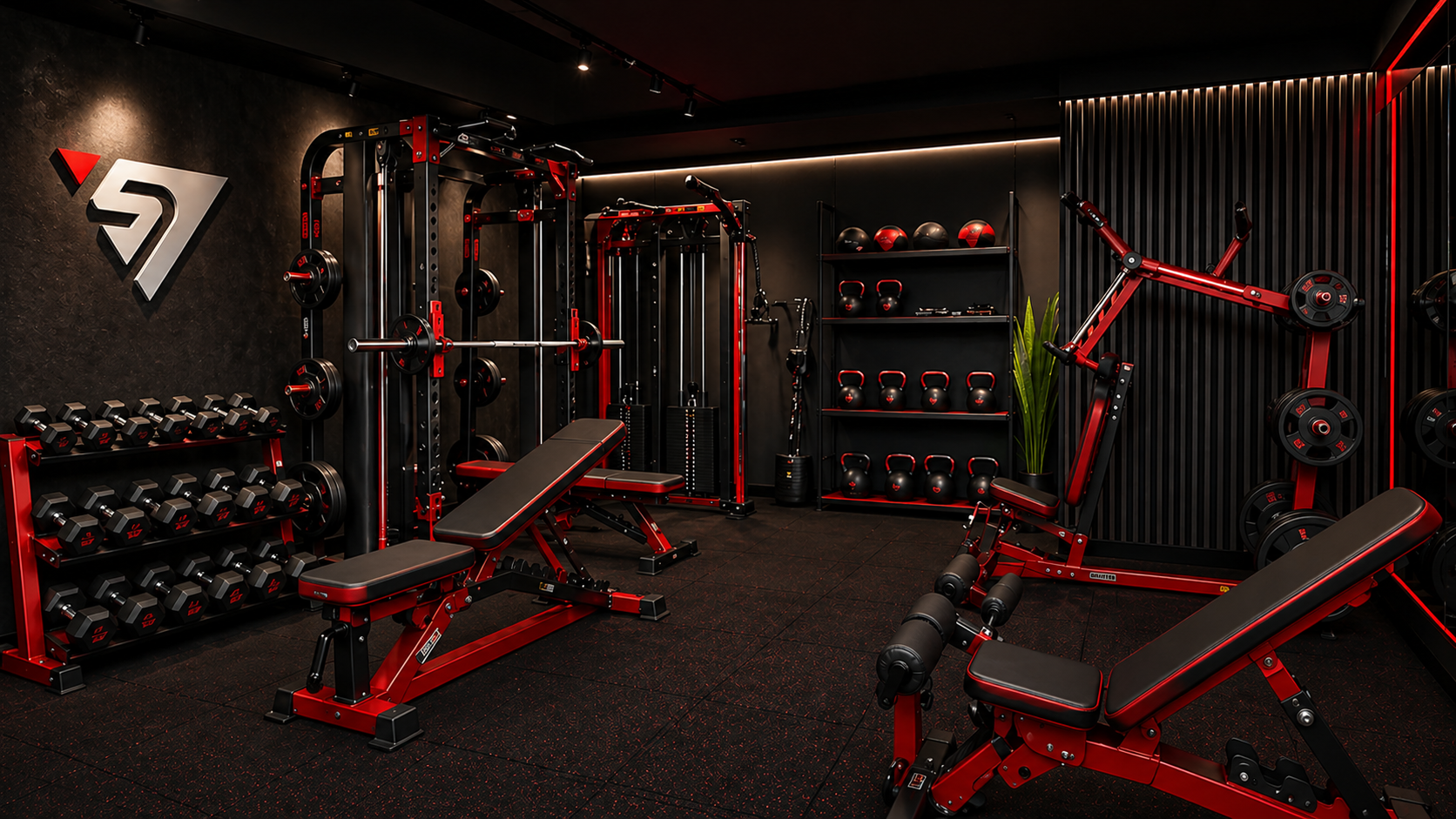
A reliable small gym equipment list for this size should include the following core categories:
- Adjustable benches that support pressing, rowing, and seated dumbbell work
- Compact racks or half racks with safety catches
- Dumbbell sets arranged on a two-tier or three-tier stand
- Olympic barbells and weight plates
- Cable-based stations for pulling, pressing, and isolation work
- Functional accessories such as mats, resistance bands, ropes, and collars
The real advantage of a small gym equipment list like this is flexibility. One bench can support chest work, shoulder work, rows, step-ups, and core training. One cable station can replace multiple single-purpose machines. That is how compact gyms maximize value without making the floor look overbuilt.
A small gym setup also benefits from vertical storage. Plate trees, dumbbell racks, and wall-based storage keep the training area clear and reduce clutter on the floor. The visual difference is significant. A room with proper storage can look 20–30% larger than a room where plates and accessories are scattered.
Comparison: Free Weights vs Machines in a Small Floor Plan
Below is a practical comparison for compact spaces.
Option |
Best Use |
Space Need |
Flexibility |
Cost Efficiency |
| Free weights | General strength, beginners, mixed users | Low to medium | High | High |
| Selectorized machines | Guided movement, safety, premium feel | Medium to high | Medium | Medium |
| Plate-loaded equipment | Heavy lifting, strength-focused users | Medium | High | Medium |
| Functional stations | Group training, versatility, warm-ups | Low to medium | Very high | High |
The best choice is rarely one category alone. A balanced small gym setup normally combines free weights, one or two machines, and a functional area. That mix gives you coverage across user types without overloading the floor.
For a home gym setup in small space, the same logic still applies. Compact racks, adjustable benches, and cable solutions usually outperform bulky single-function machines because they deliver more training options per square foot.
Which Equipment Works Best for Different Use Cases?
A compact gym should not be designed for a generic user. It should be designed for real use cases. That is where many business owners make better decisions.
Best for beginner members: adjustable bench, dumbbells, cable machine, and one guided strength station. This combination feels approachable and reduces intimidation.
Best for strength-focused users: rack system, Olympic barbell, plates, incline bench, and plate-loaded machines. This setup supports progressive overload and heavier training.
Best for mixed membership traffic: a modular small gym setup with a cable station, dumbbell area, rack, and one or two plate-loaded pieces. This version serves the widest audience and keeps the floor busy throughout the day.
Best for premium compact studios: a more polished equipment list that includes matching finishes, organized storage, and fewer but better-quality pieces. In small rooms, presentation matters almost as much as function.
What kind of gym should avoid overcrowding?
Any gym that serves beginners, personal-training clients, and independent lifters at the same time.
That is why a small gym setup should always start from member behavior, not from catalog variety.
Equipment Selection by Floor Size
A 500 sq ft floor demands strict prioritization. You should focus on essentials only: one rack, one bench, one cable station, dumbbells, plates, and a clean storage system. Anything beyond that must earn its place.
A 750 sq ft floor gives more breathing room. Here you can add a second bench angle, a dedicated core area, or one extra machine without hurting circulation.
A 1000 sq ft floor allows a more complete training experience. This is where a small gym setup can begin to feel like a full-service compact gym instead of a stripped-down room. You can separate zones more clearly, add premium finishes, and keep the overall layout less dense.
A practical way to decide is to plan for density, not just capacity. If the room feels comfortable during peak hours, it will perform better commercially and feel better to users.
What to Buy First and What to Add Later
The smartest purchasing order is simple. Start with foundational equipment, then add specialized pieces after observing member demand. This prevents wasted capital and helps you avoid the common mistake of buying too much too soon.
First buy: rack, bench, dumbbells, plates, barbell, and storage. These items cover the widest number of workouts.
Then add: cable work, plate-loaded options, and accessory-based tools. These pieces expand training variety after the base floor is stable.
Later upgrade: premium machines, duplicate stations, or design-focused upgrades. A small gym setup becomes more profitable when every new purchase is tied to actual usage data.
Problem: owners often spend too much on advanced machines early.
Solution: build around core lifts and scalable stations first, then expand once the floor proves its demand pattern.
A second home gym setup in small space lesson is worth noting here: a compact room becomes better when it is modular. Moveable benches, stackable plates, and compact storage are much easier to manage than fixed-heavy equipment everywhere.
Space-Saving Rules That Keep the Gym Comfortable
A good compact floor is not just about what you install. It is also about what you avoid. Leave enough room for entry, unloading, training, and exit. People should never feel trapped between machines.
Keep mirrors strategic, not excessive. One well-placed mirror can improve perception of depth and help with form checks. Too many mirrors create visual noise.
Use matching equipment finishes where possible. Uniformity makes a small gym setup look cleaner and more premium.
Keep the walking path open even when the room is full. A cluttered path lowers comfort and makes supervision harder for staff.
A small gym equipment list should also include storage that fits the room’s shape. If your walls are long and narrow, vertical racks make more sense than wide storage pieces.
How Shine Fitness Fits This Type of Project
For buyers planning a compact commercial floor, sourcing matters as much as design. A supplier that understands complete gym setup planning can help you avoid layout mistakes before installation begins. That is one reason many operators compare equipment, space usage, and finish quality together instead of treating them as separate decisions.
If you are building around a small gym setup, the practical route is to shortlist equipment that supports your floor size, then map it against your exact space. For reference and product direction, you can explore shinefitness.in while planning the equipment mix and storage layout. That helps keep the project aligned with the right categories from the start.
A small gym setup becomes much easier to execute when the supplier can support benches, racks, plate-loaded units, and accessories in one place. In compact gyms, that consistency helps the floor look organized and professionally finished.
Conclusion
A profitable compact gym is built on clarity, not crowding. The best small gym setup is the one that uses every square foot with intent, keeps movement easy, and gives users enough training variety without wasting space. When your layout is planned well, a 500–1000 sq ft room can feel efficient, premium, and commercially strong. The same logic also supports a practical home gym setup in small space, where versatility and storage matter just as much as equipment quality.
If you are preparing a new project or upgrading an existing floor, start with the essentials, keep the layout open, and build around real usage. For sourcing and setup support, shinefitness.in can be a useful starting point because the project should be treated as a full system, not a random equipment purchase. When the room, the equipment, and the user flow work together, the small gym setup becomes far easier to manage and much stronger as a business.
FAQs
1. How much space is enough for a small gym setup?
A 500–1000 sq ft area is usually enough for a compact commercial gym if the layout is planned properly. The key is to choose equipment that supports multiple training styles without making the room feel packed.
2. What is the most important item in the equipment checklist?
A rack, bench, dumbbells, and plates are usually the foundation. These pieces support the widest number of exercises and give you the best return on floor space.
3. Is a home gym setup in small space different from a commercial compact gym?
Yes, the goal changes slightly. A home setup usually focuses more on personal convenience, while a commercial floor needs durability, safety, and flow for multiple users.
4. Can a small gym setup include machines and still feel open?
Yes, but only if you limit machine selection. Use one or two high-utility machines, keep the center clear, and store accessories vertically to protect movement space.
5. How do I avoid buying too much equipment at the start?
Start with essentials and watch which movements members use most. Add specialized machines only after demand is visible, not because they look attractive in a catalog.
6. What kind of equipment gives the best value in a compact floor?
Multi-use equipment usually gives the best value. Adjustable benches, cable stations, racks, and well-organized storage create more training variety per square foot.
7. Why does layout matter so much for compact gyms?
Layout affects comfort, safety, and perceived size. A smart layout can make a compact room feel larger, easier to use, and more premium from the first visit.