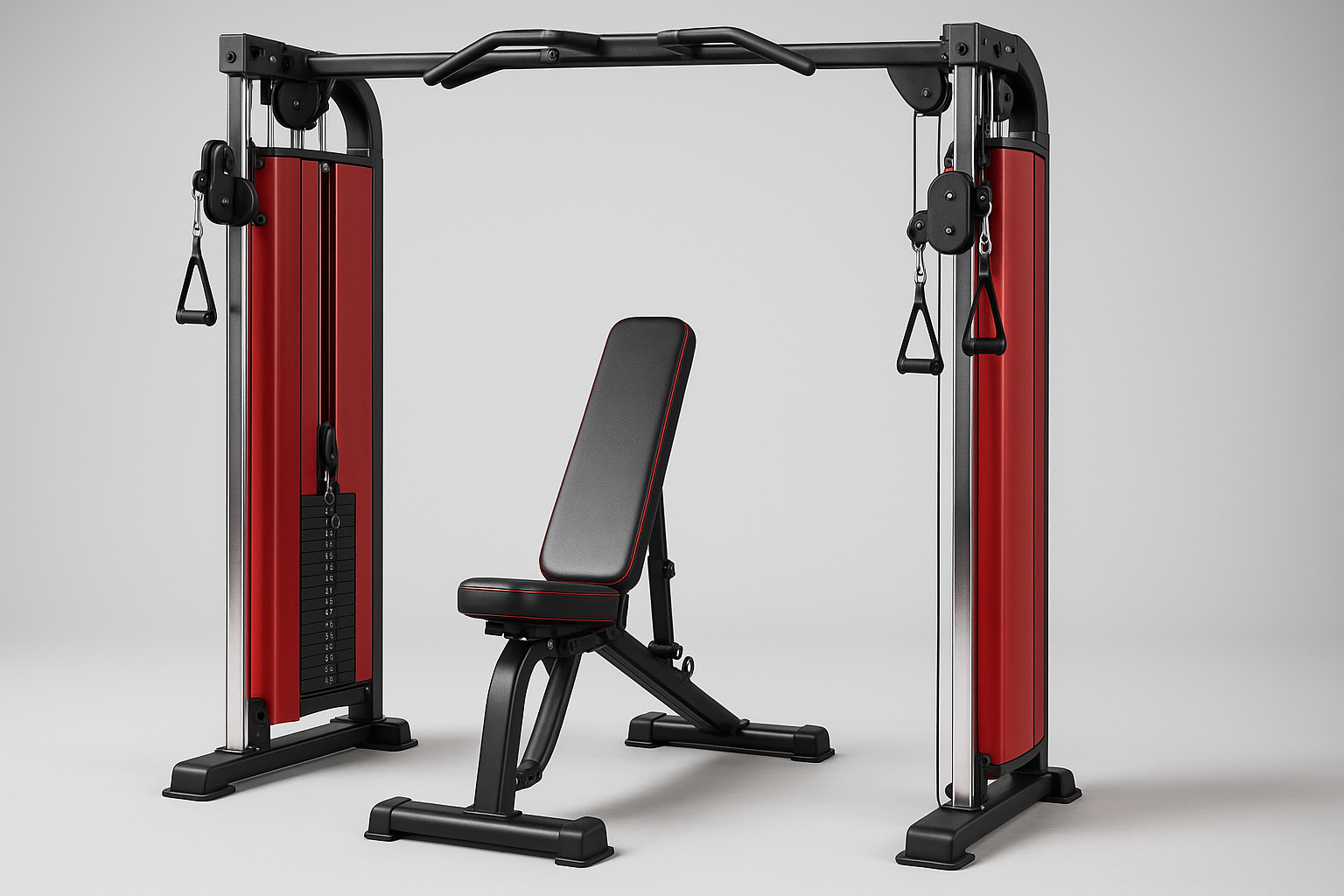
If you look around modern gyms today, you start noticing how different things look compared to a few years back. The machines feel smoother, the lines look cleaner, and people seem to move more freely without getting stuck in awkward angles. A lot of this change comes from how fast the functional trainer has evolved. It used to be a simple two-tower cable system with a few adjustments. Now it is almost like a full-body training station packed with technology, smart design, and more attention to user comfort.
The interesting part is that many people who use a functional trainer daily do not realize how much design work goes into making the machine work so naturally. You pull a cable, it moves smooth. You adjust the height, it clicks in place cleanly. But behind every one of these small things, there are dozens of design choices that did not exist a decade ago.
Cable Systems Are Becoming Smoother Than Ever
It might sound funny, but you can tell a lot about a machine just by pulling the cable once. Old cables used to drag or skip slightly. Newer versions of the functional trainer now use engineered bearings and advanced pulley discs that almost float under pressure. The resistance has a steady feel all the way through the rep.
This smoothness matters because people perform many kinds of movements on this machine. Chest press, rows, core twists, and even leg moves. That smooth pull helps keep posture steady, especially for beginners who struggle with balance.
Better Adjustment Systems Make Every Workout Feel More Natural
Older machines had height adjustment tracks that sometimes got stuck or made noise. The new functional trainer setups use stronger rails, lighter plates, and more precise locking systems. People now adjust the pulleys with one hand and do not feel confused about whether the lock clicked or not.
This might look like a small change, but when you repeat this movement every single day in a gym, it makes a huge difference. It also allows different body types to train comfortably. A tall user and a short user both find their perfect angle without fighting the machine.
Frame Shape and Width Are Changing the Way People Move
You might see two machines that look almost the same, but the way they feel could be very different. That is because companies now shape the frame of the functional trainer to match natural movement more closely. Slightly wider towers, better pulley spacing, and stronger crossbeams help the user feel grounded.
A premium frame gives that sense of safety. The machine does not wobble or shake, and users feel confident pushing heavier or trying new movements.
Handles and Attachments Are Becoming More Specialized
People used to train everything with the same straight handle. But now the new functional trainer setups come with many attachments — comfort grips, rotating handles, multi-angle pieces. These additions make each rep feel smoother and less stressful on joints.
Even the grip texture has changed. New handles do not slip easily and do not hurt the fingers. That means people stay in the motion longer without needing to stop and readjust.
Digital Integration Is Slowly Entering Functional Trainer Technology
Not every gym owner notices this, but some next-gen models now include digital tracking. They show rep speed, cable tension, or even training programs on a small display. It is not common everywhere yet, but it is slowly becoming part of the future.
This helps trainers guide members better. They see how stable the motion is or how consistent someone’s pull strength is. And it gives users feedback that helps them improve form.
Comparing the Trainer with Other Popular Machines
Machines like the cable cross over machine still stay important in the gym because of the wide-angle chest work. But the functional trainer gives more variety in less space. You can do standing movements, rotational training, or full-body patterns easily.
The same goes for lower body machines. A leg extension and leg curl machine isolates muscles well, but the trainer teaches stability and coordination. Both matter, but the trainer gives more freedom. People often mix both together for balanced training.
Strengthening Safety With Better Hardware and Smarter Design
Safety does not always come from big features. It also comes from how quiet and predictable the machine feels. New versions of the functional trainer use reinforced joints, thicker bolts, and internally routed cables that stop the machine from snagging.
Some models even use curved arms so the cable lines up better with natural movement. These things protect shoulders and lower back from strange angles.
Gyms want to use space better now. That is why many new models of the functional trainer are slimmer or have folding arms. They take less space but still work like the larger versions. This helps smaller gyms or personal studios maintain a high-quality feel without overcrowding the room.
People immediately notice when a machine fits well in a room. It makes the area feel bigger and more welcoming.
Why These Innovations Matter for Gym Owners and Members
Most people train without thinking about design, but they feel it. If a functional trainer moves cleanly, they trust it. If it adjusts easily, they enjoy it. When it feels modern and stable, they stay longer on it.
For gym owners, better machines reduce repair cost, reduce complaints, and improve the overall impression of the gym. A member who feels good using your machine is more likely to renew membership because the experience becomes part of their routine.
FAQs About Next-Gen Functional Trainers
1. Why do newer functional trainers feel smoother than older ones?
Because modern functional trainer models use better pulleys, stronger bearings, and improved cable systems.
2. Do attachments really make a difference?
Yes, different handle designs help users stay comfortable and improve their control on the functional trainer during long sets.
3. How important is frame stability?
Very important. A stable functional trainer gives users safety and confidence during heavy or complicated movements.
4. Can a cable cross over machine replace a functional trainer?
Not fully. A cable cross over machine is great for chest and shoulders, but the trainer offers more full-body movement options.
5. Are leg machines still useful with a functional trainer?
Yes, a leg extension and leg curl machine isolates muscles while the trainer focuses on coordination and balance. They work well together.
6. Do digital features help in training?
For some users, yes. They track speed, tension, or movement quality, helping trainers correct form on the functional trainer better.
Final Thoughts
The functional trainer has changed a lot in recent years. Better cables, stronger frames, smarter adjustments, new handles, and even digital tools make today’s machines feel almost natural to use. When gyms add these next-gen machines, members enjoy safer movement, smoother training, and more control. Combined with machines like a cable cross over machine or a leg extension and leg curl machine, the trainer becomes the center of functional strength for every gym.