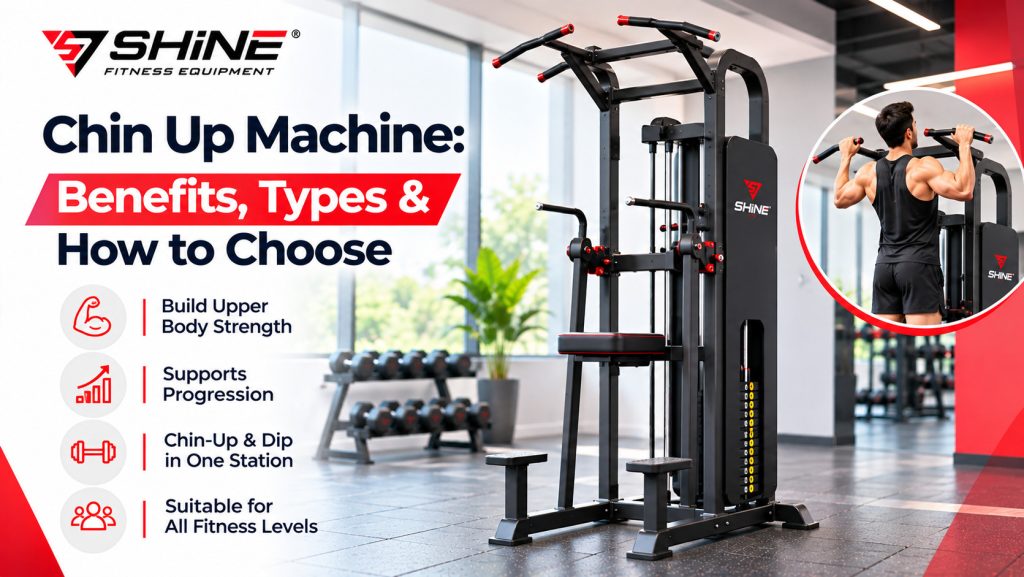
A chin up machine offsets part of the user’s body weight, so members of every strength level can train the pull-up and chin-up movement with correct form. For a gym owner, that makes it one of the few stations that serves beginners, regular lifters and rehabilitation clients on the same footprint. This guide explains how the equipment works, the main types, what it costs to own, and what to check before you buy.
How a Chin Up Machine Works
Most units use a counterweight system. The user kneels or stands on a padded platform, grips the handles and pulls upward. The weight stack or plate system subtracts load from the user’s body weight, so selecting a heavier counterweight makes the movement easier and a lighter one makes it harder.
That is the logic behind the assisted chin up machine. A member who cannot yet complete a full pull-up can still train the same movement pattern through its full range, and then reduce assistance over weeks as strength improves. Many models add a dip station, which gives the machine a second job without taking more floor space.
Compared with a basic chin up exercise machine built around a fixed bar, a counterweighted unit gives measurable progression. You can record the assistance setting each session and see improvement in plain numbers.
Benefits of a Chin Up Machine for Gyms and Members
The case for this station is practical rather than promotional. Here is what it typically delivers:
- Wider access to a demanding exercise. Bodyweight pulling is difficult for beginners, older members and people returning from a break. Adjustable assistance removes that barrier.
- Targeted upper-body work. The movement loads the lats, biceps, forearms and upper back, and the underhand grip used in chin-ups shifts more work to the biceps.
- Clear progression. Lowering the assistance gradually is an easy way for trainers to structure a programme.
- Good use of space. A combined chin and dip unit covers two exercises in one footprint, which matters in compact studios and hotel gyms.
- Fewer supervision demands. Because the stack controls the load, members can train without a spotter handing them up to a bar.
These benefits are why chin up gym equipment shows up in most well-planned strength zones, usually next to lat pulldowns and seated rows.
Types of Chin Up Machines
Selectorised (Pin-Loaded) Machines
These use a weight stack and a pin. Changing the load takes seconds, which suits busy commercial floors where many members share a station. International brands such as BLK BOX and Skelcore sell pin-loaded assisted chin and dip units described as offering adjustable resistance, which shows how standard this design has become.
Plate-Loaded Machines
These rely on weight plates and a leverage arm. They suit facilities that already stock plates and want a sturdy, mechanically simple design. Changing the load is slower than with a pin, so they work better for personal training zones than for high-traffic floors.
Combo Chin and Dip Stations
A combo unit adds a dip function to the assisted pull-up movement. If you need a single assisted pull up machine for a small room, a combo model is usually the most efficient choice.
Chin Up Machine Types at a Glance
| Factor | Selectorised | Plate-Loaded | Combo Chin/Dip |
| Load change | Fast, pin-based | Slower, add or remove plates | Depends on the underlying design |
| Best suited for | High-traffic commercial gyms | Personal training areas | Compact gyms and hotels |
| Maintenance focus | Cables, pulleys, stack guides | Pivots, bushings, plate horns | Pivots plus dip handles |
| Space needed | Moderate | Moderate | Efficient for two exercises |
How to Choose the Right Machine
Key Factors to Consider
- Frame construction. Look for a heavy-gauge steel frame, solid welds and a stable base. Ask the supplier about tube thickness and finish rather than assuming.
- Counterweight range. Check the assistance range against your members. A stack that is too light at the top end leaves beginners without enough help.
- Pad and handle design. Knee pads should be comfortable and secure, and handles should offer more than one grip position.
- Footprint and ceiling height. Measure the room, including the clearance members need to step on and off safely.
- Support and spares. Confirm warranty terms, spare parts availability and installation support before ordering.
Chin Up Machine Price: What Shapes the Cost
Anyone searching for a chin up machine price will find a wide spread, and that is normal. Several factors move the figure:
- Selectorised units generally cost more than plate-loaded designs because of the stack, cables and guides.
- Commercial-grade frames and bearings cost more than light-duty builds.
- Combo chin and dip models usually price differently from single-function units.
- Powder coating, upholstery and finish quality affect both cost and longevity.
- Freight, installation and GST should be quoted clearly and separately.
Treat the lowest quote with caution. A cheap unit that bends, wobbles or needs frequent repair costs more over its lifetime. When you compare chin up machine price quotes, ask each supplier for the same specification sheet so you are comparing like with like.
Buying a Chin Up Machine for Sale: Manufacturer vs Trader
Searching for a chin up machine for sale returns both manufacturers and resellers. The difference matters. A manufacturer controls frame design, welding and finish, can discuss customisation, and can supply spares directly. A trader may offer faster delivery on stock models but often has limited influence over quality or after-sales support.
If you are fitting out several rooms or a full facility, working with a chin up machine manufacturer simplifies the process. You get consistent finishes across machines, one point of contact for warranty, and the option to adjust dimensions or colours. Ask any chin up machine manufacturer for details of its testing, installation and service process before you commit. If you want to see what is available locally, you can browse chin up machines for sale and compare specifications side by side.
Common Mistakes to Avoid
- Buying on price alone. Weak frames and thin padding show their cost within a year of commercial use.
- Ignoring the user base. A gym full of beginners needs more assistance range than a powerlifting-focused facility.
- Skipping the floor plan. Machines that crowd walkways create safety problems and discourage use.
- Forgetting maintenance. Cables, pulleys and pivots need regular inspection and lubrication.
- Not asking about spares. A machine that cannot be repaired quickly sits idle and frustrates members.
Placing It in Your Gym Layout
Where you place a chin up machine affects both safety and usage. Put the chin up machine near other pulling stations such as lat pulldowns and seated rows, so members can move through a back workout in sequence. Leave clear space on all sides, because users step on and off the platform. Position the chin up machine away from entrances and narrow walkways, and keep a visible instruction label beside it so beginners can set assistance correctly. A short demonstration during onboarding helps new members use it regularly.
Buyers often shortlist an assisted chin up machine alongside a plain pull-up rig. Treat the assisted chin up machine as the entry station and the rig as the progression. Good chin up gym equipment also includes a chin up gym equipment layout that leaves room for coaching, and ask any chin up machine for sale listing for dimensions. When you request a chin up machine price, ask for a chin up machine manufacturer reference.
Frequently Asked Questions
What is a chin up machine used for?
A chin up machine lets users perform chin-ups and pull-ups with adjustable assistance from a counterweight. It trains the back, biceps and forearms, and helps beginners build the strength needed for unassisted repetitions while still practising correct form and a full range of motion.
How does an assisted pull up machine work?
An assisted pull up machine uses a weight stack or plates to offset part of your body weight. You kneel or stand on a platform and pull yourself up. More counterweight gives more help, so reducing it over time makes the exercise progressively harder.
What is the difference between a pull-up and a chin-up?
A pull-up uses an overhand grip, while a chin-up uses an underhand grip. The chin-up places more emphasis on the biceps, and the pull-up shifts more work to the lats and upper back. Most assisted machines allow both grips through multiple handle positions.
What affects chin up machine price in India?
Price depends mainly on load type (selectorised or plate-loaded), frame gauge, build quality, finish, whether a dip function is included, and freight and installation. Always request a written specification so quotes from different suppliers can be compared fairly.
Is a chin up exercise machine suitable for beginners?
Yes. The adjustable assistance makes it one of the more beginner-friendly ways to train a pulling movement. Users can begin with high assistance, focus on controlled form, and lower the counterweight steadily as their strength improves.
Should I buy from a manufacturer or a trader?
A manufacturer typically offers better control over build quality, customisation, spares and warranty support. A trader may be quicker for stock models. For commercial installations, direct manufacturer relationships generally reduce long-term risk and make servicing simpler.
Can one machine handle both chin-ups and dips?
Yes. Many assisted units are combo stations with dip handles. They save floor space and add exercise variety, which makes them popular in compact gyms, apartment complexes and hotel fitness rooms. Confirm the dip function is rated for your expected usage.
Conclusion
A well-chosen chin up machine gives your members a safe, progressive way to build real pulling strength, and gives you a space-efficient station that earns its place on the floor. Focus on frame quality, a suitable assistance range, comfortable pads and dependable after-sales support, and compare quotes using identical specifications rather than headline prices.
If you are planning a commercial gym setup, review your available space, equipment requirements and expected usage before selecting individual machines. Explore the relevant Shine Fitness equipment range or contact the team for guidance based on your facility requirements. To keep your equipment running smoothly after installation, read our gym equipment maintenance guide.