A successful gym setup combines the right equipment, a layout that lets members move and train safely, and a design that still works as the business grows. This guide covers how to plan a professional fitness centre from the ground up: defining your audience, dividing the floor into zones, choosing strength, cardio and functional equipment, and responding to the trends shaping modern facilities, plus practical budgeting and phasing advice.
Start with Gym Setup Planning, Not the Catalogue
Effective gym setup planning begins with questions about people and space rather than machines, because every later decision flows from them. Who will train at the facility, when will they arrive, and what do they expect? A strength-focused gym, a hotel gym and a women-only studio need very different equipment mixes.
Key Planning Questions
- Member profile: beginners, serious lifters, older adults and athletes each need different equipment and coaching space.
- Peak usage: estimate how many members will train at once during busy hours, because that, not the daily total, decides how many stations you need.
- Floor area and shape: measure usable space after columns, entrances, changing rooms and emergency exits are accounted for.
- Budget and phasing: decide what must be ready on opening day and what can be added in a later phase.
- Building constraints: check ceiling height, floor loading, ventilation and power points before finalising equipment positions.
Answering these questions first keeps the whole project aligned with real demand rather than an equipment wish list.
Zoning: The Foundation of a Modern Gym Setup
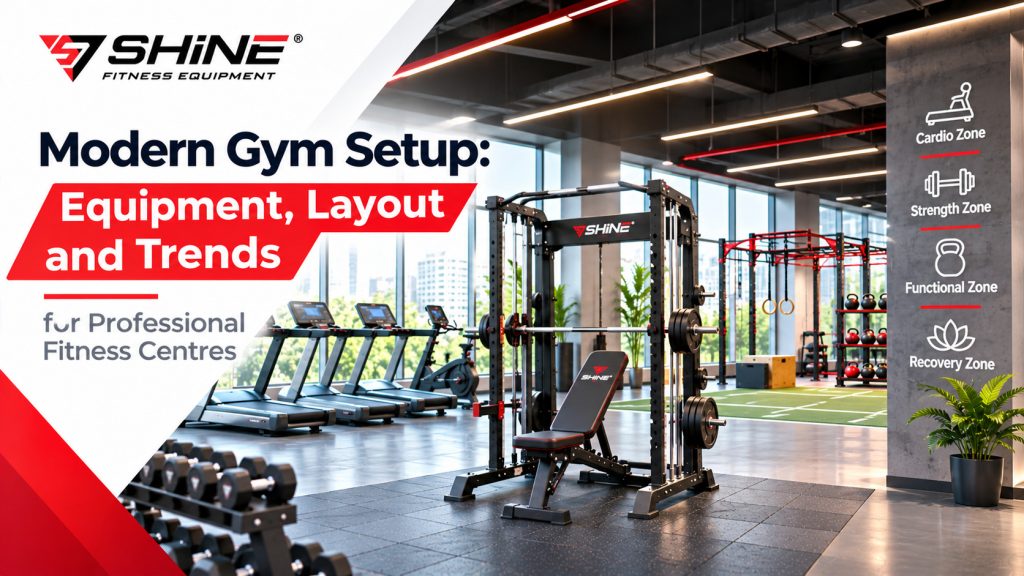
Modern facilities are organised into zones so that different types of training do not collide. Clear zoning improves safety, makes the floor easier to supervise and helps members understand where to go.
| Zone | Purpose | Typical equipment | Layout consideration |
| Cardio | Warm-ups and conditioning | Treadmills, bikes, cross-trainers, rowers | Near power points, often facing windows or screens |
| Selectorised strength | Guided, beginner-friendly training | Chest press, lat pulldown, leg extension, cable stations | Logical circuit order with clear walkways |
| Plate-loaded and free weights | Heavy compound training | Racks, smith machines, benches, plate-loaded machines | Reinforced flooring and plate storage nearby |
| Functional | Movement and conditioning work | Rigs, sleds, kettlebells, open turf | Open space free of fixed machines |
| Stretching and recovery | Mobility and cool-down | Mats, foam rollers, stretching aids | Quieter area away from heavy lifting |
On any floor, walkways deserve as much attention as equipment. Members should be able to move between zones without stepping through someone's lifting space, and staff need sightlines across the entire floor.
Equipment Selection for Professional Fitness Centres
Thoughtful gym equipment selection balances versatility, durability and member experience. Commercial equipment must withstand many users across long hours, so frame construction, cable quality, upholstery and finish matter more than they do at home. Good gym equipment selection also considers servicing, spare parts and how each piece fits the zone it will occupy.
Strength Training Machines
Strength training machines form the backbone of most commercial floors. Selectorised machines with weight stacks are approachable for beginners, while plate-loaded machines offer a free-weight feel with guided movement. A balanced floor covers chest, back, shoulders, arms, legs and glutes, with duplicates of the most popular pieces such as lat pulldowns and leg presses so members do not queue.
Free Weights and Racks
Racks, benches, smith machines, dumbbells and plates attract serious lifters and support the widest range of exercises. Allow generous space around racks and benches, and plan plate and dumbbell storage so equipment does not end up on the floor. Place mirrors where lifters can check technique, keep benches clear of walkways, and position dumbbell racks so members are not lifting directly in front of them, which is one of the most common sources of congestion on busy evenings.
Functional Training Equipment
Functional training equipment such as rigs, racks, sleds, kettlebells and battle ropes supports small-group sessions and athletic conditioning. This zone needs open floor more than additional machines, so protect the space during layout planning. Coaches running small-group sessions need room to demonstrate movements and supervise several members at once, and equipment such as kettlebells, medicine balls and battle ropes should have dedicated storage at the edge of the zone so the floor stays clear between classes.
Cardio Equipment
Cardio equipment for gyms should match peak demand and member preferences. Treadmills are usually the most used, followed by bikes, cross-trainers and rowers. Position cardio where power supply and ventilation are adequate, and leave service access behind each unit. If budget is tight, opening with fewer cardio units and adding more once real usage patterns are clear is often a sensible phasing decision.
A floor that combines these categories in the right proportions serves a wider audience and spreads demand evenly across the floor.
Flooring, Lighting and Ventilation in a Gym Setup
The building environment affects how a facility feels as much as the equipment does. Heavy lifting zones need dense rubber flooring that absorbs impact and protects the slab, while functional areas often use turf or interlocking tiles that suit sleds and floor work. Cardio areas benefit from good airflow and access to power, and stretching spaces work best with softer surfaces and quieter surroundings.
Lighting should be bright and even across strength areas so members can see their technique, with no glare in mirrors. Ventilation and cooling matter throughout, particularly in warm climates and at peak hours. Planning these elements alongside the equipment avoids expensive changes after the fit-out is complete.
Gym Setup for Different Facility Types
- Commercial gyms: a full floor with every zone, duplicates of popular machines and generous free-weight space for peak hours.
- Hotel and resort gyms: a compact room with versatile strength machines, a few cardio units and simple, low-maintenance equipment for guests.
- Corporate gyms: a layout built around short sessions, with selectorised machines, cable stations and space for small-group classes.
- Boutique studios: a focused floor centred on functional training, racks and open floor rather than large machine circuits.
Whatever the facility type, the same principles apply: match equipment to the people who will use it, protect walkways and leave room to expand. Shared-use buildings such as housing societies, colleges and hospitals also benefit from simple, durable machines with clear instructions, because users often train without supervision and arrive with very different levels of experience.
Trends Shaping Modern Gym Setups
Facility design keeps evolving as member expectations change. Several trends are influencing how professional facilities are planned today.
- More strength floor space: many operators are giving free weights, racks and plate-loaded machines a larger share of the floor in response to member interest in strength training.
- Dedicated functional zones: open areas for small-group training, conditioning and mobility work have become standard rather than optional.
- Hybrid training: members increasingly mix strength, conditioning and cardio in one session, so zones placed close together reduce wasted movement.
- Recovery areas: stretching and mobility spaces are now treated as part of the training experience.
- Member-friendly guidance: clear signage, exercise instructions on machines and logical circuit order help newer members train confidently without constant staff support.
- Durable, consistent design: matching finishes, brand colours and robust flooring help a facility look professional and stay that way.
Investing in modern gym equipment that reflects these trends helps a facility stay relevant. Modern gym equipment does not have to mean digital screens on every machine; build quality, biomechanics and a clean, consistent finish often matter more to members day to day.
Aligning Your Setup with Health Guidelines
Public health guidance supports both aerobic activity and muscle-strengthening work. The World Health Organization's physical activity recommendations encourage adults to include muscle-strengthening activities as well as aerobic exercise. A modern gym setup that gives proper space to both cardio and strength training machines reflects that balance and serves members across age groups.
Budgeting and Phasing Your Gym Setup
A realistic budget covers more than equipment. A complete project also includes flooring, mirrors, storage, delivery, installation, lighting, ventilation and a contingency for unexpected building work. Spending more on high-use strength equipment usually pays off, because these pieces carry the heaviest daily load.
Phasing is a practical way to control cost. Open with the core of the gym setup, such as racks, benches, key strength machines and enough cardio equipment for gyms of your size to cover peak demand, then add specialist pieces once real usage patterns are clear. A phased gym setup also lets you respond to member feedback rather than guessing at demand before opening.
Working with a Manufacturer on Your Fitness Centre Setup
A complete fitness centre setup runs more smoothly when you share a floor plan, member profile and budget with your supplier early. Manufacturers can recommend a realistic machine mix for your gym setup, flag layout problems, quote per machine and schedule delivery and installation so the floor is ready on time. Sharing photos of the space and any building constraints early helps avoid surprises on installation day, and agreeing a clear delivery sequence keeps other trades working without delays. Custom frame sizes, colours and branding are also easier to arrange when equipment is built to order.
For a strength-focused fitness centre setup, sourcing racks, benches, plate-loaded machines and selectorised equipment from one manufacturer keeps finishes consistent across the floor.
Frequently Asked Questions
What is the first step in a gym setup?
The first step is gym setup planning: define your target members, measure the usable floor area, estimate peak usage and set a phased budget. Equipment choices should follow from these decisions, which keeps the layout practical and prevents spending on machines your members will not use.
How should a commercial gym be laid out?
Divide the floor into zones for cardio, selectorised strength, plate-loaded and free weights, functional training and stretching. Keep clear walkways between zones, place heavy lifting on suitable flooring, and maintain staff sightlines so the entire floor can be supervised.
What equipment does a modern gym need?
Modern gym equipment for a professional facility typically includes strength training machines, racks, benches, free weights, functional training equipment, cardio machines and a stretching area. The exact gym equipment selection depends on member profile, floor area and budget, with extra units of the most popular pieces to reduce queues.
How much space should go to strength training?
There is no fixed rule, but a modern gym setup often allocates a substantial share of the floor to strength, free weights and functional training. Base the split on your member profile and peak usage rather than copying another gym's layout.
What are the latest trends in gym design?
Current trends include larger strength floors, dedicated functional zones, hybrid training layouts, recovery and mobility areas, and durable, consistent finishes. These reflect members who combine strength, conditioning and mobility work rather than relying on one type of training.
Should I buy cardio and strength equipment from the same supplier?
Not necessarily. Some suppliers cover both categories, while specialist manufacturers focus on strength. Many operators source strength equipment from a specialist and cardio equipment for gyms separately, provided finishes, servicing and delivery schedules are coordinated.
How long does a commercial gym setup take?
A gym setup timeline depends on facility size, customisation and whether construction work is involved. Planning, quotation, manufacturing, delivery and installation all take time, so confirm lead times early and build them into your opening date.
Conclusion
A modern gym setup succeeds when planning comes before purchasing. Define your members and peak usage, divide the floor into clear zones, choose durable strength, functional and cardio equipment in the right proportions, and leave space for walkways, recovery and future growth. Trends such as larger strength floors and functional zones are worth following, but only when they suit your audience and building.
If you are preparing a professional fitness centre, gather your floor plan, member profile and budget first. Then explore the Shine Fitness strength, plate-loaded and bench ranges, or contact the team for a machine list and layout suggestion based on your gym setup requirements. To see how manufacturers support a complete fit-out, read our guide on choosing manufacturers for a complete gym fit-out.