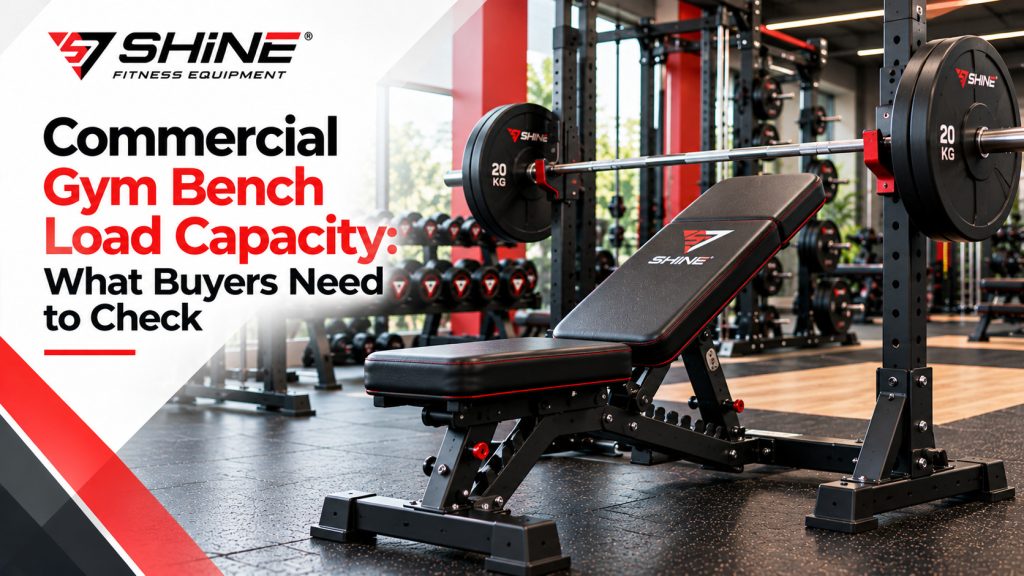
Load capacity is one of the first specifications buyers see on commercial gym benches, yet it is often the least understood feature of commercial gym benches. A single number on a product sheet does not tell you how a bench behaves under a heavy press, a dropped dumbbell or years of daily use. This guide explains what load capacity really means for commercial gym benches, which construction details support it, how different bench types compare, how much space to allow between benches and what to ask any supplier before you buy.
Why Load Capacity Matters for Commercial Gym Benches
A bench in a commercial gym supports the combined weight of the user and the load they lift, often many times an hour. Members range from beginners to heavy lifters, and many will push commercial gym benches beyond what a home bench is designed to handle.
Commercial gym benches with inadequate capacity can flex, wobble or fail at adjustment points. Even without a dramatic failure, a bench that feels unstable discourages members from using it and undermines confidence in the whole facility. Choosing commercial gym benches with a sensible safety margin protects users and reduces long-term replacement costs.
What "Load Capacity" Actually Means for Commercial Gym Benches
Load capacity is normally the maximum weight a manufacturer says the bench can support during correct use. However, manufacturers of commercial gym benches do not always define it the same way. Some quote static capacity (weight resting on the bench), while others refer to the total of user plus lifted weight during movement.
Dynamic loading is the critical issue. When a lifter lowers a heavy barbell or sets down dumbbells quickly, the force on the bench briefly exceeds the static weight. That is why experienced buyers look for commercial gym benches with a generous margin rather than buying a bench rated just above their heaviest expected load.
Questions to Ask About a Capacity Rating
- Is the rating static or dynamic? Ask whether the figure includes the user's body weight and the lifted load during movement.
- Was it tested? Ask how the rating was determined and whether testing reflects real commercial use.
- Does it apply in every position? Adjustable benches may have lower effective capacity in incline or decline settings.
- What does the warranty cover? Warranty terms show how confident the manufacturer is in the frame under commercial conditions.
Construction Details That Support Load Capacity
Capacity is the result of design and materials, not just a label. When evaluating commercial gym benches, inspect the build itself.
Frame steel and tube profile: Heavier-gauge steel and larger rectangular or oval tubing resist bending under load. Look for a frame that feels rigid when you press down firmly on the pad edges.
Weld quality: Clean, continuous welds at joints indicate careful fabrication. Weak or patchy welds are common failure points on commercial gym benches.
Base footprint: A wider base with three or more ground contact points improves stability, particularly when members sit at the end of the bench or rack weights.
Pads and upholstery: High-density foam on a solid backing board supports the user evenly and resists sagging over time.
Adjustment mechanisms: On adjustable models, the ladder, pop-pin or locking system carries load whenever the back pad is raised. These parts must be robust and lock positively.
Adjustable Weight Bench for Gym Use
An adjustable weight bench for gym floors is usually the most popular of all commercial gym benches, because it supports flat, incline and sometimes decline work for presses, rows and seated exercises.
That versatility creates more stress points than a fixed bench. When assessing an adjustable weight bench for gym use, check that the backrest and seat lock firmly in each position without play, that adjustment is easy for members to operate safely, and that the gap between seat and backrest is small enough to remain comfortable.
Also check how the capacity applies when the bench is inclined. A well-designed adjustable weight bench for gym environments keeps the load path solid in every position rather than relying on a small pin to carry the full force.
Olympic Bench for Commercial Gym Floors
An Olympic bench for commercial gym use combines a bench with integrated uprights for racking an Olympic barbell. Because the user lifts heavy loads directly above the body, this is where capacity and stability matter most among commercial gym benches.
When evaluating an Olympic bench for commercial gym installation, check the upright height and adjustability, the strength of the J-hooks or bar catches, the presence of weight-plate storage pegs that help balance the frame, and whether spotter positions or safety catches are included. Every Olympic bench for commercial gym floors should stay completely stable when a loaded bar is re-racked with some force.
Comparing Common Commercial Gym Benches
The table below summarises how the main types of commercial gym benches compare in practical terms.
| Bench Type | Primary Use | Capacity Considerations | Space Needs | Best Suited For |
| Flat bench | Dumbbell presses, rows, step-ups | Simple frame, fewer stress points | Compact footprint | Free-weight areas |
| Adjustable bench | Flat, incline and decline work | Check locking system in every position | Compact, needs adjustment clearance | General strength floors |
| Olympic flat/incline bench | Heavy barbell pressing | Uprights and hooks must handle racking forces | Larger, needs bar and plate clearance | Strength and powerlifting zones |
| Preacher/utility bench | Isolation and seated work | Pad support and frame rigidity | Compact | Accessory training areas |
Use manufacturer specifications for exact dimensions and capacity figures of commercial gym benches rather than relying on general descriptions.
Gym Bench Capacity Planning
Beyond the strength of individual units, gym bench capacity planning looks at how many commercial gym benches your facility needs and where they go. Benches are among the most shared items on a gym floor, so under-supplying them quickly creates queues at peak times.
Effective gym bench capacity planning starts with member behaviour. Observe or estimate how many members use benches during your busiest hours, how long they typically stay, and which bench types are most in demand. Strength-focused facilities generally need more Olympic and adjustable commercial gym benches, while general fitness gyms may prioritise adjustable benches close to the dumbbell rack.
Gym bench capacity planning should also consider how benches interact with other equipment. Benches near dumbbell racks, Smith machines and cable stations serve multiple purposes, so positioning them well can reduce the total number needed.
How Much Space Is Needed Between Gym Benches?
How much space is needed between gym benches? It depends on bench type, the exercises performed and local safety guidance. A useful approach is to consider the full working area of commercial gym benches rather than the bench footprint alone.
Spacing Factors to Plan For
- Arm and dumbbell movement: Allow room for members to lower dumbbells to the side and stand up safely without striking neighbouring users.
- Barbell length: Olympic benches need clearance for the full length of the bar plus loaded plates at both ends.
- Walkways: Keep a clear path behind and beside benches so others can move without crossing lifting zones.
- Adjustment clearance: Adjustable backrests need space to move through their range.
So, how much space is needed between gym benches in your facility? Use the manufacturer's recommended clearance as the minimum and add walkway space based on your layout. If you are unsure, consult your supplier's layout team or a fitness facility planner.
Questions to Ask a Commercial Gym Equipment Supplier
A reliable commercial gym equipment supplier should answer technical questions clearly. Before ordering commercial gym benches, ask:
- How is the load capacity defined and tested?
- What steel gauge and tube profile does the frame use?
- What warranty applies to the frame, welds, upholstery and moving parts?
- Are replacement pads, pins and hardware readily available?
- Can the supplier help with layout and spacing for your floor?
A knowledgeable commercial gym equipment supplier will also explain the difference between commercial and light-commercial models and recommend commercial gym benches that suit your members. Choosing a commercial gym equipment supplier with local after-sales support makes maintenance and repairs much simpler.
Common Buying Mistakes With Commercial Gym Benches
Buyers often choose commercial gym benches based on appearance or price, assume all capacity ratings are calculated the same way, or overlook how adjustable mechanisms behave under load. Another frequent mistake is placing benches too close together to fit more units on the floor. For background on how a bench is used in pressing movements, the bench press overview is a helpful reference when planning space and stability needs.
Frequently Asked Questions
What load capacity should commercial gym benches have?
Commercial gym benches should have a capacity that comfortably exceeds the combined weight of your heaviest users and their likely lifted loads, with a margin for dynamic forces. Always confirm how the manufacturer defines and tests the rating before comparing models.
Is an adjustable weight bench for gym use as strong as a flat bench?
It can be, but adjustable benches have more stress points such as the backrest pivot and locking system. Check that the bench locks firmly in every position and that the stated capacity applies at incline and decline settings, not only when flat.
What should I check on an Olympic bench for commercial gym use?
Check frame rigidity, upright strength, J-hook or catch quality, plate-storage balance and whether safety catches are included. The bench should remain completely stable when a loaded barbell is re-racked firmly.
How much space is needed between gym benches?
Allow enough room for dumbbell movement, barbell length with plates, backrest adjustment and a clear walkway. Use the manufacturer's recommended clearance as the minimum and add circulation space based on your layout and local safety guidance.
What is gym bench capacity planning?
It means deciding how many commercial gym benches your facility needs, which types and where to place them. It is based on peak-hour demand, member training styles and how benches work alongside racks, cables and dumbbell areas.
How do I choose a supplier for commercial gym benches?
Choose a supplier who explains capacity ratings clearly, shares construction details, offers strong frame warranties, stocks replacement parts and can help with layout. Local after-sales support is especially valuable for busy commercial facilities.
How often should commercial gym benches be inspected?
Check commercial gym benches weekly for loose bolts, damaged upholstery and worn adjustment pins, and carry out a detailed frame and weld inspection monthly. Remove any bench with cracks or unstable locking until it is repaired.
Conclusion
Load capacity on commercial gym benches is more than a headline number. Buyers need to understand how the rating is defined, check the frame, welds, base and adjustment systems that support it, and match bench types to the way members train. Pair that with careful capacity planning and sensible spacing, and your bench area will be safe, efficient and well used. Thoughtful selection of commercial gym benches pays off in member confidence and lower long-term costs.
If you are planning or upgrading a strength floor, review your member needs, layout and expected loads before choosing individual benches, and see our guide to the top commercial gym bench types for modern gyms. Explore the Shine Fitness range of commercial gym benches or contact the team for guidance on the right mix for your facility.