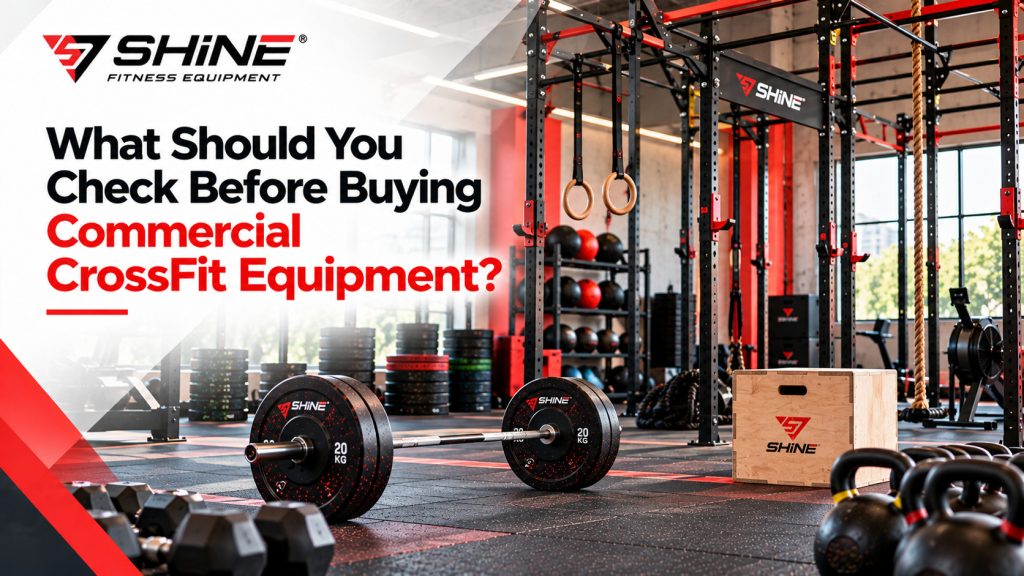
Buying CrossFit equipment for a commercial box or functional zone is very different from buying traditional gym machines. Gear in a box gets dropped, thrown, swung and loaded explosively by a full class at the same time, so durability, safety and layout matter far more than appearance. This guide walks you through exactly what to check before you buy: rigs, barbells, bumper plates, conditioning tools, flooring, space, supplier support and the mistakes that most often lead to early replacement.
Why Commercial CrossFit Equipment Needs Careful Selection
CrossFit workouts combine weightlifting, gymnastics and conditioning in short, high-intensity sessions. That mix creates unusual demands: barbells are dropped from overhead, kettlebells hit the floor, wall balls strike targets hundreds of times a day and rigs carry members swinging from pull-up bars.
Commercial CrossFit equipment must absorb that punishment every class, every day. Home-grade products may look similar in photos, but they often fail at the welds, sleeves, handles or coatings once they face group-class volumes. Careful selection protects your members, keeps classes running on time and stops your budget from disappearing into replacements.
Start With Your Programming and Class Size
Before comparing individual products, define how the space will actually be used. What you need depends on your class format, the number of members per session and the movements you programme most often.
Planning Questions to Answer
- How many athletes per class? Core items such as barbells, plates, boxes and kettlebells need to be multiplied by your maximum class size, not your average.
- Which movements dominate your programming? Olympic lifting, gymnastics and conditioning each place different loads on your kit and floor.
- Will the area be a dedicated box or part of a larger gym? CrossFit equipment for gyms often shares space with other zones, which changes your layout and storage plan.
- What is your experience mix? Beginners benefit from lighter technique bars, smaller plates and scalable options.
Answering these questions first prevents you from overbuying one item and running short of another.
Rigs and Racks: The Backbone of Your Box
A rig is usually the largest single investment in a box. It supports pull-ups, muscle-ups, squats, presses and a wide range of accessory attachments.
When evaluating rigs, check the steel gauge and upright profile, weld quality at the crossmembers, the stability of the base or wall mounting, the spacing of hole patterns for J-hooks and safeties, and the range of compatible attachments. A good rig feels completely solid when several members kip on the pull-up bars at once. Also confirm the rig's height and footprint against your ceiling, especially if you plan to programme muscle-ups and rope climbs.
Barbells and Bumper Plates
Barbells are handled more than almost any other piece of CrossFit gym equipment. Look at shaft quality, knurling suited to high-rep work, sleeve rotation through bearings or bushings, and a finish that resists corrosion and chalk build-up.
Bumper plates must survive thousands of drops. Check the rubber density, the strength of the steel insert or hub, consistent diameter across all weights and how much the plates bounce. Excessive bounce is a real hazard in a crowded class, while poorly bonded inserts can work loose over time. Stocking a range of bars and plates for different users makes it easy to scale workouts safely.
Conditioning and Functional Fitness Equipment
Beyond lifting, every box relies on a wide range of functional fitness equipment for metabolic conditioning, skill work and scaling.
Core Conditioning Items to Assess
- Kettlebells: Check the handle finish and look for smooth welds or one-piece casting so they do not tear hands during high-rep swings.
- Plyo boxes: Look at stability, edge protection and whether foam or wooden boxes better suit your members' experience and safety needs.
- Wall balls and slam balls: Check stitching and shell durability, and whether the balls hold a consistent shape after repeated impact.
- Rowers, bikes and ski ergs: Assess build quality, monitor reliability and service support, as these machines see constant class use.
- Ropes, rings and gymnastics accessories: Confirm load ratings and mounting points, and inspect them for wear regularly.
Reliable conditioning tools keep sessions flowing because athletes are never waiting on broken or missing items. When budgeting, prioritise the pieces used in almost every workout.
Flooring and Space Planning
Flooring is part of your equipment investment, even if it rarely appears on the product list. Dropped barbells and kettlebells send significant impact into the floor, so dense rubber flooring or dedicated lifting platforms are essential to protect the building, your gear and nearby users.
Space planning matters just as much. Each athlete needs enough room to perform barbell lifts, burpees and box jumps without colliding with a neighbour. Leave clear lanes for rowers and running, and keep wall space free for wall-ball targets. Give every item a fixed storage position so it returns there after class; this reduces trip hazards and speeds up transitions between workouts.
Comparing Commercial and Home-Grade Equipment
Not everything sold for functional training is designed for commercial use. The table below highlights the practical differences buyers should look for.
| Factor | Commercial-Grade | Home / Light-Use |
| Intended usage | Multiple daily classes, many users | Occasional use by few users |
| Frame and welds | Heavier steel, reinforced joints | Lighter materials, simpler joints |
| Barbell sleeves | Built for repeated drops and rotation | May loosen with frequent drops |
| Bumper plates | Durable inserts, controlled bounce | Inserts can loosen sooner |
| Warranty | Commercial-use coverage | Often excludes commercial use |
| Best suited for | Boxes, gyms, training centres | Home or garage setups |
Always read the manufacturer's specifications and warranty terms to confirm the intended use of every product before you buy.
Choosing a CrossFit Equipment Supplier
Your CrossFit equipment supplier affects much more than the purchase price. A good partner helps you plan quantities and layout, provides clear product specifications and supports you long after installation.
Before committing, ask about warranty terms for commercial use, availability of spare parts such as barbell collars, rig hardware and rower components, delivery and installation options, and lead times for additional items as your membership grows. A reliable supplier should also be honest about which products are truly commercial-grade and which are better suited to lighter use.
Durability and Maintenance Checks
Even the best gear needs regular care. Build simple routines into your operations so problems are caught early:
- Clean and brush barbell knurling regularly, and check sleeves for smooth rotation.
- Inspect bumper plates for cracked rubber or loose inserts.
- Tighten rig bolts and check welds and wall fixings on a set schedule.
- Examine rings, ropes and straps for fraying and replace them promptly.
Consistent maintenance extends equipment life and shows members that safety is taken seriously.
Common Mistakes When Buying CrossFit Equipment
Buyers often underestimate quantities for full classes, choose cheaper products that fail under drop-heavy use, overlook flooring and storage, or buy from sellers who cannot supply spare parts. Another frequent mistake is equipping the box only for advanced athletes, leaving beginners without lighter bars and scaling tools. Treating your CrossFit gym equipment as one complete system, rather than a list of separate purchases, helps you avoid all of these problems.
Frequently Asked Questions
What CrossFit equipment does a new box need first?
A new box typically starts with a rig, barbells, bumper plates, kettlebells, plyo boxes, wall balls, rowers or bikes, and impact-resistant flooring. Quantities should match your maximum class size so every athlete can train without sharing during core movements.
How is commercial CrossFit equipment different from home equipment?
Commercial-grade products use heavier steel, reinforced welds, more durable barbell sleeves and bumper inserts, and are backed by commercial-use warranties. They are designed for repeated drops and multiple daily classes, which home equipment usually cannot withstand.
Is CrossFit equipment suitable for regular commercial gyms?
Yes. Many gyms add a functional training zone with a rig, platforms and conditioning tools. Plan dedicated space and flooring so high-impact training does not interfere with other members.
What flooring is needed for a CrossFit area?
Dense rubber flooring or lifting platforms are recommended because barbells, kettlebells and medicine balls are dropped frequently. The right flooring protects the building structure, extends the life of your gear and reduces noise and vibration.
How do I choose a CrossFit equipment supplier?
Choose a supplier that offers genuine commercial-grade products, clear specifications, commercial-use warranties, spare-part availability and installation support. Ask for guidance on quantities and layout based on your class size and programming.
What is functional fitness equipment?
Functional fitness equipment includes tools that train movement patterns used in daily life and sport, such as kettlebells, medicine balls, plyo boxes, sleds, ropes and rings. It is used for strength, conditioning and mobility work in group and individual sessions.
How often should CrossFit equipment be inspected?
Check barbells, plates, ropes and rings weekly, and inspect rig bolts, welds and wall fixings monthly. Remove any damaged item from use immediately and replace worn parts before they become a safety risk during classes.
Conclusion
Buying CrossFit equipment for a commercial facility is about more than ticking off a product list. Start with your programming and class sizes, check the build quality of rigs, barbells and plates, plan for flooring and space, and work with a supplier who supports you long after delivery. When every decision reflects real class conditions, your box stays safe, reliable and ready for every session, and your investment becomes a long-term asset rather than a recurring cost.
If you are setting up a box or adding a functional zone to your gym, map your class size, programming and floor space before selecting individual items. Explore the Shine Fitness functional training equipment range or contact the team for guidance tailored to your facility.