
Most faults on commercial gym equipment are minor, predictable, and fixable in-house: a frayed cable, a slipping treadmill belt, a bolt that has worked loose, a torn pad. Left alone, each of these becomes a safety issue and an expensive repair. This guide walks through the problems that occur most often on a gym floor, the checks and fixes a competent staff member can carry out safely, the clear boundary where DIY work should stop, and the preventive routine that keeps small faults from turning into downtime. Nothing here replaces manufacturer instructions for your specific machines, which should always take precedence.
Common Gym Equipment Issues
Almost every fault a facility encounters falls into one of a few categories. Recognising the pattern early is most of the job, because equipment rarely fails without warning, it makes a noise, develops play, or starts feeling different before it breaks.
Cable and Pulley Problems
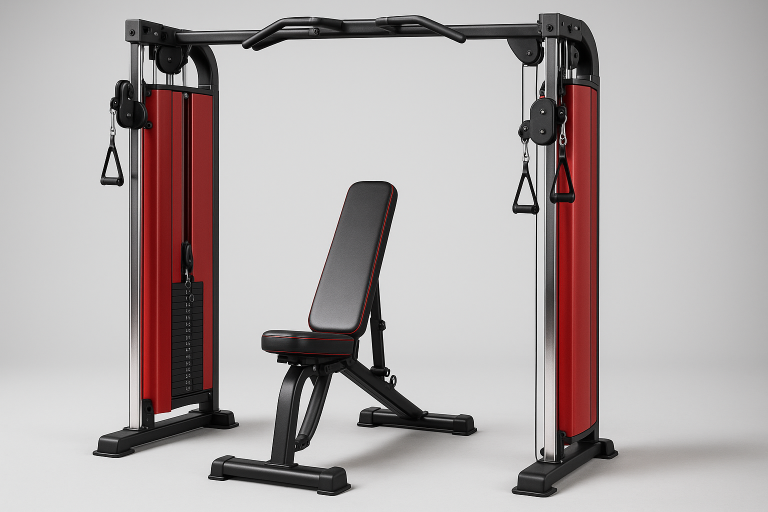
Cable machines take more abuse than almost anything else on the floor. The usual gym equipment problems here are fraying, stiffness, noise, and uneven travel.
Fraying cable. Inspect the full length of every cable regularly, especially where it wraps a pulley and at the swage fittings at each end. Any broken strand means the cable is compromised. A frayed cable is not repairable, it is replaced, always with the correct length and fitting type specified for that machine. Take the station out of service until the replacement arrives.
Grinding or squealing pulleys. This is the second most frequent cable machine repair after cable replacement, and noise usually indicates a worn bearing or a groove that has worn out of round. Check whether the pulley spins freely by hand with the load removed. A dry bearing can sometimes be revived, but any cable machine repair involving a pulley that wobbles on its axle or shows a scored groove ends in replacement, since a worn groove accelerates cable wear.
Uneven or jerky travel. Look first for a cable that has jumped its groove, then for a misaligned pulley bracket, then for debris in the weight-stack guide rods. Guide rods benefit from cleaning and a light application of the lubricant the manufacturer specifies, never a heavy grease, which collects dust.
Weight stack sticking. This is usually guide-rod contamination or a bent selector pin. Clean the rods, check the pin, and confirm the stack moves freely through its full travel. Effective cable machine repair is mostly inspection and replacement of consumable parts rather than complex mechanical work.
Treadmill Belt and Motor
Cardio units are the most electrically complex machines in a gym and the ones where the DIY boundary is tightest. Basic treadmill repair tasks are within reach of trained staff; anything involving the motor, controller board, or wiring is not.
- Belt slipping or hesitating. The most common treadmill repair call of all, and usually just belt tension or lubrication. Most decks require periodic application of a silicone lubricant between belt and deck, following the manufacturer’s interval.
- Belt drifting off-centre. Corrected by small, equal adjustments to the rear roller bolts. Adjust in quarter-turn increments, run briefly, and reassess between adjustments.
- Burning smell or tripping breaker. Stop immediately, isolate the machine from power, and call a qualified technician. This is not a DIY task under any circumstances.
- Console or display faults. Check the cable connection at the console first. Beyond that, board-level faults require the service agent.
- Excessive noise from the deck. Often a worn deck surface or belt. Both are replaceable parts, but replacement usually needs the service manual for that model.
Treadmill repair is also the area where warranties are most easily voided, so check your service agreement before opening any panel.
Loose Bolts and Upholstery
The most common issue on strength machines is also the simplest: fasteners work loose under cyclic loading. A monthly torque check on every bolted joint, frames, uprights, seat brackets, footplates, handles, prevents most rattles, wobbles and premature bushing wear, and it is the cheapest gym equipment maintenance task there is. Use the torque specified by the manufacturer rather than tightening by feel, and replace any fastener with damaged threads instead of reusing it.
Torn upholstery is a hygiene and appearance problem before it is a structural one. Exposed foam absorbs sweat and cannot be sanitised. Small splits can be held temporarily with proper upholstery repair tape, but the correct fix is pad replacement. Most manufacturers supply pads as spares, and re-upholstery is considerably cheaper than replacing a machine. Keeping a small stock of common pads is one of the more cost-effective habits in gym equipment maintenance.
Other recurring faults worth a routine check:
- Worn or split grips and handles, which affect safety and are quick to swap.
- Perished rubber feet, which cause rocking and damage flooring.
- Seized or noisy adjustment pins, usually a cleaning and lubrication issue.
- Damaged weight-stack rubber bumpers, which cause loud clanging and transmit shock into the frame.
When to DIY vs Call a Technician
The distinction is not about difficulty; it is about consequence. If a mistake in the repair could injure a member, the work belongs to a qualified technician regardless of how straightforward it looks.
| Situation | Handle In-House | Call a Technician |
| Loose bolts, rattles | Yes, with a torque wrench | If threads or frame are damaged |
| Cable fraying | Replace with correct spare | If routing is complex or unclear |
| Pulley noise | Inspect and clean | Replacement on load-bearing assemblies |
| Torn upholstery | Replace pad | If mounting brackets are damaged |
| Treadmill belt tension | Yes, per manual | Persistent slipping after adjustment |
| Electrical faults, burning smell | Never | Always |
| Frame cracks or weld failure | Never | Always, immediately |
| Weight-stack or guide-rod damage | Cleaning only | Bent rods or damaged stack plates |
A sound approach to gym machine troubleshooting is to work from symptom to cause systematically: reproduce the fault, isolate which component is involved, check the simplest cause first, and stop the moment the diagnosis becomes uncertain. Documenting each fault and its resolution builds a service history that makes future gym machine troubleshooting faster and supports warranty claims. Staff who follow a fixed gym machine troubleshooting sequence also avoid the guesswork that damages parts.
Safety Rules for Any In-House Repair
- Take the machine out of service properly. Physically tag it, remove the selector pin, and make it obviously unusable rather than relying on a sign.
- Isolate power before touching any cardio unit. Unplug it, switching it off at the console is not isolation.
- Never partially load a machine you are working on. Remove all load before inspection.
- Use correct spares only. Any gym equipment DIY repair using a substitute cable or a generic fastener changes the load path in ways that are not visible.
- Test under supervised load before returning the unit to the floor. Have a staff member run the machine through its full range first.
Structural gym equipment DIY repair on frames, welds, or load-bearing assemblies exposes a facility to real liability. Those are manufacturer or technician jobs, and the same applies to anything covered by an active warranty. If you need help identifying whether a fault is serviceable in-house, ask your supplier before you start, most will tell you directly, and it is far cheaper than a failed repair. Knowing when to fix gym equipment yourself and when to escalate is the single most useful skill a facility manager can develop here.
Preventive Maintenance Basics
It is always cheaper to prevent a fault than to fix gym equipment after it has failed. The principle of scheduled preventive maintenance applies to gym floors as much as to industrial plant: planned, routine attention at fixed intervals costs less than unplanned failure.
A workable routine for most commercial facilities:
- Daily. Wipe down all contact surfaces and upholstery with an appropriate cleaner. Visually check cables, pads and handles. Report anything unusual.
- Weekly. Check guide rods and moving parts for smooth travel. Inspect treadmill belt alignment, which prevents most treadmill repair work later. Test all adjustment mechanisms through full range.
- Monthly. Torque-check fasteners across all strength machines. Inspect every cable end-to-end. Clean and lubricate per manufacturer specification. Check rubber feet and bumpers.
- Quarterly. Deep clean, inspect welds and frames for cracks or corrosion, review the service log, and reorder consumable spares.
- Annually. Arrange a professional service for cardio equipment and any machine still under warranty.
Two habits multiply the value of this routine. First, keep a written log per machine, date, check performed, fault found, action taken. Second, hold a small spare-parts inventory of the items that fail most often: cables, pads, grips, selector pins, rubber feet. A machine that waits three weeks for a two-hundred-rupee part is losing revenue the whole time. Consistent gym equipment maintenance of this kind also protects resale value and keeps warranty cover intact.
Frequently Asked Questions
Can I repair gym equipment myself?
Routine gym equipment DIY repair such as tightening fasteners, replacing pads and grips, cleaning guide rods, and adjusting treadmill belt tension can be handled in-house with the manufacturer’s manual. Electrical faults, frame cracks, and load-bearing assemblies require a qualified technician.
How often should gym equipment be serviced?
Gym equipment maintenance works best on a fixed cycle: daily visual checks and cleaning, weekly function checks, monthly fastener and cable inspections, and a professional annual service for cardio units. High-traffic facilities should shorten these intervals based on actual usage.
What causes a treadmill belt to slip?
Usually insufficient belt tension or inadequate lubrication between belt and deck. Check the manufacturer’s lubrication interval first, then adjust rear roller bolts in small, equal increments. Persistent slipping after adjustment indicates a worn belt or deck.
When should a gym cable be replaced?
Immediately, once any broken strand, kink, corrosion, or deformation at the swage fitting is visible. Cables are not repairable. Take the station out of service until a correct-specification replacement is fitted.
Why do gym machine bolts keep coming loose?
Repeated loading and vibration gradually loosen fasteners, which is normal on any machine in daily use. A monthly torque check to the manufacturer’s specification prevents rattles, wobble and accelerated bushing wear.
Is it cheaper to repair or replace a gym machine?
It is usually far cheaper to fix gym equipment when the frame is sound and only consumable parts have worn. Replacement makes sense when frames are cracked or corroded, spares are unavailable, or repeated faults are causing continuous downtime.
What spare parts should a gym keep in stock?
Cables, upholstery pads, grips and handles, selector pins, rubber feet, and weight-stack bumpers. These fail most frequently and are inexpensive relative to the revenue lost when a machine stands idle.
Conclusion
Keeping a gym floor working reliably is less about technical skill than about routine and judgement. The faults that appear most often, frayed cables, noisy pulleys, slipping belts, loose bolts, torn pads, are all visible in advance to anyone inspecting regularly, and most of them are resolved by cleaning, correct tightening, or fitting the right spare part. Equally important is knowing where to stop: electrical work, frame repairs, and anything load-bearing belongs with a qualified technician. Facilities that combine a written maintenance log, a small spare-parts stock, and a clear DIY boundary spend less, lose less floor time, and run measurably safer floors.
If you are setting up a maintenance routine or need advice on spare parts and servicing for your machines, start by auditing every unit on your floor and recording its condition. Explore the Shine Fitness equipment range or contact the team for guidance on servicing and replacement parts for your facility.