Choosing the right gym products in India means matching equipment to your members, your floor area and your budget, not simply filling a room with machines. This guide explains the main equipment categories, what separates commercial-grade builds from lighter alternatives, how to assess suppliers, and which mistakes tend to cost new gym owners the most. By the end, you will have a practical framework for shortlisting equipment before you request a single quote.
Understanding the Market for Gym Products in India
Gym owners can source gym equipment in India from three broad routes: imported brands, domestic manufacturers and trading companies that resell products from several makers. Each route carries different trade-offs in lead time, spare-part availability, price transparency and after-sales support.
For a commercial facility, these differences matter more than the sticker price. A machine that sits idle for weeks waiting for a replacement part costs more in lost member satisfaction than it saved at purchase. That is why experienced buyers evaluate gym equipment in India on total ownership experience: build quality, finish durability, service access and installation support.
Demand for gym products in India now spans very different use cases. A boutique studio, a hotel gym, a college facility and a high-footfall commercial club all need different equipment mixes. Defining your use case first prevents the most common planning error, which is buying a product list rather than designing a training floor.
Core Categories of Gym Products in India
Most gym products in India used in commercial facilities fall into four equipment families. Understanding what each one does helps you allocate space and budget sensibly.
Selectorised and Strength Gym Machines
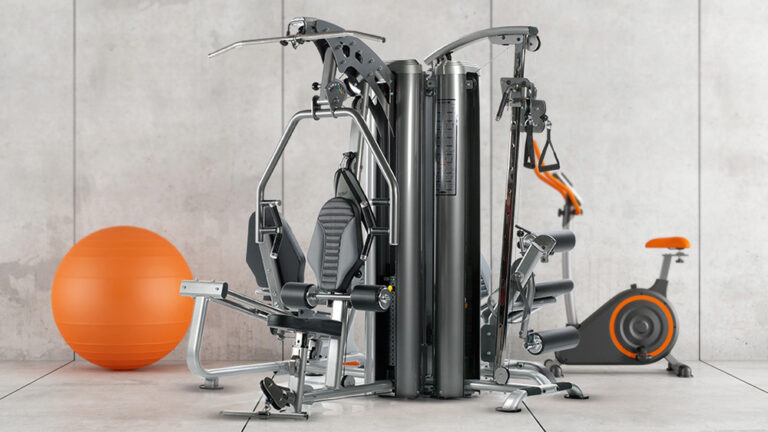
Selectorised gym machines use a weight stack with a pin, which makes them quick to adjust and easier for beginners to use safely. They suit chest presses, lat pulldowns, leg extensions, leg curls and cable stations. Members of all experience levels can use them without a spotter, so they tend to be popular on busy floors.
Plate-Loaded Machines and Racks
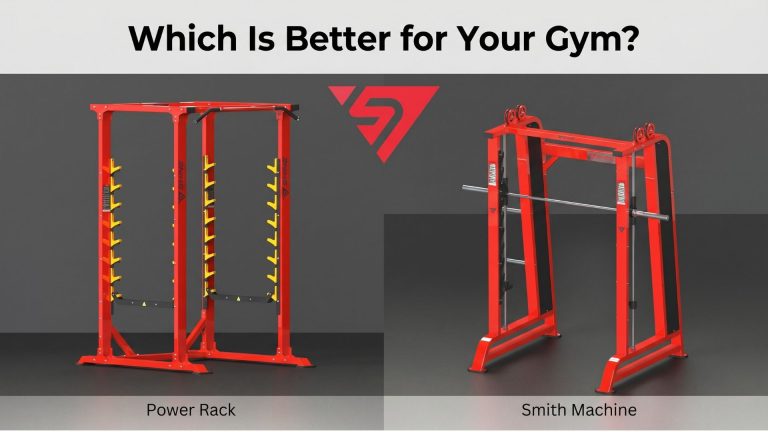
Plate-loaded equipment lets members add or remove weight plates, giving a wider load range and a heavier feel that many experienced lifters prefer. This family includes leg presses, hack squats, Smith machines and squat racks. These machines usually need more floor space and a sensible plate-storage plan.
Benches and Free-Weight Stations
Flat, incline, decline and adjustable benches are the backbone of any free-weight area. They are used with dumbbells and barbells for pressing, rowing and accessory work. Because benches are used constantly, upholstery quality and frame stability deserve close attention.
Cardio and Functional Zones
Treadmills, bikes and open functional areas complement strength training and help serve members with general fitness goals. Plan these zones alongside the strength floor, since airflow, noise and circulation space affect how the whole room feels.
Key Factors to Consider Before You Buy
- Member profile: a beginner-heavy membership benefits from more selectorised machines, while a strength-focused membership needs more racks and plate-loaded stations.
- Floor area and ceiling height: measure usable space after allowing for walkways, mirrors and plate storage, not just the total room size.
- Frame construction: look at tube thickness, weld quality and base stability, since these determine how a machine behaves after years of daily use.
- Finish and upholstery: powder-coated frames and reinforced upholstery resist chalk, sweat and constant contact better than basic paint and thin padding.
- Service access: confirm who supplies spare parts, how quickly, and whether installation is included.
Commercial vs Light-Commercial vs Home-Use Equipment
One of the most expensive mistakes is buying home-grade or light-duty equipment for a commercial floor. The categories are not interchangeable, and the differences show up in frame design, expected usage and maintenance demands.
| Factor | Commercial-grade | Light-commercial | Home-use |
| Intended usage | Continuous daily use by many members | Moderate use in small studios or offices | Occasional use by one household |
| Frame construction | Heavy-gauge steel, reinforced joints | Medium-duty frames | Lighter frames |
| Maintenance needs | Scheduled inspection and servicing | Periodic checks | Minimal |
| Space requirement | Larger, planned footprint | Moderate | Compact |
| Best suited for | Commercial gyms, clubs, hotels | Small studios, corporate gyms | Private homes |
Use this table as a starting framework for comparing gym products in India, then ask each supplier to explain in writing how a specific model is built and what duty cycle it is designed for.
Choosing Commercial Fitness Equipment That Lasts
Durable commercial fitness equipment starts with steel quality and joint design, but the details beyond the frame decide how long a machine stays presentable. Among all gym products in India, moving parts deserve the closest inspection. Pay attention to pulleys, guide rods and bushings, because these wear first on busy floors. Check that cables, pins and fasteners are accessible for inspection and replacement.
Ergonomics matters as much as strength in any fitness equipment. Gym machines that fit only one body type will frustrate a diverse membership. Adjustable seats, clear range-of-motion paths and stable foot platforms make equipment usable for more members and reduce the risk of poor technique.
Finally, consider appearance. Consistent colours, clean welds and uniform upholstery across the floor signal professionalism to prospective members, and they are easier to achieve when all your fitness equipment comes from one manufacturer.
How to Evaluate Gym Equipment Manufacturers in India
Working with gym equipment manufacturers in India can shorten lead times and simplify servicing, because the company that builds the machine also understands its parts. Manufacturers can often adapt dimensions, colours or branding to suit a facility, which traders generally cannot.
When comparing suppliers, look beyond the catalogue. Ask where the equipment is actually fabricated, how frames are finished, and what happens after delivery. A trustworthy supplier will answer these questions plainly and put key terms in writing.
Questions to Ask Every Supplier
- Is the equipment manufactured in-house or sourced from third parties?
- What steel specifications and finishing process are used on the frames?
- Is installation included, and is it carried out on site?
- How are spare parts supplied, and what is the usual turnaround?
- Can dimensions, colours or branding be customised for the facility?
- Is pricing quoted per machine with delivery shown transparently?
Cross-checking a supplier's answers against the general principles described in references on exercise equipment can also help you spot vague or unrealistic claims.
Planning Your Gym Setup Equipment
Good gym setup equipment planning begins with the floor plan, not the product list. Sketch the room, mark fixed elements such as columns, doors and mirrors, and then allocate zones for strength training, free weights, cardio and stretching.
A practical sequence works well for most gym setup equipment projects, and for choosing gym products in India more broadly:
- Define the member profile and the most common training goals.
- Measure the usable floor area and mark circulation paths.
- Allocate zones and a proportion of the area to each equipment family.
- Shortlist machines for each zone and verify dimensions against the plan.
- Confirm delivery, installation and servicing terms before placing an order.
Phasing is also worth considering. A new facility can open with a strong core of racks, benches and primary machines, then add specialised equipment once actual member demand becomes clear. This protects cash flow and avoids buying gym products in India that members rarely use.
Common Mistakes When Buying Gym Products in India
- Choosing equipment by price alone and ignoring build quality and service access.
- Skipping a scaled floor plan, which leads to crowded zones and blocked walkways.
- Mixing finishes and brands without a design plan, which makes the floor look unfinished.
- Overbuying specialised machines while neglecting basics like benches and racks.
- Ignoring plate storage, which creates clutter and safety risks.
- Failing to confirm installation and spare-part support in writing.
Frequently Asked Questions
What are the most essential gym products in India for a new commercial gym?
A new commercial gym typically needs adjustable benches, squat racks, plate-loaded machines, selectorised strength machines, cable stations, free weights and a cardio zone. The exact mix depends on member profile, floor area and budget, so planning the layout first prevents wasted purchases.
How do I choose between commercial and home gym equipment?
Choose commercial fitness equipment when many members will use it daily. It uses heavier frames and is designed for continuous use. Home-grade equipment is built for light, occasional use and tends to wear quickly under the demands of a public gym floor.
Is it better to buy from a manufacturer or a trader?
Buying directly from gym equipment manufacturers in India often gives clearer pricing, customisation options and easier access to spare parts, since the same company builds and services the machines. Traders offer variety across brands and gym equipment in India but may have less control over quality, lead times and technical support.
How much space do I need for a commercial gym?
Space needs depend on the equipment mix and expected footfall. Plate-loaded machines and racks need generous clearance, and walkways must remain open. Measure usable area, draw a scaled layout, and verify each machine's dimensions before ordering to avoid congestion.
Which equipment should I buy first when budget is limited?
Start with the most versatile gym products in India: adjustable benches, a squat rack, a cable station and a few core strength machines. These cover most training needs and attract a broad membership. Add specialised machines later, guided by what members actually use.
Can gym equipment be customised for my facility?
Many manufacturers can adjust dimensions, colours and branding to suit a facility's layout and identity. Ask for specifications in writing, confirm lead times for custom work, and request a sample or detailed drawing before approving a larger order.
What should be included in an equipment quotation?
A clear quotation should list each machine with its model, specifications, quantity and price, plus delivery, installation and warranty terms. Transparent itemisation helps you compare suppliers accurately and avoids surprise charges after the order is confirmed.
Conclusion
The best gym products in India are not simply the most impressive machines on a catalogue page. They are the ones that match your members, fit your floor plan, withstand daily use and come with reliable installation and service. Start by defining your use case, then build a balanced mix of strength machines, plate-loaded equipment, racks and benches. Compare suppliers on construction, finish and support rather than price alone, and phase your purchases so your budget follows real member demand.
If you are planning a commercial gym, review your available space, equipment requirements and expected usage before selecting individual machines. Explore the relevant Shine Fitness equipment range or request a quote for guidance based on your facility requirements. For a closer look at how leading manufacturers compare, read our commercial gym equipment brands comparison.