Short answer: there is no single price. A functional trainer machine in India is priced by what it is built from and how hard it will be worked, so a commercial unit that runs 12 hours a day costs more than a light home build — and a single well-made station can replace five or more fixed machines, which is where the real value sits.
If you are pricing a functional trainer machine for a commercial gym, studio, or well-equipped home setup, the gap between quotes is driven almost entirely by frame steel, the cable system, and the expected daily load. This guide explains what actually moves the functional trainer price, so you can read a quote properly and match the machine to your floor rather than to a number on a listing.
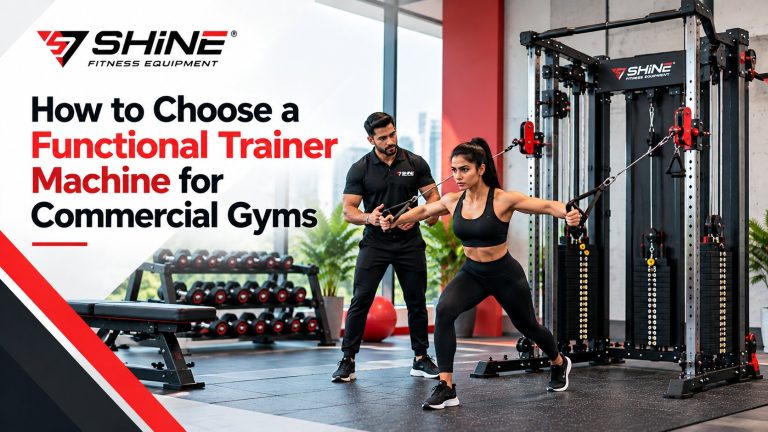
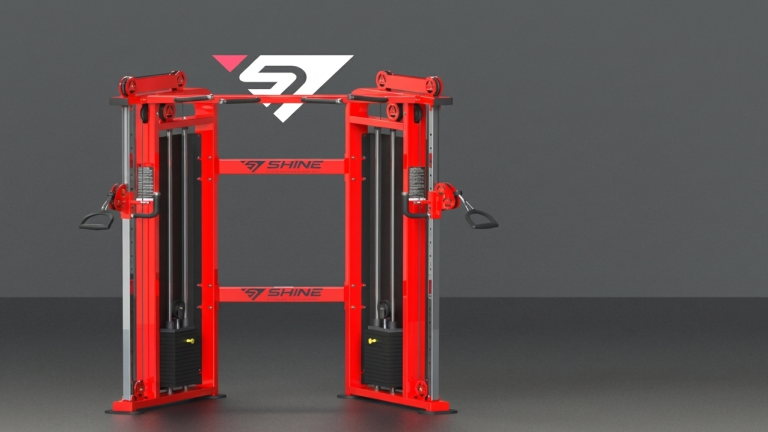
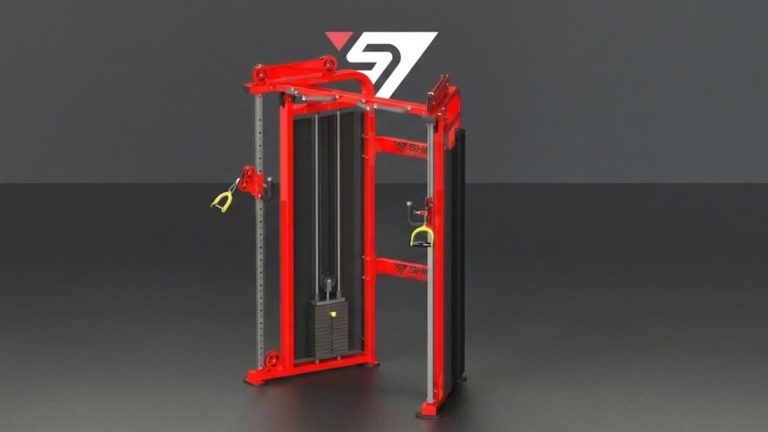
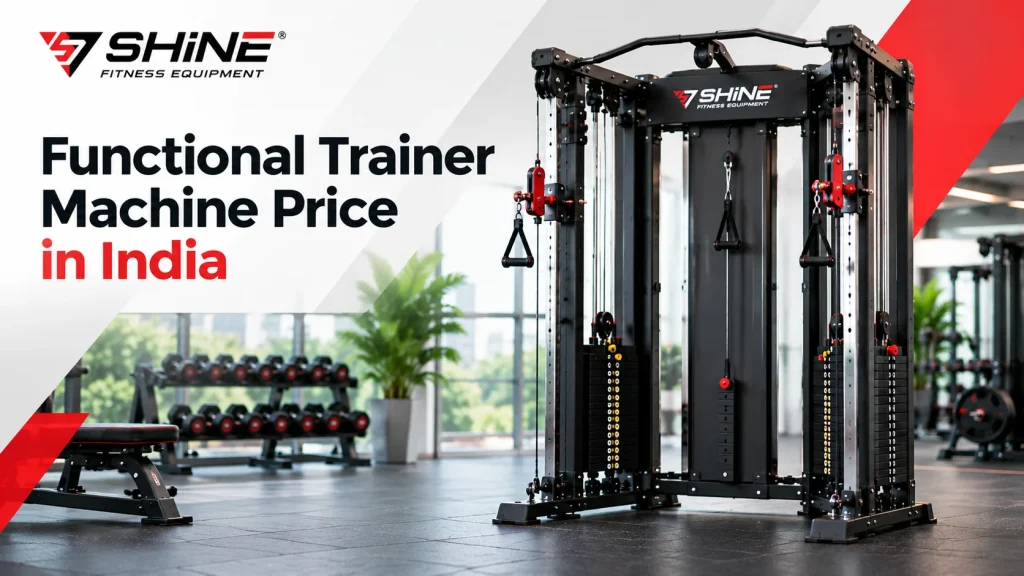
A functional trainer is a dual-adjustable-pulley cable station. Two weight stacks run on independent pulleys that travel up and down a vertical column, letting you train pushes, pulls, rotations, and single-arm work through a full range of motion. Because it replaces a rack of separate stations, it is one of the most space-efficient pieces of strength equipment you can buy. It is also versatile: one functional trainer machine can run 20 or more movements, as this guide to functional trainer exercises for a full-body workout shows.
What Determines Functional Trainer Machine Price in India?
The sticker price reflects engineering decisions you cannot always see in a photo. Understanding them is the difference between buying once and buying twice.
Frame steel is the biggest cost driver. A light unit may use thinner tube — often around 14-gauge (roughly 1.9 mm wall) — that flexes under heavy daily loads. A commercial-grade frame uses heavier steel, commonly 11-gauge (about 3 mm), that stays rigid through years of use. Shine Fitness, for example, cuts, bends, welds, and powder-coats heavy-gauge steel on its own line at Chandrala, Gujarat, rather than buying frames in and re-badging them. That is why finish and rigidity stay consistent across a whole floor.
The cable-and-pulley system is the second driver. Aircraft-grade cables, sealed bearings, and fibreglass-reinforced nylon pulleys cost more, but they survive the constant cycling a busy gym puts them through. The pulley ratio matters too: a 2:1 ratio means a 100 kg stack delivers about 50 kg at the handle while doubling cable travel, which changes the feel of every rep. Cheaper systems wear, fray, and start to feel notchy within months. Weight-stack size, guide-rod tolerance, and upholstery density each add their own increment to the functional trainer price. The protective finish is part of this as well — an oven-cured powder coating resists chalk and sweat far better than a sprayed paint.
Key Factors That Move the Price
- Frame gauge and steel quality — heavier tube (around 11-gauge) resists flex and lasts longer under daily commercial loads
- Pulley ratio and cable rating — a 2:1 pulley ratio changes the effective load and the feel of each rep
- Weight-stack size — commercial units commonly carry two stacks of 90–100 kg; larger stacks widen who can train on it
- Finish and upholstery — oven-cured powder coating and dense padding survive chalk, sweat, and heavy footfall
- Attachments included — bars, ropes, and handles bundled into the quote change the headline number
Commercial or Light-Commercial: Where Does Your Money Go?
The most common mistake is buying a light-commercial functional trainer machine for a setting that needs a commercial one. A machine built for a home or a low-traffic studio will struggle in a gym that runs 12 hours a day, and the saving disappears in repairs and downtime. The table below sets out the honest trade-offs.
| Factor | Light-Commercial | Commercial-Grade |
| Typical use | Home, apartment gym, low footfall | Full commercial gym, studio, hotel |
| Frame construction | Lighter tube, around 14-gauge steel | Heavier tube near 11-gauge, reinforced welds |
| Weight stacks | Smaller, often a single stack | Dual stacks, commonly 90–100 kg each |
| Expected daily usage | Occasional to moderate | Continuous, high-rep daily load |
| Maintenance need | Lower in light use | Built to tolerate heavy servicing cycles |
| Best suited for | 1–2 users or small-group training | Paying members and shared floors |
If you are sourcing for a paying floor, the best functional trainer for gym use is almost always the heavier commercial functional trainer machine. The cost of member dissatisfaction and equipment failure outweighs the upfront saving. Choosing the best functional trainer for gym settings means prioritising frame gauge and cable rating over a low headline price. For a home setup worked a few hours a week, a lighter unit can be the right call — provided you are honest about how hard it will be used.
Diagram: Commercial vs light-commercial functional trainers — comparing frame steel gauge, cable and pulley quality, daily usage tolerance, maintenance cycles, and best-suited application. (Insert the comparison infographic here.)
Should You Buy From a Manufacturer or a Reseller?
Where you buy changes the functional trainer price as much as what you buy. A functional trainer manufacturer — or broader gym equipment manufacturer in India — that fabricates in-house can quote factory-direct, because there is no distributor margin stacked on top. It also means custom sizes, colours, and specifications are handled in the same production run rather than ordered in from elsewhere.
This matters beyond price. When you buy direct from a gym equipment manufacturer in India, spare parts, servicing, and replacement cables come from the people who built the machine. Resellers often cannot support what they sell once the warranty window closes. A manufacturer that has built equipment since 2007 and supplied more than 1,000 gyms nationwide carries that service relationship with the sale. That is why many owners prefer to source a functional trainer machine straight from a functional trainer manufacturer rather than a reseller who only re-badges imported stock.
What to Check Before You Commit
- Who manufactures the unit — in-house fabrication by a gym equipment manufacturer in India usually means better parts support
- Whether delivery and on-site installation are included in the quote
- The maximum user weight (commercial models are typically rated around 150 kg) and the stack rating for that specific model
- What attachments and accessories are bundled versus charged separately
- Warranty terms — commercial frames commonly carry 5–10 years, with 1–3 years on cables and pulleys
- Lead time for custom frame sizes, colours, or OEM badging
Matching the Machine to Your Floor
Price should follow purpose, not the other way around. A studio with three trainers and rotating clients needs different functional trainer equipment than a 24-hour gym with unsupervised members.
Measure your clear floor and ceiling height first. A commercial column commonly stands 2.1–2.3 m tall and needs roughly 0.9–1.2 m above it for the pulleys to travel, so plan for about 2.4–2.5 m of ceiling clearance. On the floor, a single frame is often around 1.3 m wide, and a functional trainer machine needs clear width for two users, so allow close to 3 m so two people can train at once without clashing.
Then decide how many stations you genuinely need. One well-built functional trainer machine often does the work of five or more fixed machines. When you compare models, weigh each quote against the functional trainer equipment you would otherwise buy separately — the cable station usually wins on cost per movement and on floor space.
For neutral background on how cable resistance training works and why full-range movement matters, the overview of strength training is a useful reference before you weigh up models.
Common Costly Mistakes
- Buying on headline price alone and ignoring frame gauge and cable rating
- Under-sizing the machine for the real daily footfall it will see
- Forgetting to budget for installation and the 2.4–2.5 m of ceiling clearance it needs
- Overlooking spare-parts availability and who services the functional trainer equipment
When Is a Functional Trainer the Wrong Purchase?
An honest buying guide has to say when not to buy. A functional trainer is the wrong first machine in a few real cases, and spending the money anyway is how gyms end up with equipment that gathers dust.
Do not buy one if your ceiling is below about 2.4 m. The pulleys need vertical travel, and a cramped column kills the overhead movements that justify the purchase. Measure before you order, not after.
Do not lead with a functional trainer if your members are almost all beginners chasing one or two lifts. A budget plate-loaded machine or a simple rack may serve that crowd better per rupee. The cable station earns its cost when people use its range and variety, not when it sits on a single pin setting.
And do not buy a light-commercial unit for a busy paying floor to save money. It is built for occasional use. Put it under continuous high-rep traffic and the frame flex, cable wear, and downtime will cost more than the heavier build would have, usually within the first year. If the budget only stretches to a light unit, buy fewer commercial stations instead of more light ones.
Frequently Asked Questions
What is the price of a functional trainer machine in India?
There is no single figure. The functional trainer price varies with frame gauge, cable system, stack size (commonly 90–100 kg per stack), and whether you buy from a manufacturer or a reseller. A factory-direct commercial build is usually better long-term value than a cheap imported unit.
Is a functional trainer worth it for a commercial gym?
Yes, for most gyms. One station replaces five or more fixed machines while covering pushes, pulls, and rotational work. For paying members, a commercial-grade build is the best functional trainer for gym floors because it pays back through durability and lower downtime.
What is the difference between commercial and home functional trainers?
Commercial units use heavier steel (around 11-gauge), stronger cables, and denser upholstery to survive continuous daily use. Home units are lighter and cheaper — often 14-gauge frames — but can struggle under high footfall, making them unsuitable for busy commercial floors.
How much space does a functional trainer machine need?
Allow roughly 3 m of clear width so two users can train side by side, and about 2.4–2.5 m of ceiling height so the pulleys can travel their full range. Always measure vertical clearance first, as cable columns need more height than most fixed machines.
Should I buy a functional trainer from a manufacturer or a reseller?
Buying a functional trainer machine from a functional trainer manufacturer usually means factory-direct pricing, in-house spare parts, and the option of custom sizes. Resellers add margin and often cannot service the equipment once the warranty ends.
What should I check in a functional trainer quote?
Check the frame steel gauge, cable rating, weight-stack size, maximum user weight (commercial units are often rated near 150 kg), and which attachments are included. Confirm whether delivery and on-site installation are part of the quoted price.
How long does a commercial functional trainer last?
A well-built commercial functional trainer machine, properly serviced, lasts many years of daily gym use, with frame warranties commonly running 5–10 years. Longevity depends on steel quality, cable maintenance, and buying from a manufacturer who supplies replacement parts.
Conclusion
The price of a functional trainer machine reflects its frame steel, cable system, and intended workload — not a figure to chase in isolation. A commercial floor needs a heavier build with dual 90–100 kg stacks; a lightly used home gym can justify a lighter one. Buying from a manufacturer that fabricates in-house gives you factory-direct pricing and a real service relationship, which matters far more over the life of the machine than a small saving at purchase. Decide the workload first, then let the specification — and the price — follow from it.
If you are planning a gym or studio setup, measure your floor and the 2.4–2.5 m of ceiling clearance, confirm the daily footfall the machine must handle, and ask for a specification-level quote rather than a headline number. Explore the Shine Fitness strength equipment range or request a quote for pricing matched to your facility.