
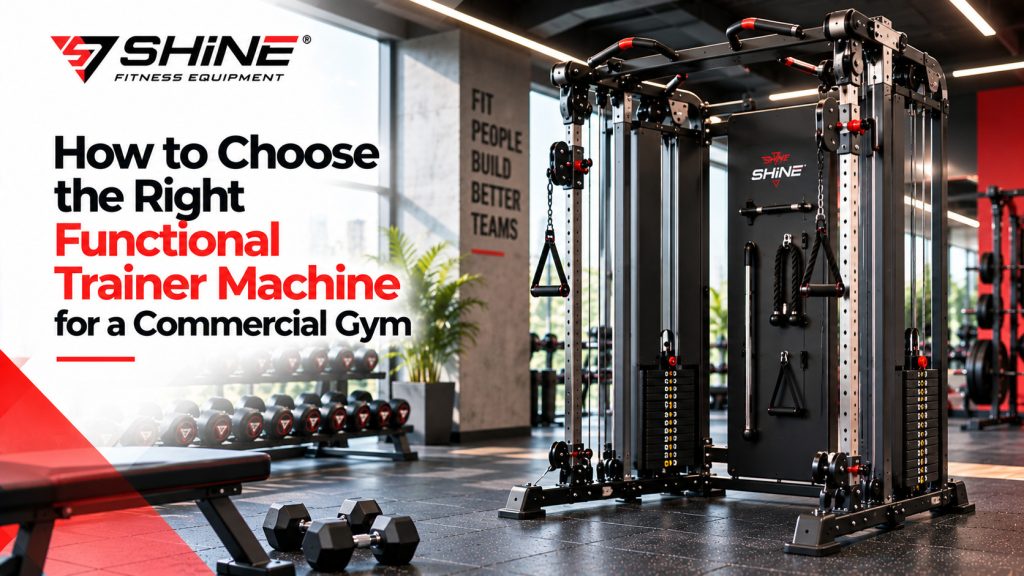
A functional trainer machine is usually the busiest station on a commercial gym floor. One compact frame lets members press, pull, rotate, lunge and stretch, and it lets trainers run personal and small-group sessions without hunting for free space. The flip side is that a poorly chosen unit quickly becomes an expensive problem. A flimsy frame, a jerky cable or a stack that runs out too early will frustrate members within months. This guide walks gym owners, fitness entrepreneurs and facility managers through what to check before buying, how the main cable stations differ, and how to match the specification to the way your members actually train.
What Is a Functional Trainer Machine?
A functional trainer machine is a freestanding cable station built around two independent weight stacks and two height-adjustable pulley arms. Each arm slides along a vertical column, so the cable can start anywhere from floor level to overhead. Because the handles are free to move in any direction, the user controls the line of pull instead of following a fixed track.
That freedom is exactly what separates it from selectorised machines such as a chest press or leg extension, where the movement path is locked. Coaches use cable stations for athletic conditioning, core stability, injury rehabilitation and general strength, because the body has to stabilise the load the way it would in sport or daily life. For background on how pulley-based resistance works, the cable machine article on Wikipedia gives a clear overview.
Why Commercial Gyms Invest in Functional Training Equipment
Members today expect more than long rows of single-purpose machines. Personal training, small-group classes, mobility sessions and sport-specific programmes all rely on functional training equipment, and a dual-stack cable station sits at the centre of that offer. Here is why it earns its floor space:
- Huge exercise variety from one footprint: Chest flys, rows, face pulls, woodchops, split squats, Pallof presses, curls and triceps work can all be done on the same frame.
- Suitable for every member: Beginners start with light, smooth resistance, while experienced lifters load the stacks for serious strength work.
- Strong revenue per square metre: Trainers can book sessions on it all day, which makes it one of the most productive pieces of commercial gym equipment you can own.
- Safer for unsupervised use: Pin-selected stacks remove the need to load and unload plates, which cuts the risk of dropped weights.
- Useful for rehab and older adults: Low starting loads and adjustable angles make it a good fit for physiotherapy-style and senior programmes.
Functional Trainer Machine vs Cable Crossover Machine vs Dual Pulley Gym Machine
Three cable-based stations are often confused during purchasing. They look similar on a showroom floor, but each one is designed for a different job.
Cable Crossover Machine
The cable crossover machine uses two tall towers set wide apart, usually joined by a top frame with a pull-up bar. The wide stance is ideal for chest crossovers and other bodybuilding-style isolation work. The trade-off is space, since it needs a long wall and generous clearance on both sides.
Dual Pulley Gym Machine
A dual pulley gym machine typically combines two cable points with fixed or limited positions, often set up for long-pull rows and pulldowns. It is compact and dependable for back training, but it offers less freedom of movement than a fully adjustable station.
The Adjustable Dual-Stack Station
This design brings the two stacks closer together and adds height-adjustable, swivelling arms. It is the most versatile of the three and the easiest to fit into a mid-size floor plan.
| Feature | Functional trainer | Cable crossover | Dual pulley station |
| Floor space | Compact single frame | Wide, two-tower layout | Compact |
| Pulley adjustment | Full height range, swivel arms | Adjustable towers, wide spacing | Fixed or limited positions |
| Weight stacks | Two independent stacks | Two independent stacks | One or two stacks |
| Best suited to | Functional training, PT, rehab, classes | Chest isolation, bodybuilding | Rows, pulldowns, back work |
| Exercise variety | Very high | High | Moderate |
| Ideal setting | Commercial, hotel, corporate, studio | Large commercial gyms | Space-limited or budget floors |
For most commercial floors, the functional trainer machine delivers the best return on space and budget. Larger bodybuilding-focused gyms often add a crossover station as well, because the two complement each other rather than compete.
Key Features to Check Before You Buy
Frame Construction and Finish
Ask for the steel section size, the wall thickness and how the frame is welded. Clean, continuous welds and an oven-cured powder coat will outlast painted frames by years. A functional trainer machine takes twisting and lateral forces that fixed-path machines never see, so frame rigidity matters more here than on almost any other station.
Weight Stacks and Pulley Ratio
Check the total stack weight on each side and the step between plates. Smaller increments help beginners and rehab clients progress safely. Just as important is the pulley ratio. Many cable stations use a 2:1 ratio, which halves the resistance the user feels while doubling cable travel. Get the ratio in writing so your trainers can programme loads accurately.
Adjustment Mechanism
Height changes should take seconds with a pop-pin or lever. Count the positions on each column, because more settings mean finer control over the angle of pull. Arms that also pivot sideways add further range.
Cables, Pulleys and Bearings
Cables should be coated, high-tensile steel, and pulleys should run on sealed bearings. A gritty or jerky cable is the first flaw members notice and the first complaint your front desk hears.
Footprint and Clearance
Measure the length, width and height of the unit, then add a clear working zone in front for lunges, rotations and step-outs. Confirm ceiling clearance if the frame carries a pull-up bar.
Before you sign a purchase order, run through this checklist:
- Frame: steel size, weld quality and powder-coated finish confirmed
- Stacks: total weight per side and plate increments stated clearly
- Pulley ratio: given in writing on the specification sheet
- Adjustments: number of height positions and swivel range
- Attachments: handles, rope, straight bar, ankle straps and pull-up bar included or priced separately
- After-sales: warranty terms, spare parts availability and service response time
- Installation: on-site assembly included in the quote or charged extra
Matching the Machine to Your Gym Type
Large Commercial Gyms
High-footfall gyms often need two stations, or one functional trainer machine beside a dedicated crossover. Place them near the free-weight zone so trainers can move clients between cables, benches and racks without crossing the floor. The cable area should also sit within a wider range of strength training equipment so members can progress naturally from guided machines to free movement.
Boutique and Personal Training Studios
In a studio, the cable station often becomes the centrepiece. One well-built unit can carry most of a PT session, which keeps the equipment budget lean while the timetable stays full.
Hotel, Corporate and Residential Gyms
These facilities are mostly unsupervised, so safety and simplicity matter. A functional trainer machine replaces several single-purpose machines, and selectorised stacks are easy for guests to use without instruction.
Space-Constrained Floors
Where every square metre counts, a Smith machine with functional trainer combines a guided barbell with twin cable columns in one frame. It is a practical choice for compact commercial gyms and premium home setups.
Common Mistakes to Avoid When Buying a Functional Trainer Machine
- Choosing on price alone: A cheaper frame often hides thinner steel, lower-grade cables and bearings that wear quickly.
- Ignoring the pulley ratio: Without knowing the ratio, trainers cannot programme loads accurately or compare machines fairly.
- Underestimating space: The footprint is only half the story, because members need room to lunge, rotate and step out.
- Buying from a trader with no service network: Cables and pulleys are wear parts, so local support and spares matter.
- Planning it in isolation: Every station should fit the flow of your wider commercial gym equipment layout, not just fill an empty corner.
Why Buy Direct from a Manufacturer
Buying from the factory removes a layer of margin and gives you a direct line to the people who build the machine. Shine Fitness has manufactured gym equipment at its own facility in Chandrala, Gujarat since 2007. Cutting, bending, welding, powder coating, upholstery and assembly all happen under one roof, which keeps the finish consistent across an entire floor of commercial gym equipment.
The range includes a full-size functional trainer machine, a lighter variant for smaller spaces, the combined Smith machine with functional trainer and a complete line of strength training equipment. Machines are delivered and installed across India, custom specifications can be built on request, and multi-unit orders qualify for wholesale pricing.
Maintenance Tips to Protect Your Investment
A cable station lasts for many years when it is looked after. Wipe grips and upholstery daily, inspect cables weekly for fraying or kinks, and clean and lightly lubricate the guide rods every month. Check that pop-pins lock fully and that selector pins sit cleanly in the stack. Replace any cable at the first sign of wear rather than waiting for it to fail mid-set.
Conclusion
The right functional trainer machine gives your gym a station that serves beginners, athletes, rehab clients and personal trainers alike. Focus on frame strength, smooth cables, a clearly stated pulley ratio and enough adjustment to cover every angle. Compare it honestly with a cable crossover machine and a dual pulley gym machine so each piece earns its place. Then plan it as part of your functional training equipment zone and overall strength layout, not as a stand-alone purchase. Finally, choose a partner who can build, deliver, install and service what you buy. If you are planning a new floor or upgrading an existing one, request a quote from Shine Fitness with your floor area and gym type. You will get a machine list built around how your members really train.
Frequently Asked Questions
What is a functional trainer machine used for?
It is used for multi-directional cable exercises such as presses, rows, rotations, lunges and core work. Gyms rely on it for personal training, group classes, athletic conditioning and rehabilitation.
Is a functional trainer better than a cable crossover?
Neither is better in every case, because the functional design is more compact and versatile while a crossover suits wide chest movements. Most busy commercial gyms benefit from having both.
How much space does a functional trainer machine need?
Allow for the machine’s own footprint plus a clear working zone in front for lunges and rotations. In tight spaces, a Smith machine with functional trainer combines two stations in one frame.
What weight stack is ideal for a commercial gym?
Choose stacks heavy enough for strong lifters, with small increments for beginners and rehab clients. Always confirm the pulley ratio, as it changes the resistance the user actually feels.
Can a functional trainer machine be used in a hotel or corporate gym?
Yes, it is one of the best choices for unsupervised facilities. Pin-selected stacks are safe and simple, and one unit replaces several single-purpose machines.
What is the difference between functional training equipment and regular gym machines?
Cable stations and similar tools let the body move freely in several planes, while regular machines guide a fixed path. Both are valuable, and well-planned gyms combine them.
How do I maintain a cable station?
Wipe it down daily, inspect cables weekly and lubricate guide rods monthly. Replace worn cables immediately and book a periodic service with the supplier.